Digital heritage bringing cultural treasures to the public

The Southern Women’s Museum has digitised 1,113 artifacts, but only 113 are available to the public. Thousands more are waiting for an exhibition system to be built under an expansion project

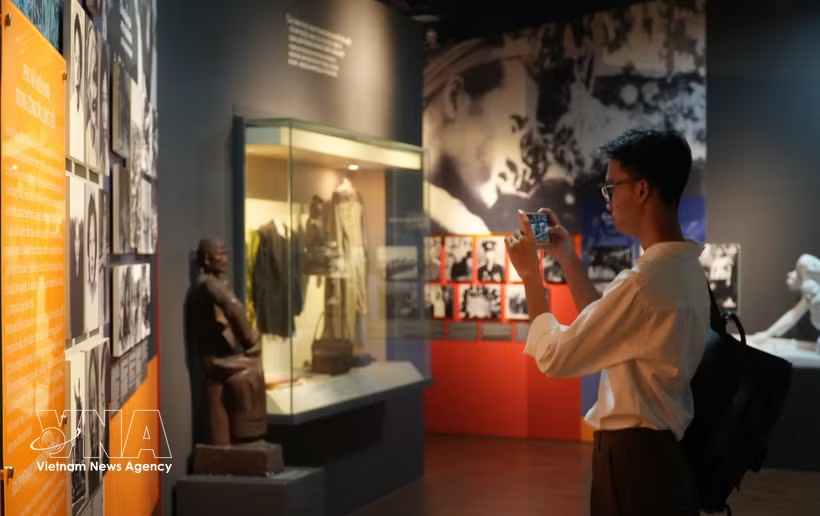
The Southern Women’s Museum scans and digitises more than 1,000 artifacts for display using hologram technology (Photo: VNA)

Ho Chi Minh City (VNA) - Ho Chi Minh City’s museums and local authorities need to address more than digitisation to make digital heritage accessible to the public. Challenges like data storage, information standardisation, content creation, and staffing to operate the systems have yet to be resolved.

From digitising artifacts to opening up access

The Southern Women’s Museum has digitised 1,113 artifacts, but only 113 are available to the public. Thousands more are waiting for an exhibition system to be built under an expansion project. The museum aims to finish the system in 2027, allowing the full collection to be viewed online, its Deputy Director Pham Thi Dieu said.

Do Thi Anh Tuyet, Vice Chairwoman of the Tan Dinh ward People’s Committee, said the ward plans to digitise Ngoc Hoang Pagoda, a national-level architectural and artistic heritage site, in phases, followed by three city-level sites. Digitising heritage and cultural data is part of the ward’s “digital Tan Dinh ward, digital neighborhoods” plan.

Pham Thi Khanh Ngan, Chief of the Office of the Department of Cultural Heritage at the Ministry of Culture, Sports and Tourism, said the national system is designed to link information across heritage sites, museums, artifacts, intangible cultural heritage and documentary heritage.

The database could build on existing records, adding inventory, recognition and registration data, along with drawings, images, documentary films and 3D models, she said. That would let heritage information serve management, research and education while gradually opening new forms of online public access, she said.

New visitor experiences powered by reliable data

At the War Remnants Museum, digital data is used both to manage artifacts and serve visitors. Its Deputy Director, Lam Ngo Hoang Anh, said the museum has digitised all artifact records and standardised 130 pages of descriptive terminology to support the description, classification, and retrieval of items.
vnanet-p.jpg
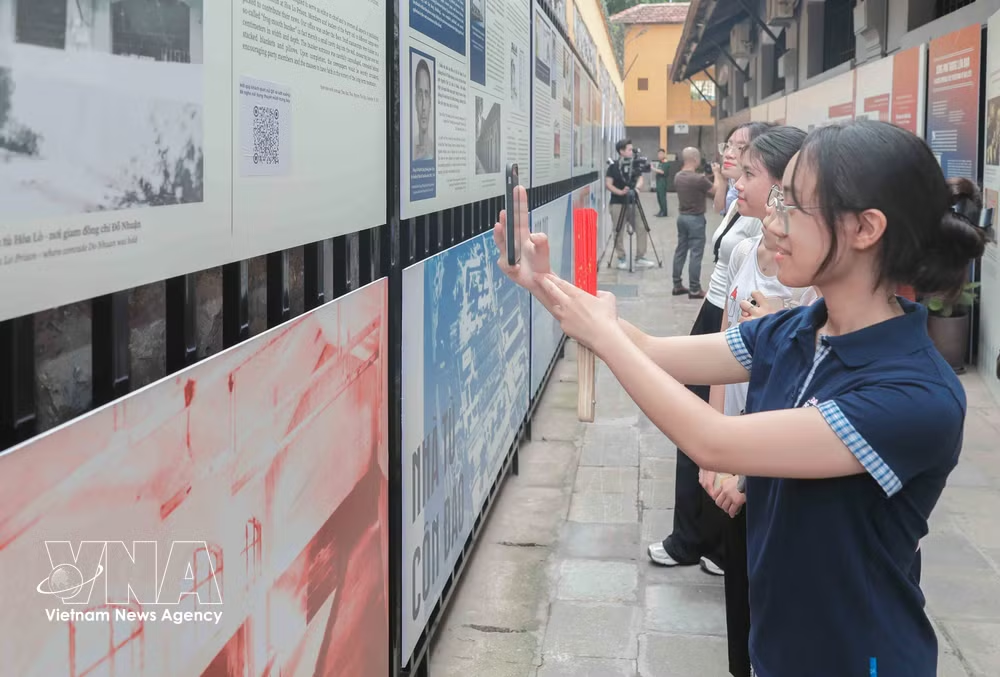
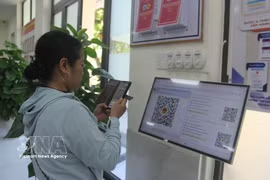
Visitors scan QR codes to experience the digitalised exhibits (Photo: VNA)

The museum also runs two automated ticket-control gates and an audio guide with 119 content points in 10 languages.

It uses 3D scanning, online exhibitions and digital projections to widen access to historical evidence. Visitors can explore content by interest and examine details that are hard to see in conventional displays. The online space also reaches those who can’t visit in person.

Christopher Bryson from Infinite Muse pointed to the potential of pairing heritage data with immersive technology and artificial intelligence. 3D models and interactive spaces let the public view artifacts and sites from multiple angles, while AI can help with archival searches, content preparation and answering questions based on information curated and verified by specialists.

Nguyen Minh Nhut, Deputy Director of the Municipal Department of Culture and Sports, said heritage digitisation is a new preservation approach that demands strict data and technology standards. Data must come from a lawful source, be created properly from the outset, be complete and consistent, and be shareable and reusable./.
VNA

See more

The women’s team final in the épée event between two Vietnamese teams (Photo: VNA)

Vietnam tops Southeast Asian Fencing Championships with 27 medals

Vietnam topped the medal table at the Southeast Asian Fencing Championships 2026 with 27 medals, including nine golds, three silvers and 15 bronzes, as the tournament wrapped up in the northern city of Quang Ninh on October 23 after nearly a week of competition.

Singer Dang Duong is among the artists featured in the national concert Proud to Be Vietnamese 2026. (Photo of the organisers)

Concert to celebrate unity and pride

The programme carries profound political, cultural and social significance, helping promote historical values and the Vietnamese tradition of paying tribute to the past generations, while nurturing love for the homeland and country and strengthening bonds among generations of Vietnamese people.

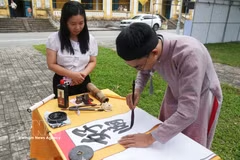
A visitor watches a calligraphy demonstration at the first Vietnam Calligraphy Festival 2026. (Photo: VNA)

Vietnam Calligraphy Festival celebrates national cultural heritage

The festival features more than 100 exhibition booths, bringing together calligraphy clubs from across the country, calligraphers, artisans, culture researchers, businesses and representatives of traditional craft villages. Exhibitions, exchanges, discussions and hands-on activities celebrate calligraphy and promote Vietnam’s cultural values.

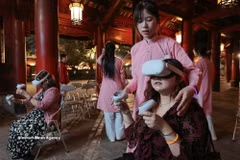
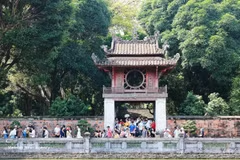
Tourists experience writing calligraphy through virtual reality at Hanoi's Temple of Literature. (Photo: VNA

Hanoi works to unlock heritage resources

When innovation deepens understanding of traditional values rather than replacing them, heritage becomes not only something to preserve but also a resource for sustainable tourism, economic development and reinforcement of Hanoi’s position as a UNESCO Creative City.

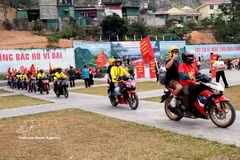
Following the launch ceremony, the 100-motorbike convoy travels from Dong Van across Ma Pi Leng Pass, taking in spectacular mountain scenery and the Nho Que River before finishing at Pa Vi Ha in Meo Vac commune. (Photo: VNA)

100 motorbikes conquer Ma Pi Leng Pass to promote safe travel

A convoy of 100 motorbikes set off on a journey across Ma Pi Leng Pass on October 21 as part of a roadshow campaign to promote safe motorcycle travel in the northern province of Tuyen Quang, home to the Dong Van Karst Plateau UNESCO Global Geopark.

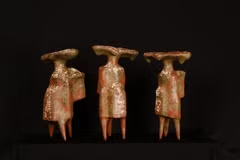
The work "Khong gian cua nui" (The Space of Mountains) by Le Lang Luong. (Photo: Published by VNA)

Vietnam-Japan sculpture exhibition to bring artists together in Kanagawa

The “Dialogue” exhibition in Japan's Kanagawa prefecture from November 8-11 will feature more than 30 works by artists from both countries, including 26 pieces by 13 contemporary Vietnamese sculptors from different generations. These artists have developed distinctive artistic languages and made their own marks on Vietnam’s contemporary art scene.

A performance at the event (Photo: VNA)

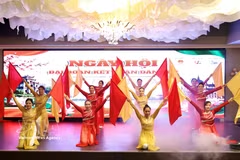
Vietnamese in Hungary stage first Great National Unity Festival

The event also served as a showcase for Vietnamese culture, customs, cuisine and traditions, in step with Vietnamese Culture Day. It encouraged Vietnamese of all generations to hold onto their cultural identity while spreading the image of Vietnam and its people among Hungarians, adding to people-to-people exchanges and mutual understanding between the two countries.

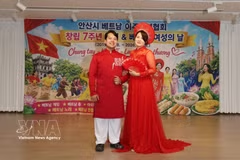
An ao dai fashion show at the festival. (Photo: VNA)

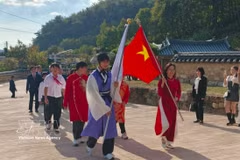
Vietnamese culture shines at festival in RoK

A celebration marking the seventh founding anniversary of the Vietnamese Migrant Women’s Association (VMWA) in Ansan, Gyeonggi province, the Republic of Korea, took place on October 18, featuring cultural exchanges and activities to mark Vietnamese Women’s Day (October 20).

Vietnam harnesses culture as growth driver

Vietnam harnesses culture as growth driver

Under a March 17, 2026 action plan from the municipal Party Committee, which follows the Politburo’s Resolution 80-NQ/TW dated January 7, 2026, on Vietnamese cultural development, the city is moving beyond preservation alone. It is now upholding heritage values while developing cultural products, spaces and markets tied to innovation and global integration.