Efforts made to shield Ly Son’s coral reefs from marine plastic

Protecting Ly Son’s coral reefs is ultimately an investment in the natural capital that sustains its marine economy, a shared responsibility that begins both beneath the waves and on shore.

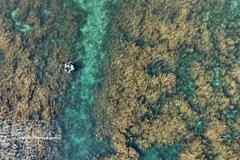
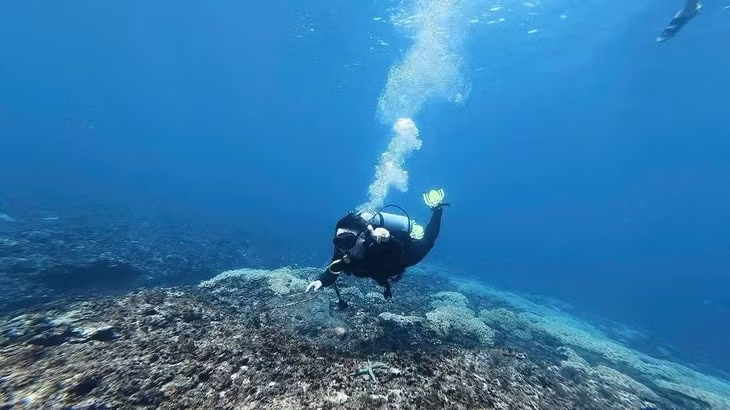
Nguyen Van Huy, Chairman of the Ly Son special zone People’s Committee, dives into the sea to inspect a coral reef within the Ly Son Marine Protected Area. (Photo: nhandan.vn)

Hanoi (VNA) – Beneath the turquoise waters of the Ly Son Marine Protected Area in central Vietnam’s Quang Ngai province, coral reefs are showing encouraging signs of recovery; yet woven between the growing coral branches lies a persistent threat: discarded fishing gear and marine plastic waste.

To assess the health of these underwater ecosystems firsthand, Nguyen Van Huy, Chairman of the Ly Son special zone People’s Committee, recently suited up for an inspection dive into the reserve’s core zone.

Joining conservation officers and marine specialists at the Lach Chua Hang monitoring station, located roughly 500 metres offshore inside the strictly protected zone, Huy combined ecological assessment with hands-on seabed cleanup.

Rather than relying solely on visual checks, the survey team deployed standardised scientific methods, including the Reef Check protocol and phototransect imaging, to document coral coverage and analyse the composition of the seafloor.

Every piece of debris retrieved during the dive was systematically sorted, counted, weighed, and logged to trace where the pollution originated.

The findings offered a mix of optimism and urgency. While divers recorded healthy patches of newly developing coral, plastic waste remains entrenched across the reef structure. Monofilament fishing lines, heavy ropes, plastic pipes, and torn netting were found snared around coral colonies.

Following the dive, Huy directed local agencies to sustain routine reef monitoring alongside scheduled cleanups, while calling on fishermen, vessel owners, aquaculture farms, and tourism operators to halt marine dumping and actively recover damaged gear.

For divers working with the Ly Son Marine Protected Area management board, underwater waste collection is a continuous, delicate operation that extends far beyond official inspections.

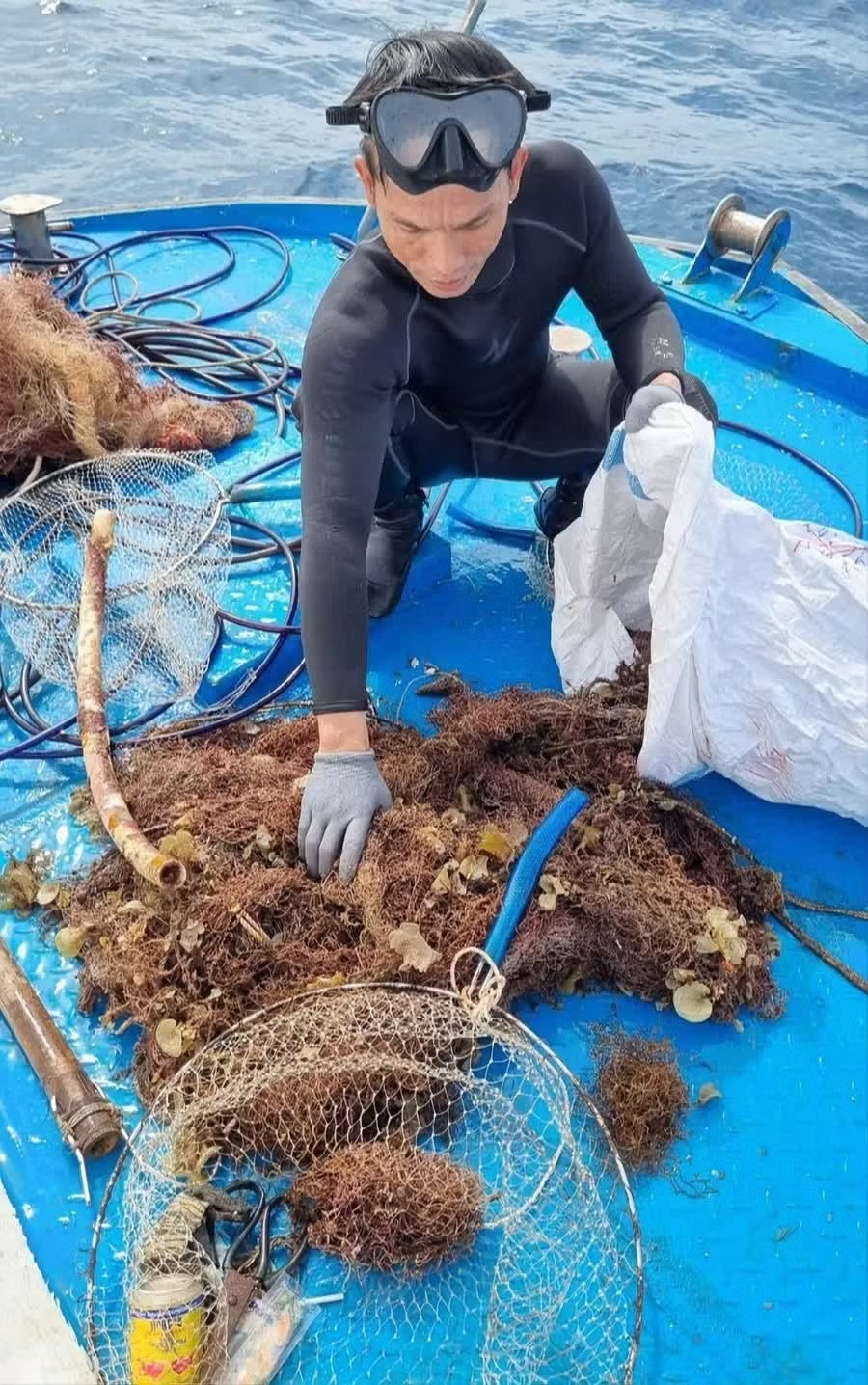
Regularly descending into the reserve’s waters, they clear debris lodged deep within rock crevices and fragile reef formations. During a single cleanup campaign spanning the south of Go An Vinh, Bai Lang, and Bai Tro Hon, divers hauled more than 116 kg of trash ashore, including not only nets, lines, plastic bottles, and aluminum cans, but also discarded clothing and even truck tyres.
efforts-made-to-shield-ly-sons-coral-reefs-from-marine-plastics-7374.jpg
Waste collected from the seabed off Ly Son Island. (Photo: nhandan.vn)

Extracting waste from living coral demands patience and technical skill. Yanking on tangled fishing line can easily slice through soft coral tissue or snap brittle branches, forcing divers to carefully sever deeply embedded netting piece by piece.

Left unchecked, abandoned fishing gear—commonly referred to as "ghost nets"—continues to drift through ocean currents long after being lost, smothering reefs, breaking coral skeletons, and ensnaring marine life. Consequently, divers operate under a strict rule: removing trash must never come at the expense of damaging the surrounding habitat.

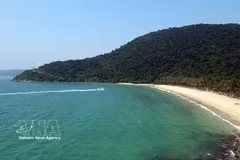
Covering more than 7,000 ha of waters, the Ly Son Marine Protected Area harbours a rich mosaic of coral reefs and seagrass beds that serve as vital nurseries for marine biodiversity and anchor the eco-tourism economy.

However, durable plastic that lingers for decades continue to test the ecosystem’s resilience.

Since the start of the year, the reserve’s management board and volunteer groups have removed nearly one tonne of plastic debris from inshore waters and reefs, supported by fixed monitoring stations that track long-term environmental shifts.

Looking ahead, local authorities aim to broaden participation by mobilising commercial dive operators, volunteers, and coastal residents for regular reef cleanups, paired with stricter onshore waste sorting and disposal systems.

For Ly Son’s underwater waste pickers, clearing the seabed remains an immediate priority. Still, keeping the reefs free of debris requires tackling pollution at its source—curbing lost fishing gear and unmanaged household waste before they ever reach the water.

Protecting Ly Son’s coral reefs is ultimately an investment in the natural capital that sustains its marine economy, a shared responsibility that begins both beneath the waves and on shore./.

VNA

See more

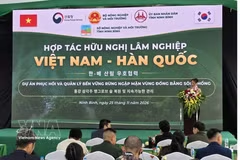
Delegates at the event (Photo: VNA)

Vietnam, RoK wrap up mangrove restoration project

According to the Forestry Project Management Board under the ministry, the project planted 170 ha of new mangroves and restored or supplemented another 80 ha, meeting its approved targets. It also completed a three-hectare mangrove nursery, handed over to local authorities in 2024 to ensure a steady supply of seedlings.

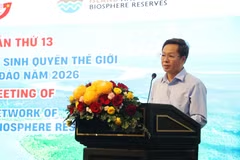
The second Ministerial Meeting of Mekong–Lancang Water Resources Cooperation takes place in Hanoi on November 19, 2026. (Photo: VNA)

Mekong–Lancang Ministerial Meeting promotes water information sharing

Minister of Agriculture and Environment Trinh Viet Hung noted that amid climate change, natural disasters and growing water demand, cooperation among the six Mekong–Lancang countries has become increasingly important. This calls for stronger information sharing, coordinated action and joint efforts towards the sustainable management and use of water resources throughout the basin.

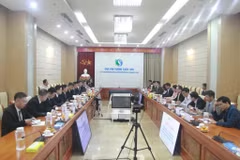
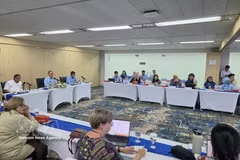
An overview of the working session (Photo: VNMHA)

Vietnam, China step up hydrological information sharing, early disaster warnings

The two sides signed the Minutes of Meeting on an emergency information-sharing mechanism for transboundary rivers. The document formalised key technical agreements reached by experts from the two countries, notably the conditions for activating emergency information provision at two critical locations in the river basins.

Authorities in Mang But commune, Quang Ngai province, assist residents whose homes have been affected by floods and landslides (Photo: VNA)

Heavy rain causes widespread damage across central Vietnam

According to the Vietnam Disaster and Dyke Management Authority under the Ministry of Agriculture and Environment, as of 5pm on November 11, the downpours injured two people in Hue city, and damaged or unroofed 38 houses in Quang Tri, Hue, Quang Ngai and Dak Lak.

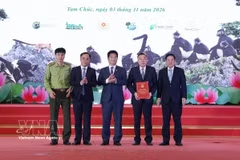
Representatives of the People’s Committee of Ninh Bình province present the decision to establish the Kim Bang Delacour's Langur Species and Habitat Conservation Area. (Photo: VNA)

Ninh Binh establishes world's largest Delacour's langur sanctuary

The establishment of the Kim Bang Delacour's Langur Species and Habitat Conservation Area in Ninh Binh province provides a solid legal and scientific foundation for completing the dossier to seek UNESCO recognition of the Van Long–Kim Bang–Tam Chuc Cultural and Ecological Landscape Complex as a World Heritage Site.

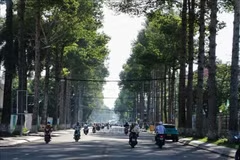
Trees planted along Vo Truong Toan street in Cao Lanh ward, Dong Thap province. Urban tree species capable of reducing fine particulate matter will be planted to reduce air pollution. (Photo: VNA)

Urban trees capable of reducing fine dust to be planted

The Forestry and Forest Protection Department (FFPD) will lead the component on identifying crop and planting structures that help reduce air pollution, while also participating in the design of urban public-space landscapes.

Professor Yucheng Lin, an Assistant Professor at City University of Hong Kong (CityUHK). (Photo: VNA)

Hong Kong expert offers solutions to help Vietnam tackle sea-level rise

In an interview with the Vietnam News Agency’s correspondents in Hong Kong (China), Lin, an expert specialising in sea-level change and climate risk assessment, said Vietnam shared global drivers of sea-level rise with China’s coastal regions, but local conditions could lead to significant differences in the overall risks.

Typhoon Yagi caused severe losses in many provinces in Vietnam in 2024. (Photo: VNA)

Vietnam could face super typhoon like Yagi every seven years

If global average temperatures rise by two degrees Celsius, Vietnam could experience such a super typhoon once every 13 years on average. The frequency would increase to once every nine years under the three-degree warming scenario and once every seven years if temperatures rise by four degrees.

Six of the newly recorded species are of conservation significance, representing four orders and five families. (Photo published by VNA)

Dakrong Nature Reserve records 35 new bird species

Dakrong Nature Reserve in the central province of Quang Tri has recorded 35 bird species not previously documented, including several endangered and rare species listed on the International Union for Conservation of Nature (IUCN) Red List.

An overview of Soc Son waste-to-energy plant in the Nam Son Waste Treatment Complex, in Hanoi (Photo: VNA)

Hanoi targets collection and treatment of all industrial solid waste

Hanoi aims to ensure that all industrial solid waste from its hi-tech parks, industrial parks and industrial clusters is collected and treated in line with regulations under a new plan to strengthen waste management and tighten control on scrap collection, storage and recycling facilities across the capital.