Hanoi launches tourism-focused art programme

The “Chuyen Ha Noi – Mot ngay rat Ha Noi” (Hanoi stories – A truly Hanoi day) programme is scheduled to be staged regularly at 8 p.m. every Friday at the theatre, located at 31–33 Luong Van Can street, Hoan Kiem ward. It is expected to become one of the city’s signature cultural attractions for both domestic and international visitors.

vnanet-hanoi-show.jpg
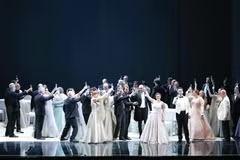
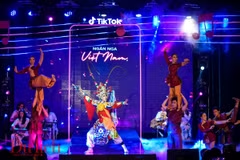
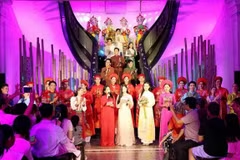
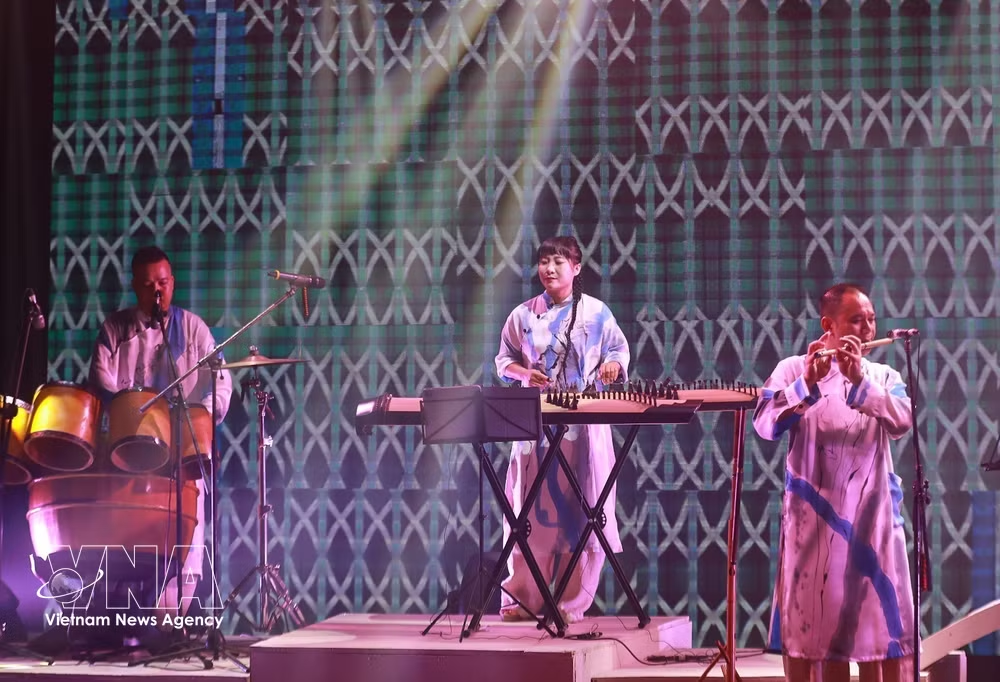
A performance on the stage of the “Chuyen Ha Noi – Mot ngay rat Ha Noi” show in the capital on July 30, 2026. (Photo: VNA)

Hanoi (VNA) – The Thang Long Song, Dance and Music Theatre, a significant venue in downtown Hanoi, on the evening of July 30 launched a new art programme developed to serve the tourism sector while contributing to the capital's cultural industries and night-time economy.

According to the organisers, the “Chuyen Ha Noi – Mot ngay rat Ha Noi” (Hanoi stories – A truly Hanoi day) programme is scheduled to be staged regularly at 8 p.m. every Friday at the theatre, located at 31–33 Luong Van Can street, Hoan Kiem ward. It is expected to become one of the city’s signature cultural attractions for both domestic and international visitors.

The programme portrays the rhythm of Hanoi's daily life from dawn to late evening through music, dance and theatrical performance, enhanced by modern stage technology. Familiar sounds from traditional Vietnamese instruments, including dan bau (monochord), dan tranh (16-string zither), bamboo flute and festival drums, blend with visual effects, lighting and live performances to capture different facets of the capital's charm.

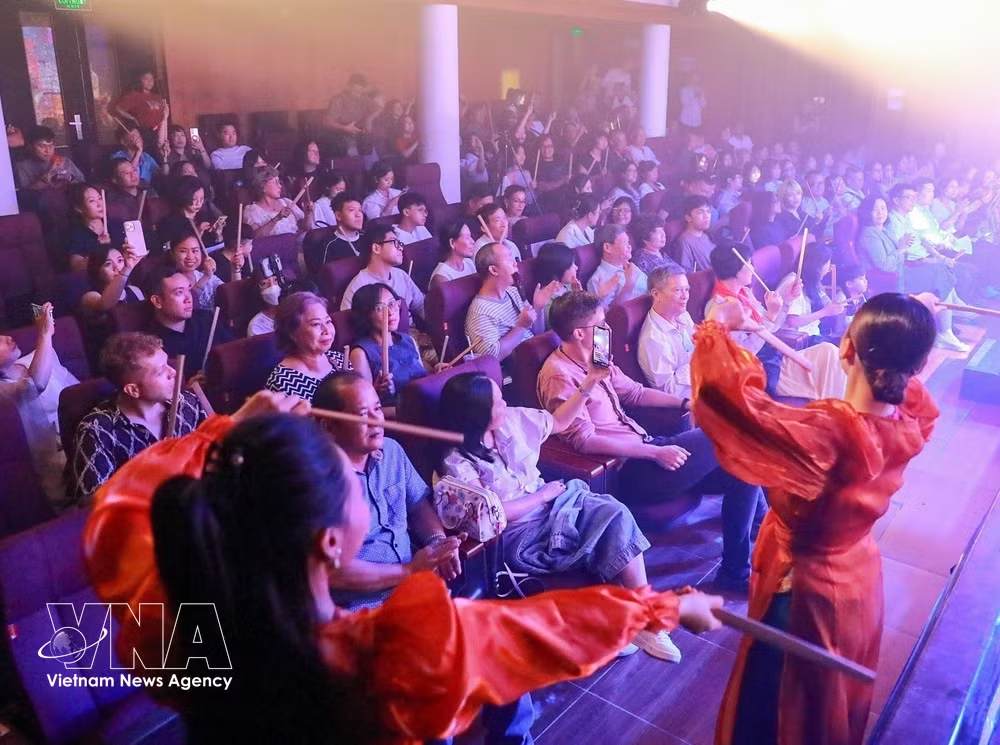
A highlight is its open performance space, featuring a range of interactive activities that allow audiences to engage directly with the performances. Before the show, visitors are treated to lotus tea, traditional pastries and local delicacies, creating a more immersive cultural experience.

The production is the latest high-quality of its kind commissioned by the municipal Department of Culture and Sports. It reflects the city's drive to encourage public arts institutions to proactively develop distinctive, high-quality cultural products that integrate culture with tourism and economic development.
vnanet-hanoi-show-2.jpg
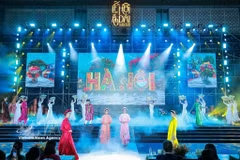
A highlight of the “Chuyen Ha Noi – Mot ngay rat Ha Noi” show is its open performance space, featuring a range of interactive activities that allow audiences to engage directly with performers. (Photo: VNA)

According to the department, the theatre's location in the Old Quarter, close to the Hoan Kiem Lake pedestrian area, makes it well positioned to become an evening cultural destination for tourists.

Through this production, the theatre aims to establish a regular performance schedule while expanding cooperation with travel agencies, hotels and service providers to make the programme a regular stop on visitors' journeys through Hanoi./.
VNA

See more

A performance at the Vietnam–Korea Festival 2026 in Da Nang city (Photo: VNA)

Vietnam–Korea Festival 2026 kicks off in Da Nang

Now in its fifth edition, the festival has cemented its place as Da Nang’s signature annual diplomatic event, spotlighting the distinct cultures of both nations, fostering friendship and driving cooperation with Korean localities and partners.

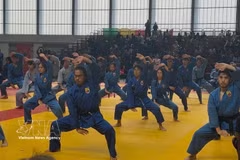
A performance at the opening ceremony of the 2026 Hanoi International Martial Arts Festival on August 7 (Photo: VNA)

Hanoi opens international martial arts festival

The event attracts about 2,000 martial artists of 66 delegations, including seven international delegations from six countries, namely Indonesia, Russia, France, Germany, Switzerland and Morocco.

The statue of Vietnam's King Ly Thai To ( (974 - 1028) in Bonghwa county (Photo: VNA)

RoK to develop K-Vietnam Valley project linked to Ly Dynasty heritage

With the designation in place, Bonghwa will carry out eight specialised projects worth a combined 347.6 billion KRW (245.1 million USD) from 2026 to 2030 – among them the K-Vietnam Valley itself, tourism development around Changpyeong Reservoir, rental smart farms, and a Baekdudaegan healing ‘pet village.’

The organising committee presents awards to outstanding martial artists at the festival. (Photo: VNA)

9th Int’l Festival of Vietnamese Traditional Martial Arts wraps up

The ninth International Festival of Vietnamese Traditional Martial Arts has fostered the martial spirit, strengthened national pride, promoted cultural exchanges and reinforced the aspiration to bring Vietnamese traditional martial arts to a wider international audience.

An appetising bowl of My Quang features a rich combination of ingredients. (Photo: VNA)

Da Nang to host festival honouring Quang Nam-style noodle soup

My Quang is not only a signature dish of the Quang region but also reflects the history, culture and daily life of communities in central Vietnam. With its diverse ingredients, preparation methods and distinctive flavours, the noodle soup has become one of Vietnam's best-known culinary specialities, helping strengthen Da Nang's position on the culinary tourism map.

Hanoi’s traditional silk weaving craft continues to be preserved and developed today. (Photo: VNA)

Van Phuc silk weaving village officially recognised as Hanoi tourist destination

With its millennia-old heritage and growing integration of preservation and innovation, Van Phuc silk weaving village is poised to become a distinctive cultural destination, helping promote Hanoi’s sustainable cultural tourism and bring the quintessence of Vietnamese silk weaving closer to domestic and international visitors.

Minister of Construction Tran Hong Minh speaks at the session (Photo: VNA)

Lawmakers mull over changes to architecture law

On architectural management, the draft Law amending and supplementing several articles of the Law on Architecture clarifies the concept of “national cultural identity in architecture”, tying design to the preservation and promotion of regional heritage. It pushes architecture that mirrors local identity and fits each locality’s natural, historical and social conditions, while setting criteria to identify, assess and protect architecturally valuable buildings as a distinct form of cultural heritage.