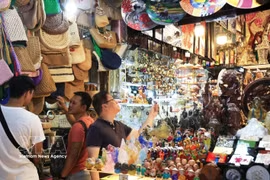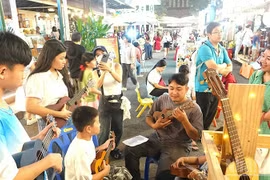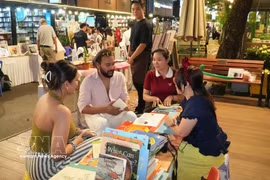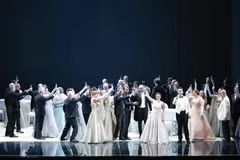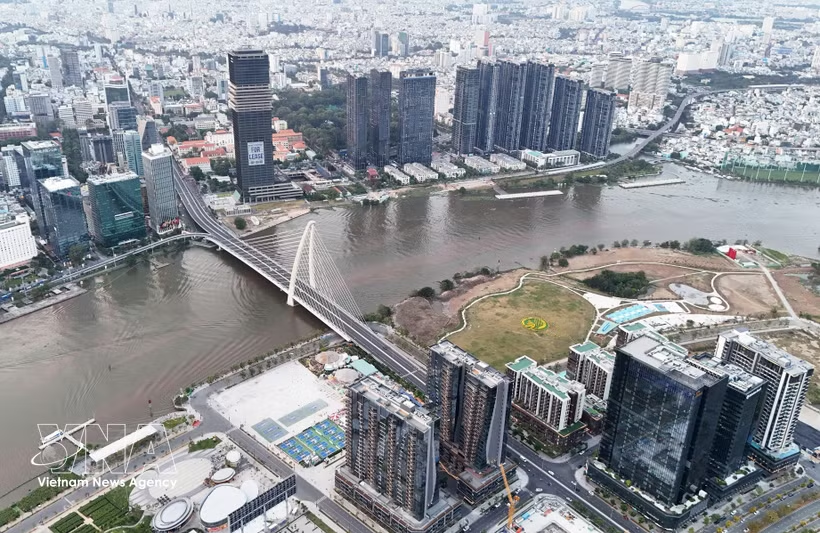
Ho Chi Minh City (VNA) – Ho Chi Minh City stands as a dynamic crossroads where cultural currents converge. Its identity, etched in lifestyles, language and daily conduct, has been tested across decades of construction and development.
Cultural values in character of city dwellers
From its origin as Saigon-Gia Dinh, Ho Chi Minh City absorbed successive waves of ethnic communities and external influences. Geography and diversity fused to produce a population known for generosity, openness, straightforwardness, solidarity, tolerance and compassion. Successive phases of urban development further sharpened those traits into a pioneering, dynamic, creative and resilient spirit, coupled with a strong sense of civic pride.
Dr. Vu Thi Mai Oanh, former head of the Department of Political Theory at the Ho Chi Minh City Cadre Academy, noted that the cultural and human values of southern Vietnam and old Saigon have been transmitted uninterrupted from the reform era to the present.
The metropolis has repeatedly served as the launchpad for initiatives and pilot schemes later scaled nationwide. These range from early experiments that pierced institutional constraints during reform, to first mover in industrialisation and modernisation, global integration, and grassroots campaigns spanning poverty reduction, summer literacy, voluntary blood donation, charity bus services and free meals that subsequently became national models.
Pham Phuong Thao, former Vice Secretary of the municipal Party Committee and former Chairwoman of the municipal People's Council, identified openness as a defining Saigon trait.
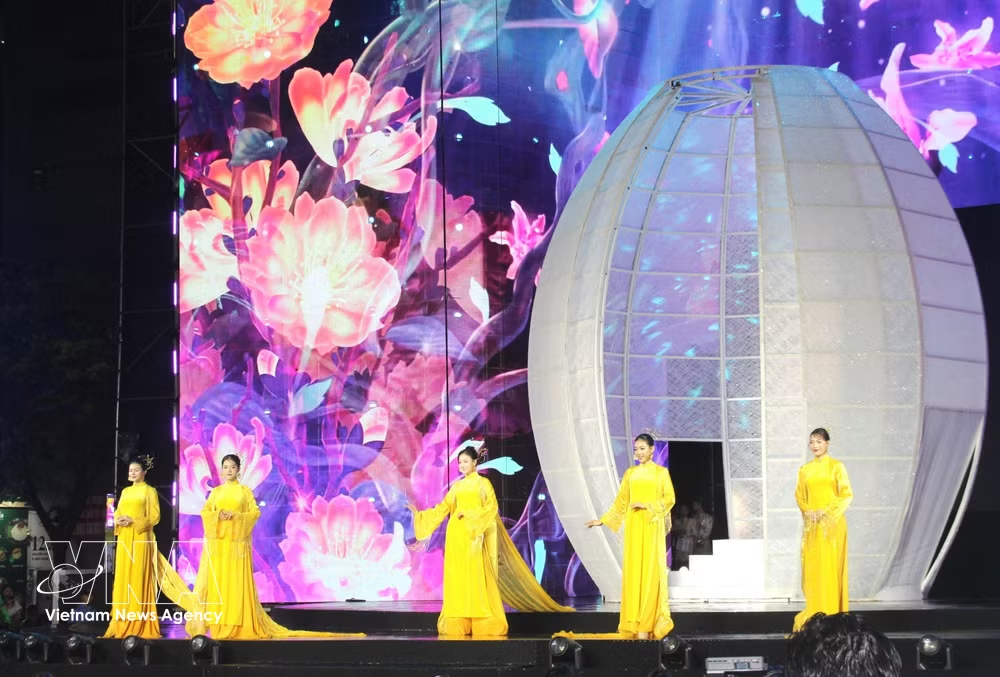
Residents of today’s Ho Chi Minh City also display intellectual energy and an industrial, modern outlook. A dense mix of populations, religions and cultures continues to inject vitality into socio-economic progress, expands cultural activity and reinforces community cohesion, she added.
Upholding human values
According to experts and researchers, people both create culture and sit at the centre of every development strategy. Therefore, Ho Chi Minh City’s economic agenda has remained tightly coupled with the deliberate cultivation of civilised, modern citizens who retain a distinct cultural identity.
This is fully consistent with the orientations set out in the Politburo’s Resolution 80-NQ/TW dated January 7, 2026 on national cultural development, and, most recently, the Prime Minister’s decision dated July 2, 2026, which mandates a nationwide rollout of the national, cultural and family value systems and standards for Vietnamese people.
The goal is to embed these systems in daily life, elevate the role of culture, families and citizens in economic growth, national defence-security, rapid and sustainable development, while converting cultural and human capital into competitive advantage amid global integration.
To reinforce local human values, Thao argued for clear codes of conduct that specify what must be amplified and what must be curtailed, then disseminated across society.
She underscored the need to cultivate healthy social norms, affirm the city’s human value system, absorb humanity’s broader cultural inheritance, and swiftly correct outdated practices.
Meritorious Artist Ngo Pham Hanh Thuy said it is necessary to preserve the purity and standards of the regional language, both in written documents and everyday communication.
Thuy noted that language is not merely a communication tool but a repository of community culture, character and identity. Protecting its standards and beauty fosters a civilised, humane environment while nurturing aesthetic, ethical and cultural awareness among the youth. In an age of globalisation, she said, that is how the city guards a distinct identity that resists dilution./.