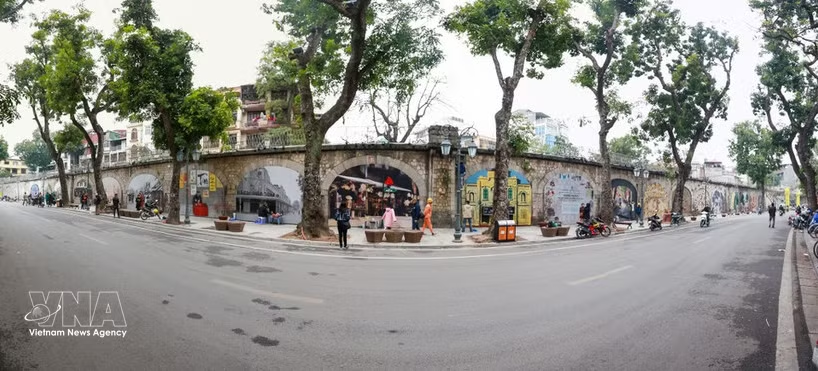
Hanoi (VNA) – Hanoi is accelerating plans to develop a cultural, service, commercial and tourism space at 131 railway arches south of Long Bien Bridge, with the project expected to break ground in October 2026.
The project covers the railway arches along Phung Hung and Gam Cau streets and aims to create a new public space combining culture, tourism, services and night-time economic activities.
The municipal People’s Committee Office has announced the conclusions of a meeting chaired by Duong Duc Tuan, Standing Vice Chairman of the People’s Committee, on the implementation of a detailed 1:500 urban design and the investment project for the 131 railway arches.
The city said progress on previously assigned tasks had not met requirements. However, on August 28, 2026, the Ministry of Construction issued Decision No. 1542/QD-BXD transferring the management of the national railway infrastructure assets in the Phung Hung arches section, from Km1+399 to Km2+215 of the Hanoi–Dong Dang railway line, to the Hanoi People’s Committee.
The decision provides a basis for local authorities to proceed with relevant procedures.
The municipal Department of Construction has been tasked with leading the appraisal of the 1:500 urban design, consulting relevant ministries and completing documents for submission to competent authorities for approval.
Walking space and night-time economy
The municipal Department of Finance will study investment mechanisms and implementation options, including public-private partnerships (PPP), build-own-operate (BOO) contracts and other lawful investment models.
Hanoi plans to develop the area under an urban economy model, promote the night-time economy and create a connected pedestrian space.
Relevant agencies will consider mechanisms allowing investors to capitalise on spaces inside the arches, parts of adjacent pavements and certain road areas and intersections in accordance with the urban design. The city also plans to explore ways for residents living opposite the arches to participate in commercial activities, creating an ecosystem around the pedestrian area.
The Hoan Kiem ward People’s Committee has been tasked with preparing a pedestrian street plan, covering its scope, operating hours, traffic organisation, parking, business logistics, connections with neighbouring streets, security, fire prevention and environmental sanitation.
The ward will also work out a plan for developing the night-time economy linked with the preservation and promotion of urban heritage values and the development of tourism, services and commerce.
Under the investment plan, 127 of the 131 arches will be considered for different cultural functions and elevations, with the spaces along both sides of Phung Hung–Gam Cau streets, adjacent pavements and pavements opposite residential areas developed in a coordinated manner.
The project proposer must also study ways to reinforce the steel structures of the old arches to ensure safety and enable their continued use. The plan includes upgrading roads and pavements, adding trees, flower beds, benches, lighting and other urban facilities.
The renovation of the arches and improvement of surrounding infrastructure are expected to be carried out simultaneously to speed up implementation.
The city plans to submit the project’s investment policy to the municipal People’s Council between September 24 and 26 and complete procedures for the investment policy and investor selection by September 30.
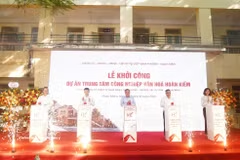
A groundbreaking ceremony is scheduled for October 8–10, 2026, to mark the 72nd anniversary of the Liberation of Hanoi. The project is targeted for completion by June 30, 2028, or earlier if conditions permit./.