Ho Chi Minh City (VNA) - Foreign direct investment (FDI) into Ho Chi Minh City is shifting towards new sectors and higher-quality projects. Alongside manufacturing, investors are increasingly targeting logistics, seaports, digital infrastructure, high technology and high-value-added services, in line with the city’s new development orientation.
Major projects target infrastructure and technology
In early September 2026, the Ho Chi Minh City Department of Finance granted an investment registration certificate to Singapore-based Tokgistic Pte. Ltd. for the Swift Logistics Co., Ltd. project in the city.
The project has total registered investment of more than 25.85 trillion VND (980 million USD), including 196 million USD in investor-contributed capital, or 20%, with the remaining expected to be mobilised. The project has a 50-year operating term and is scheduled to begin operations in this November.
It is among the largest newly licensed projects in the city this year, reflecting growing foreign investor interest in logistics and supply-chain-related services.
In April 2026, TikTok Shop Vietnam was also among the city’s newly licensed FDI projects, with investment of 125 million USD. The project followed discussions between TikTok and the municipal People’s Committee on plans to expand operations and strengthen its investment presence.
Ho Chi Minh City has also attracted several other large-scale FDI projects or received proposals for additional investment this year.
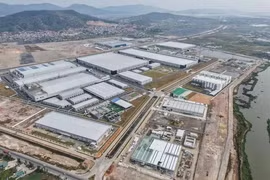
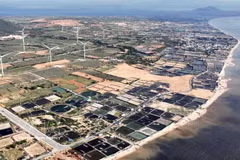
Notably, the Can Gio International Transshipment Port project has a total investment of more than 4.9 billion USD. The project is expected to enhance international cargo transshipment capacity and maritime connectivity, while creating additional momentum for the development of logistics, trade, transportation and related support services.
The AI Factory data centre project, with total investment of approximately 2.1 billion USD and a proposed additional investment of around 2.8 billion USD, is expected to expand computing, data storage and processing capacity to support AI application, digital transformation, and innovation.
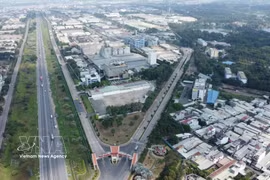
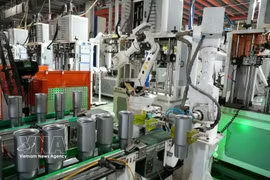
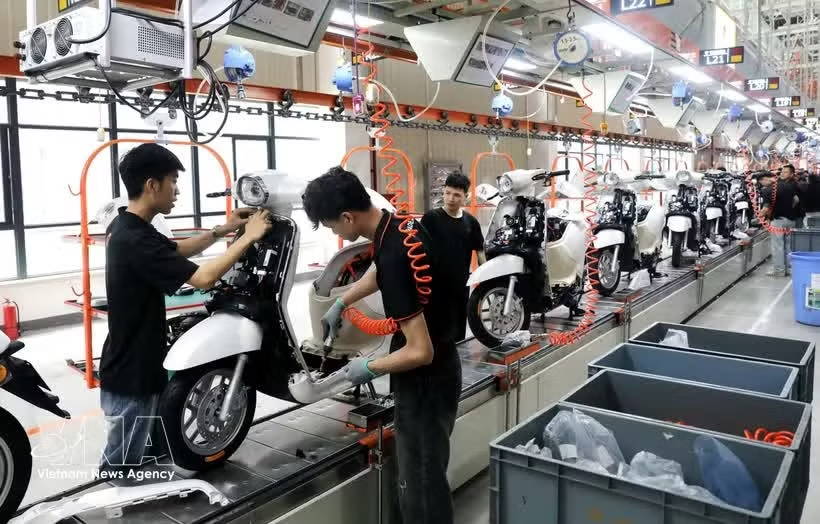
At the Saigon Hi-tech Park (SHTP), FDI is also increasingly flowing into data infrastructure, smart electronics manufacturing and high-tech services.
According to Nguyen Ky Phung, head of the SHTP Management Board, in the first nine months of 2026, the park granted licences to two new FDI projects with total registered capital of nearly 590 million USD, accounting for about 48% of the total newly registered capital.
Creating new space to attract high-quality FDI
According to Vice Chairman of the Ho Chi Minh City People’s Committee Nguyen Cong Vinh, the city attracted more than 17.8 billion USD in FDI in the first nine months of the year, 4.2 times higher than the same period last year. The result reflects growing investor confidence in the city’s investment environment amid stronger decentralisation and the removal of institutional and policy bottlenecks.
Ho Chi Minh City has already exceeded its full-year 2026 FDI attraction target of 11 billion USD. According to the municipal People’s Committee, GRDP grew 9.06% in the first nine months, or 9.16% excluding oil and gas, while total social investment mobilisation reached 541.6 trillion VND, up 17.3%.
Based on these results, the Ho Chi Minh City Department of Finance estimates that total registered foreign investment for 2026 could reach around 19 billion USD, about 72.7% above the target. The estimate will be updated based on investment attraction results in the remaining months of the year.
However, alongside capital scale, the city is setting higher requirements for the quality and effectiveness of FDI.
According to Deputy Director of the Ho Chi Minh City Department of Finance Quach Ngoc Tuan, the scope for attracting FDI through traditional methods is becoming increasingly limited. The city is therefore gradually shifting from focusing on the amount of registered FDI capital to attracting higher-quality foreign investment.
The merger of Ho Chi Minh City with Binh Duong and Ba Ria-Vung Tau has opened up a larger development space, enabling the city to reshape its approach to attracting foreign investment. In particular, Resolution No. 10-NQ/TW of the Politburo sets out clear orientations for developing the foreign-invested economic sector, providing a basis for shifting the focus from the amount of investment capital to the quality of investment.
The Department of Finance said the expanded development space not only creates greater room for investment attraction but also enables the city to shape growth poles with different advantages and orientations, thereby improving the quality of FDI.
To implement this approach, the city is focusing on improving the investment and business environment, accelerating administrative reform, and developing policies to attract and support investors.
The Department of Finance is also coordinating with departments, agencies, management boards and localities to monitor and accelerate the processing of key project applications, while supporting existing investors in expanding operations and resolving difficulties related to investment procedures and project implementation.
Alongside attracting new projects, Ho Chi Minh City is placing greater emphasis on implementation progress, capital disbursement and putting projects into operation, while strengthening linkages between FDI and domestic businesses in the supply of goods and services and workforce training./.
VNA