Ready-built factories gain from new manufacturing FDI wave

Ready-built factories attracted 73% of new manufacturing FDI in northern Vietnam over the past two quarters, as foreign investment continued to surge at the region's industrial hubs during the first eight months of 2026. The trend points to growing demand for premises that can be put into operation quickly.

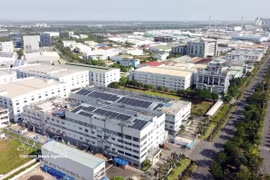
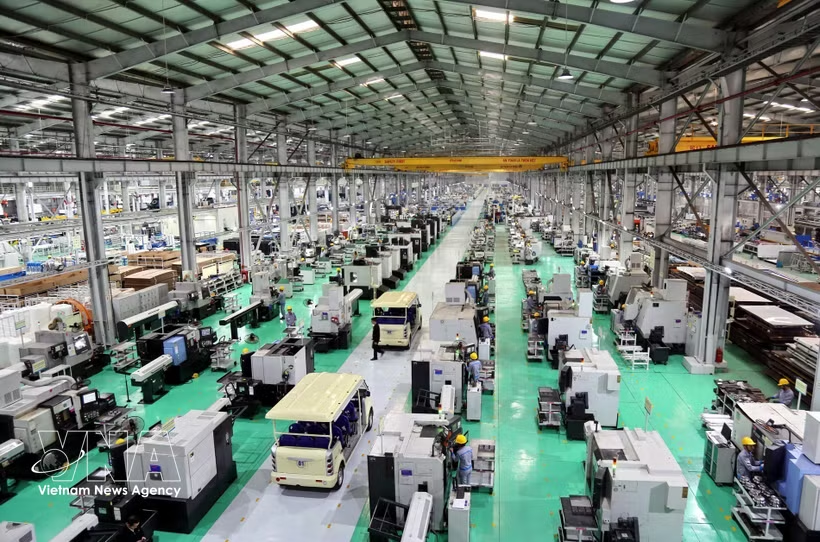
Factories and production facilities in the Chu Lai Open Economic Zone, Da Nang city, are equipped with modern production lines. (Photo: VNA)

Hanoi (VNA) – With registered FDI rising more than 55% in the first eight months and disbursed capital reaching a five-year high, and demand for production-supporting infrastructure continuing to grow, ready-built factories could emerge as a clear beneficiary of the new manufacturing FDI wave, while industrial land will remain the foundation for long-term investment plans, according to experts.

Manufacturing investment continues to rise

Ready-built factories attracted 73% of new manufacturing FDI in northern Vietnam over the past two quarters, as foreign investment continued to surge at the region's industrial hubs during the first eight months of 2026. The trend points to growing demand for premises that can be put into operation quickly.

According to Savills Vietnam, factories accounted for 54% of new manufacturing FDI projects in northern Vietnam but attracted 73% of total capital, or about 6.3 billion USD, in the first two quarters of 2026. Industrial land projects, meanwhile, accounted for 46% of projects but only 27% of investment.

The trend is also evident nationwide. Of 468 new manufacturing FDI projects, 266 were factory projects, making up 56.84% of the total and attracting about 7.09 billion USD, equivalent to 66.24% of total capital. Industrial land projects attracted about 3.62 billion USD.

Although these figures cover the first two quarters, investment flows in July and August continued to underline the strong appeal of manufacturing and northern industrial centres.

By the end of August, Vietnam had attracted 40.63 billion USD in registered foreign investment, up 55.4% year on year. Newly licensed FDI projects numbered 2,771, with total registered capital of 21.72 billion USD, up 96.8% despite a 9.4% rise in the number of projects.

Processing and manufacturing remained the largest recipient. Newly registered capital in the sector reached 12.15 billion USD, or 55.9% of total new capital. Including additional capital, the sector lured about 20.18 billion USD in the first eight months, or 59.5% of the combined capital in the two categories.

Disbursed FDI also increased, reaching about 17.25 billion USD, up 12% year on year and the highest level for the same period in five years. Processing and manufacturing accounted for 82.6%, or 14.24 billion USD.

The scale and pace of investment flows show that demand for expanded production capacity remains strong, particularly in high-tech and high-value-added sectors.
vnanet_potal-anh-cho-chum-bai-mo-khong-gian-don-dong-von-fdi-the-he-moi-8993148.jpg
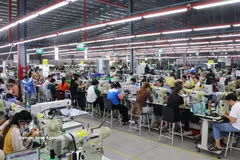
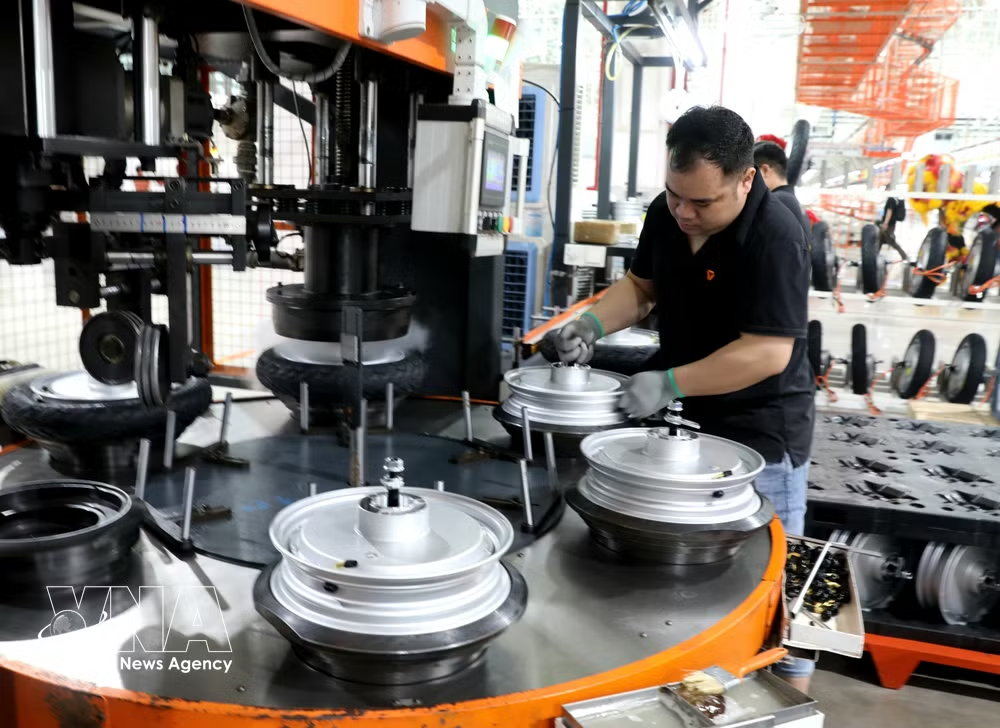
Production line at the Yadea Vietnam smart manufacturing plant, a project worth over 100 million USD located in Tan Hung Industrial Park, Bac Ninh province. (Photo: VNA)

John Campbell, Director and Head of Industrial Services at Savills Vietnam, said that as global supply chains undergo continuous restructuring, speed of deployment is becoming an increasingly important competitive factor. Bringing a factory into operation several months earlier can offer advantages in costs, orders and participation in supply chains.

This explains why ready-built factories are increasingly being considered not merely as a temporary solution for market entry, but from the outset of investment planning.

A new race in industrial real estate

The shift towards high-quality FDI is also changing requirements for industrial real estate. Gene King, Chief Investment Officer at BW Industrial Development, said FDI in Vietnam was moving more clearly towards high-value-added sectors such as electronics, semiconductors, artificial intelligence infrastructure and high-tech manufacturing.

This qualitative shift is directly affecting demand for ready-built factories, said King.

Demand for ready-built factories therefore reflects not only the need to shorten deployment time but also changes in the sectoral composition of FDI.

Savills experts noted that the higher share of investment attracted by factories than by industrial land shows that some investors are willing to pay for a platform that can shorten the process from licensing and site preparation to production.

The rise of ready-built factories, however, does not diminish the role of industrial land. Large-scale greenfield projects, long-term expansion plans and factories requiring customised designs will still need land to develop according to their specific requirements.

The bigger change is that the market now has an additional competitive criterion. It is no longer enough to provide land on which businesses can build factories. Industrial real estate must also enable them to bring production into operation more quickly, particularly as rising manufacturing investment in electronics and high-tech industries creates more diverse demand.

Alongside industrial land, businesses can opt for ready-built factories, build-to-suit facilities or integrated models combining factories with warehousing and logistics. For new investors, these options can reduce the time and resources required during the initial development stage.

The market is also seeing more developers offering such products. Alongside BW Industrial, Frasers Property, KTG Industrial, Core5, SLP and Mapletree, Logicross, the logistics brand of Japan's Mitsubishi Estate, has entered the market with projects in Nam Thuan and Hai Phong.

The emergence of these models shows that industrial real estate is gradually shifting from the question of whether land is available to how effectively it can support actual production./.
VNA

See more

Prime Minister Le Minh Hung and delegates launch the digital platform of the Vietnam Association of Small and Medium Enterprises (August 2026). Photo: VNA

Vietnamese businesses, entrepreneurs make growing contributions to national development

Vietnam Entrepreneurs’ Day is an opportunity to recognise businesses’ contributions and reinforce the entrepreneurial spirit, the pursuit of legitimate prosperity and national responsibility. With stronger policies and greater innovation, Vietnamese enterprises are expected to play an increasingly important role in economic growth and the country’s ambition to become a strong, prosperous nation.

A view at a CO.OPMART supermarket in Bac Ninh city (Photo: bacninh.gov.vn)

Bac Ninh’s CPI up 4.07% in nine months

The consumer price index (CPI) in Bac Ninh city rose 4.07% year-on-year in the first nine months of 2026, with housing and construction materials, education and transport recording the sharpest increases, according to the municipal Statistics Office.

Vietnam's textile - garment and footwear industries are aiming to shift from processing and assembly to stages with higher added value, increasing technology content and competitiveness. (Photo: VNA)

Vietnam’s supporting industries seek stronger domestic links

As global supply chains undergo major changes and environmental standards and digital technology requirements become more demanding, developing supporting industries has become essential to improving the competitiveness of the economy. This requires coordinated efforts by the Government, multinational corporations and domestic businesses.

Prime Minister Le Minh Hung speaks at the meeting (Photo: VNA)

PM orders power plan overhaul to meet double-digit growth

Securing adequate power supply is an urgent priority and a prerequisite to successfully achieve socio-economic development goals 2026, a foundational year for accelerating progress, with breakthroughs to follow in 2027 and the goals for the full term to be delivered, said Prime Minister Le Minh Hung.

General Secretary of the Communist Party of Vietnam Central Committee and President To Lam speaks at the meeting (Photo: VNA)

Top leader pledges support for firms, presses tech self-reliance

The country needs more firms that master technologies, build trusted brands and run production networks able to compete globally. Progress over the next five to 10 years must show up in productivity, job quality and market position, said top leader To Lam.

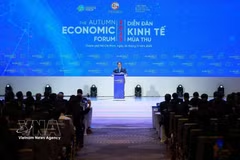
Then Prime Minister Pham Minh Chinh addresses the Autumn Economic Forum 2025 on November 26 last year. (Photo: VNA)

World Economic Forum to co-brand Autumn Economic Forum 2026 in Ho Chi Minh City

On October 27, the forum will host 16 thematic sessions across three parallel venues, focusing on AI – quantum, finance – digital economy – autonomy, and manufacturing – sustainability – next generation. Two sessions will be jointly organised with the WEF, addressing “Repositioning Vietnam and ASEAN in Global Value Chains” and “From AI Deployment to Future Manufacturing Workforce Readiness”.

Nguyen Dinh Kien, Secretary of the Sam Mun commune Party cell in Dien Bien province, builds wealth through spotted deer farming. (Photo: VNA)

📝OP-ED: Party Central Committee’s 4th plenum offers new thinking encouraging Party members to engage in business

Accordingly, the plenum reached a consensus on several key principles, including shifting from a mindset of “permission” to one of “encouragement and facilitation” for Party members engaging in the private sector; protecting their lawful economic activities; and maintaining strict oversight of those exercising control and benefiting from such activities.

AVAC ASF LIVE vaccine developed and manufactured by AVAC Vietnam Joint Stock Company. (Photo: avac.com.vn)

Vietnam ships first commercial ASF vaccine order to Philippines

Nguyen Van Diep, General Director of AVAC Vietnam, said this was the company’s first commercial export order following the Philippines’ approval of the vaccine for unrestricted circulation. The Philippine Department of Agriculture is expected to issue usage guidelines next week, paving the way for wider distribution and application.

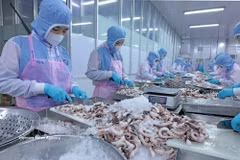
Workers process octopus for export to the Japanese market at Huy Nam Company in An Giang province. (Photo: VNA)

Fisheries sector strives for 12 billion USD in exports amid rising costs

The 12-billion-USD export target remains achievable given solid output growth and generally favourable market conditions. However, any fourth-quarter slowdown would not necessarily reflect raw material shortages but also impacts on economic efficiency amid rising material and fuel costs.