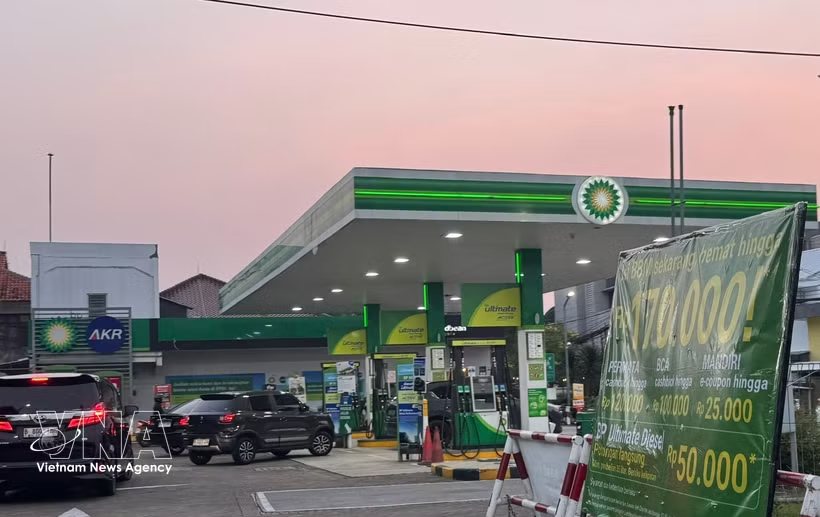
Jakarta (VNA) - Indonesia’s Ministry of Energy and Mineral Resources (ESDM) is preparing a dedicated financing scheme to bridge the price gap between bioethanol-blended gasoline and conventional gasoline, supporting the upcoming mandatory biofuel rollout.
The country’s national news agency Antara cited ESDM Minister Bahlil Lahadalia sharing that the framework aims to protect domestic producers and farmers while addressing market price disparities when global crude oil prices fall below bioethanol production costs.
"We will develop a sound financing mechanism that benefits the industry, farmers, and the state," Bahlil told reporters in Jakarta on August 3 as quoted by Antara.
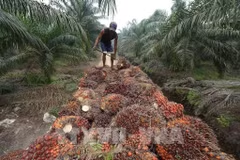
Under the plan, the government will set reference prices for key bioethanol feedstocks – corn, cassava, and sugarcane – to help ensure stable returns for local farmers.
The initiative supports Indonesia's roadmap to reduce its heavy reliance on imported gasoline. Following extensive policy reviews, the government plans to mandate a 10% bioethanol blend (E10) starting in 2027, with a gradual increase to an E20 blend between 2028 and 2029./.
Indonesia, Thailand target 20 bln USD in two-way trade by 2030
Indonesia and Thailand aim to increase bilateral trade to 20 billion USD by 2030 under an expanded strategic partnership covering the economic, energy and agricultural sectors, Indonesian President Prabowo Subianto announced on August 3.