Jakarta (VNA) – The Indonesian government has decided to tighten controls on refined sugar imports and, for the first time, require importing companies to invest in developing domestic sugarcane plantations.
The move aims to revive the struggling sugar industry, protect the livelihoods of millions of farmers, and achieve self-sufficiency in sugar production within the next two years.
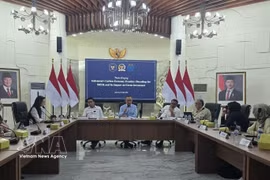
Speaking in Bandung district, West Java, recently, Agriculture Minister Andi Amran said imported refined sugar had flooded the domestic market beyond isolated leakages, depressing prices and undermining the livelihoods of local sugarcane farmers, Antara news agency reported.
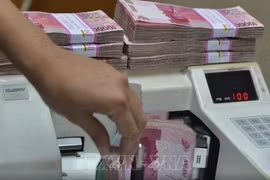
The consequences extend beyond farmers. Two state-owned sugar companies, PT Perkebunan Nusantara and PT Sinergi Gula Nusantara, suffered losses of approximately 600 billion IDR (33.2 million USD) and 680 billion IDR (37.6 million USD), respectively. Meanwhile, molasses prices in producing areas have nearly halved to around 1,000 IDR per litre.
In East Java, sugarcane farmers threatened a nationwide strike after tens of thousands of tonnes of harvested sugar remained in warehouses due to delays in the disbursement of 1.5 trillion IDR in payments. The volume of unpurchased sugar produced by farmers has reached an estimated 1.6 million tonnes, exposing growers to potential losses of between 4 trillion IDR and 7 trillion IDR.
To address the situation, the Indonesian government will strictly enforce Ministry of Agriculture Regulation No. 98/2013, which requires sugar processing plants to source at least 20% of their raw material from plantations they own. However, of the country's 11 refined sugar producers, only one has met the requirement, while the remaining producers depend entirely on imported raw sugar.
Amran said that, from now on, all sugar importers will be required to invest in developing domestic sugarcane growing areas if they wish to continue operating.
The policy has received support from Commission VI of the House of Representatives, which oversees trade and state-owned enterprises./.