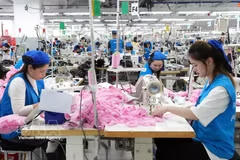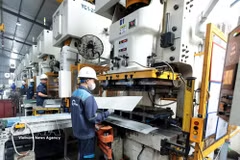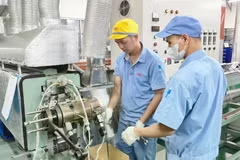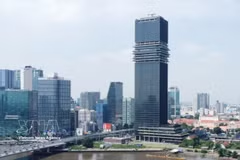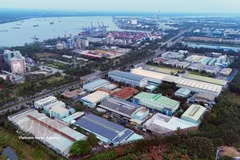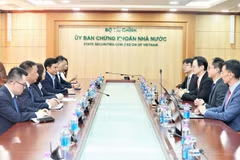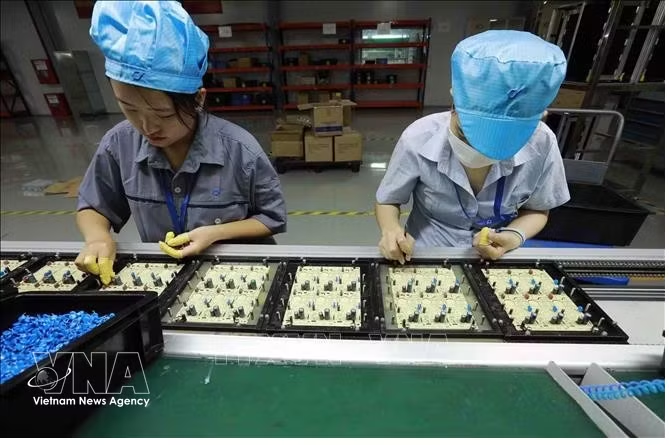
Hai Phong (VNA) – Hai Phong's industrial base needs a broad overhaul to move deeper into global value chains, as a new generation of foreign investors imposes tougher requirements.
FDI momentum holds
Foreign direct investment into Hai Phong remained among the strongest in Vietnam in the first nine months of 2026. Registered capital is estimated at more than 3.638 billion USD, or 93.3% of the full-year target of 3.9 billion USD. The inflow is helping the city pursue double-digit economic growth for the year.
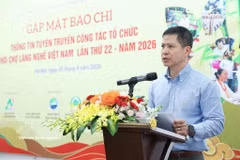
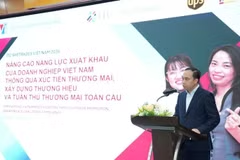
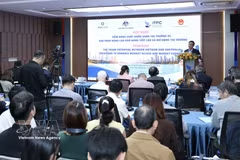
Dr. Vo Tri Thanh, Director of the Institute for Brand and Competitiveness Strategy, told a September 29 event in Hai Phong that Vietnam has set ambitious goals. They include raising incomes, speeding up industrialisation and modernisation, bolstering strategic autonomy, developing high technology and improving competitiveness. Hai Phong is expected to play an important role in this process, he said.
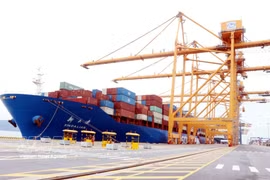
The port city has long industrial and maritime roots and has posted double-digit growth for 11 straight years. It is now working to become a major logistics hub, supported by improving infrastructure and a broader service ecosystem.
Nguyen Thi Bich Dung, Deputy Head of the Hai Phong Economic Zone Authority (HEZA), said industrial parks can no longer simply lease land to attract new-generation FDI. They must become industrial ecosystems that give firms what they need to manufacture, plug into supply chains, pursue green transition and compete.
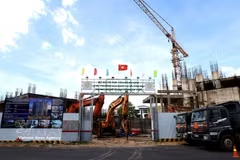
Delivering that remains difficult. Site clearance, building up clean land bases, and connecting electricity, water, transport and other basic infrastructure all demand coordination among multiple agencies, and must keep pace with project schedules.
HEZA is coordinating with relevant agencies to support investors and cut the time needed to process administrative procedures, according to her.
Incentives and distinctive edges
Ko Tae Yeon, Chairman of the Korean Chamber of Business in Vietnam (KoCham), said each industrial park should build its own competitive edge rather than compete only on available land. Environmental, social and governance (ESG) standards should be a core part of that approach, he said.
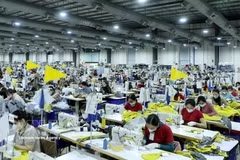
He also urged Hai Phong to build fuller ecosystems around its industrial parks, with more attention to housing, dormitories and amenities for workers. Parks should evolve from production sites into integrated development spaces, and their management bodies must operate effectively and work closely with firms, Ko said.
In the past nine months, the city set up six industrial parks, approving investment policies and investors at the same time, and nine parks broke ground. The municipal Department of Industry and Trade is pressing investors to finish the paperwork needed to start construction on three industrial clusters in the fourth quarter.
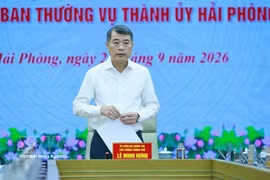
For the rest of 2026, Chairman of the municipal People’s Committee Do Thanh Trung told department, agency and local heads to follow the principle of "say it, do it; act immediately, act decisively, see it through to the end and deliver results." He has also ordered critical path schedules for each task under the "six clear" principle, with weekly meetings for thorough inspection and follow-up.
Departments and localities must also clear bottlenecks hampering production and trade, finish site clearance for key projects quickly, and tackle long-stalled projects once and for all. The aim is to speed up disbursement, make FDI attraction more effective and hit the city's 2026 socio-economic targets, he added./.