Hanoi (VNA) – Nghe An province aims to unlock its vast marine potential and leverage its strategic coastal location as a dynamic economic centre in the north-central region, Vice Secretary of the provincial Party Committee and Chairman of the provincial People’s Committee Vo Trong Hai has said.
In an interview with VietnamPlus e-newspaper, Hai said the marine economy was one of the growth drivers of Nghe An and its dynamic regional economy.
Substantial room to become a dynamic marine economic hub
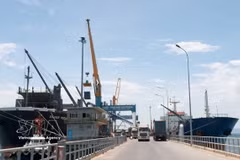
With more than 82km of coastline, six estuaries, six fishing ports and six cargo ports, as well as economic and industrial zones and coastal urban areas, Nghe has substantial room to develop its marine economy, Hai said.
Its distinctive advantage lies in its strategic geographical position along major economic corridors, Hai said, describing the province as a natural gateway to the sea for the north central region, Laos and northeastern Thailand through key inter-regional and international transport routes.
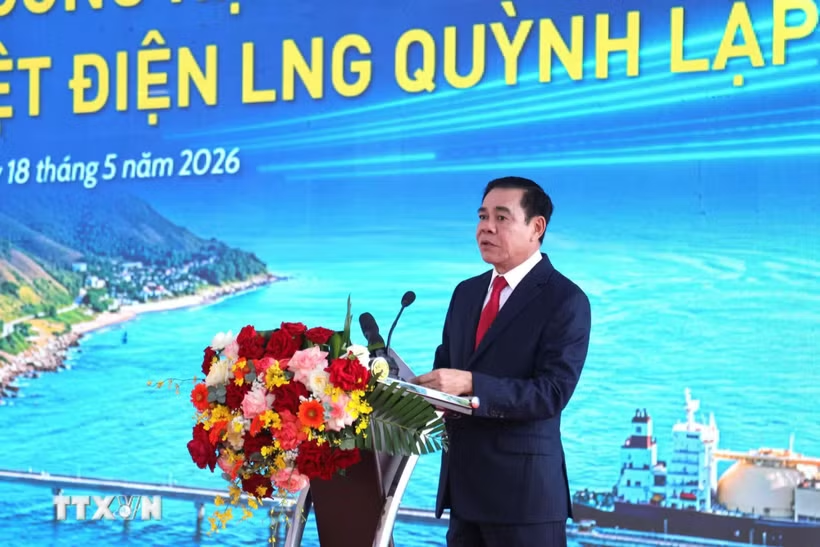
The province also has major infrastructure potential, notably the southeast Nghe An economic zone, one of the country’s key investment attraction areas, along with a rapidly developing seaport system. Construction began on deep-water Cua Lo port project in late 2025, and on the Quynh Lap LNG thermal power plant project in May 2026.
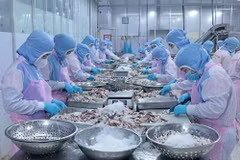
Hai noted that Nghe An also has diverse marine economic potential, ranging from fisheries and high-tech aquaculture to coastal industry and culturally distinctive marine and island tourism. These advantages, combined with the diligence and creativity of local people, provide a solid foundation for the locality to strengthen its position as a strong marine growth pole.
To turn regional connectivity advantages into tangible growth, Nghe An plans to focus on three major solutions, Hai said.
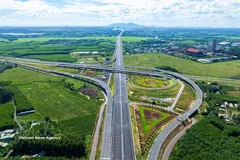
The province will continue to synchronise its transport infrastructure, building on projects already completed, including the coastal road linking Nghi Son in Thanh Hoa province with Cua Lo and the Vinh-Cua Lo route. It is also accelerating the Vinh-Thanh Thuy expressway project and upgrading Vinh International Airport.
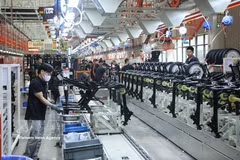
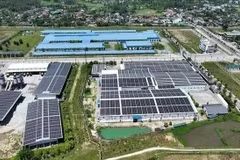
The southeast Nghe An economic zone will serve as a core for attracting a new generation of investment, with priority given to hi-tech industries, electronics, semiconductors, textiles and footwear for export. This is expected to generate greater demand for trade through the province’s seaports.
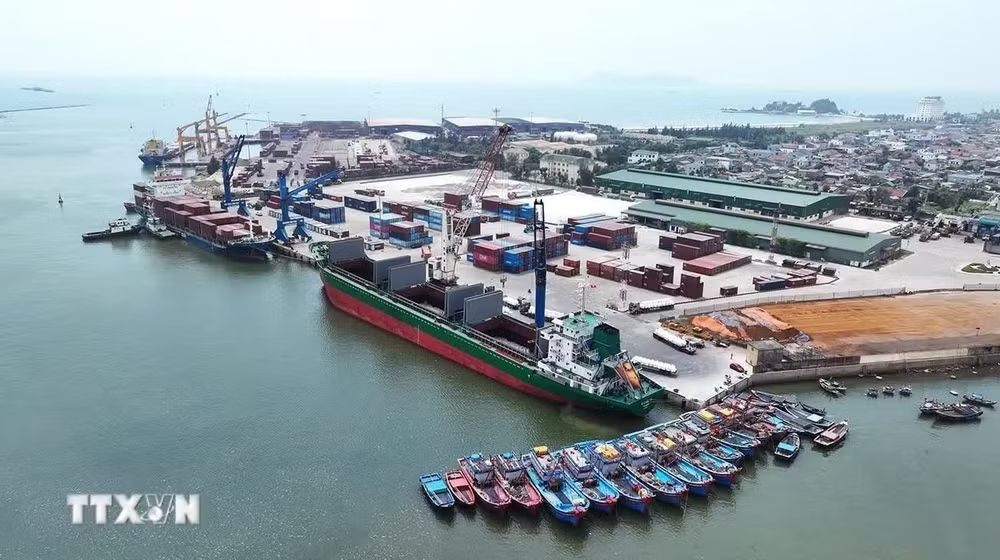
At the same time, Nghe An is seeking to build a green and sustainable logistics ecosystem by attracting big investors in warehousing and logistics. The locality has also introduced support policies for shipping lines operating domestic and international container services to and from Cua Lo port. Hai said the ultimate goal was to reduce logistics costs, improve competitiveness and turn Nghe An into a leading international cargo transit hub in the region.
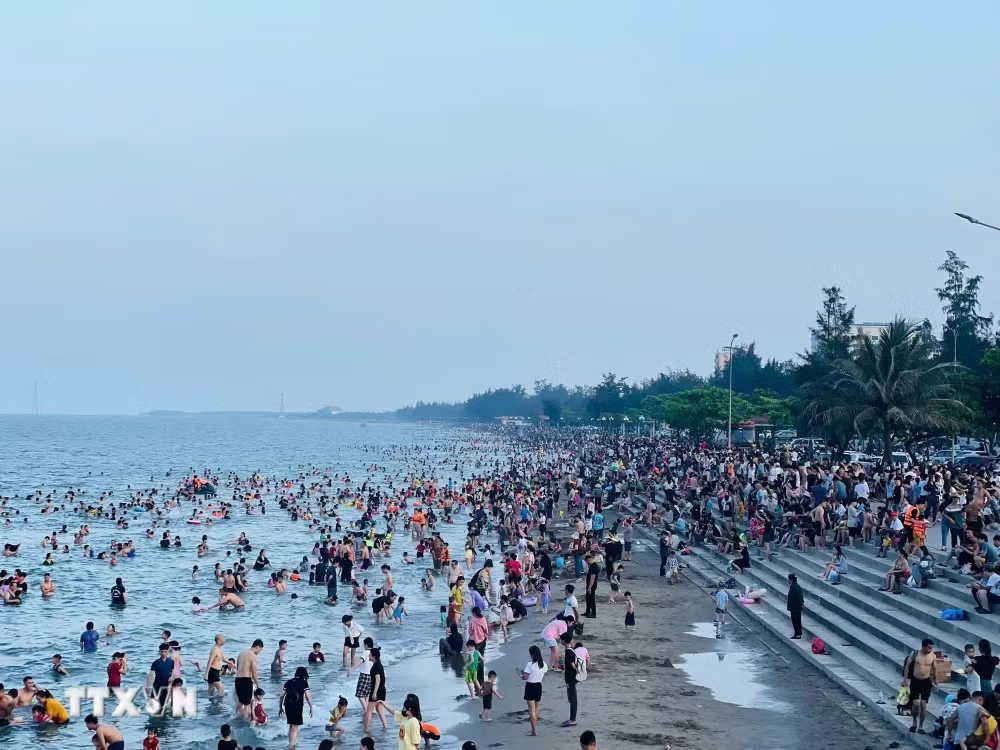
Nghe An welcomed 9.9 million visitors in 2025, with tourism service revenue exceeding 11.9 trillion VND (456.4 million USD), Hai said, adding that the province is working to further develop sustainable marine tourism while reducing its seasonal nature. Alongside traditional beach resorts in Cua Lo, Cua Hoi and Bien Quynh, Nhe An is diversifying products through ecotourism and island exploration, cultural and spiritual tourism, cuisine and coastal craft village experiences.
The province is also investing in large-scale infrastructure and services, including high-end entertainment complexes and four- and five-star hotels.
Night-time economic activities, including pedestrian streets, night markets, food streets and street performances, as well as intra- and inter-provincial tours connecting Cua Lo and Vinh with Nam Dan and western Nghe An, are also being promoted.
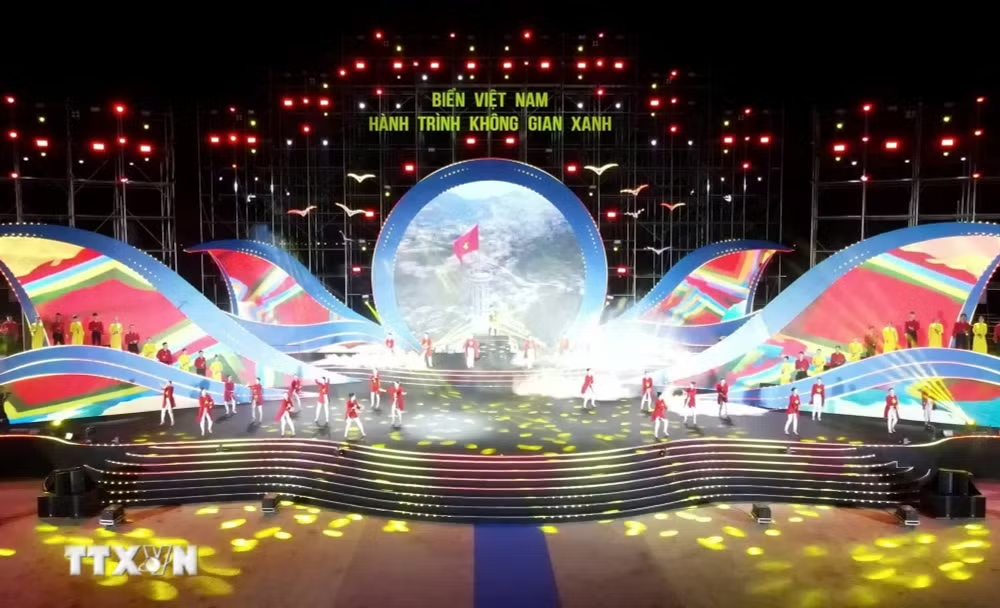
Hai acknowledged that the province still faced challenges, including inconsistencies between marine economic planning and urban, transport and logistics infrastructure. Coastal infrastructure, particularly seaports and logistics, has yet to fully keep pace with business growth, while social investment in infrastructure remains limited. The province also faces shortages of high-quality human resources for seaports, maritime services, logistics and high-end tourism. Meanwhile, the region still suffers from coastal erosion, seawater intrusion, sedimentation at river and sea mouths, plastic waste and coastal wastewater pollution.
Strengthening regional and international connectivity
The official stressed that “the marine economy cannot develop if it stands alone,” highlighting the importance of regional and international cooperation. Nghe An is strengthening links with neighbouring Thanh Hoa and Ha Tinh provinces to develop complementary coastal tourism value chains and coastal industrial infrastructure, he said, noting that the coastal road connecting Nghi Son with Cua Lo demonstrates the effectiveness of such infrastructure connectivity.
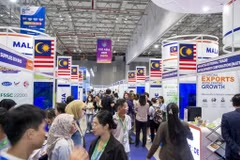
The local authorities are leveraging external transport routes to connect goods from Laos and northeastern Thailand with Nghe An’s seaports. It is also accelerating the Vinh-Thanh Thuy expressway and seeking to attract high-quality foreign direct investment.
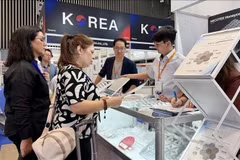
According to the official, recent FDI projects have contributed directly to global supply chains in electronics, semiconductors and garment manufacturing. These projects include combined investment of hundreds of millions of USD from major groups such as Luxshare, Goertek, Ju Teng, Foxconn and Everwin.
Looking toward 2045, Hai said Nghe An will become a dynamic, modern economic centre and an important international gateway for the north-central region, with modern deep-water ports, smart coastal urban areas, year-round marine tourism and a well-preserved marine environment./.