Hanoi (VNA) – In a world of rapid and complex change, Vietnam’s foreign policy of independence, self-reliance, multilateralisation, diversification and proactive, active international integration is expanding the country’s space for cooperation and enhancing the country’s standing and strength. From bilateral relations to multilateral forums, and from the economy, science and technology to defence, security and people-to-people diplomacy, practical developments show that this policy is being translated into increasingly concrete outcomes.
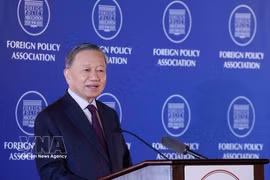
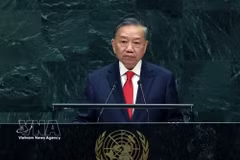
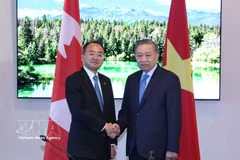
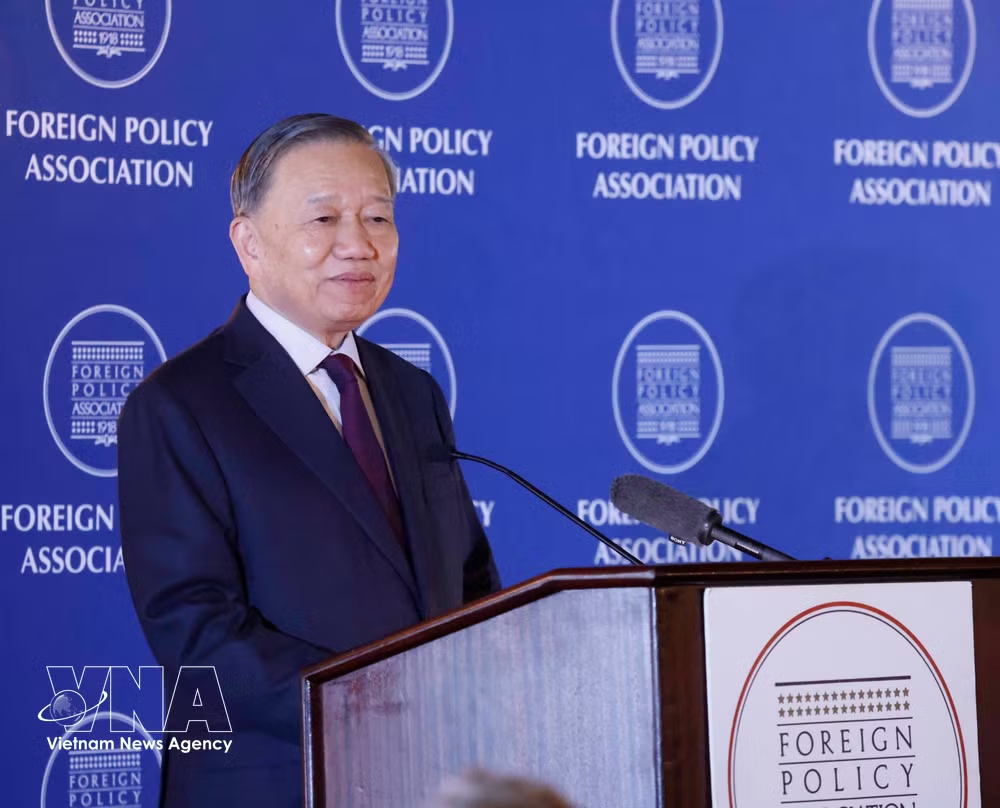
Speaking at the Foreign Policy Association (FPA) of the US recently, General Secretary of the Communist Party of Vietnam Central Committee and President To Lam stressed that “trust built over decades must continue to be nurtured through concrete cooperation results that people in both countries can feel in their daily lives”.
The Party and State leader’s remarks conveyed a clear message that good relations between countries only have real meaning when they produce tangible results of cooperation. This also reflects the foreign policy thinking set out at the 14th National Party Congress, which defined external relations as a “key and regular task”, requiring not only expanded relations but also more effective international integration and the transformation of diplomatic ties into resources serving national development and defence.
Vietnam-Hungary relations offer a clear illustration through concrete figures. The two countries are comprehensive partners and are working continuously to deepen and strengthen ties across various fields. Vietnam and Hungary aim to raise bilateral trade to 2 billion USD a year and expand cooperation in investment, science and technology, education, healthcare and pharmaceuticals. More than 3,000 Vietnamese scientists and experts have also been trained in Hungary, forming an important bridge between the two countries.
In relations with Malaysia, two-way trade reached 21.59 billion USD in 2025, up 19%. Malaysia currently has about 6.1 billion USD in investment in Ho Chi Minh City, mainly in banking and real estate. These figures show that the cooperative framework is becoming increasingly substantive through investment, trade, technology and people-to-people exchanges.
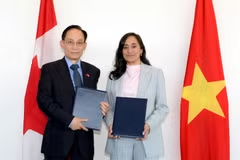
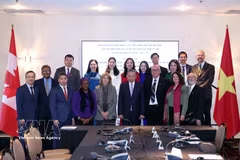
With the US, the importance of tangible cooperation outcomes is even more evident. Agreements related to two projects addressing the consequences of chemical and dioxin contamination from the war in Vietnam represent practical steps that contribute to advancing the Comprehensive Strategic Partnership between the two countries.
For the Bien Hoa Airport dioxin remediation project, the US has decided to provide an additional 130 million USD in non-refundable ODA, raising total project funding from 300 million USD to about 430 million USD. For the project on improving the quality of life of people with disabilities in heavily sprayed Agent Orange-affected provinces, the US has committed 91 million USD in non-refundable aid to expand healthcare, rehabilitation and social services. The project will initially be implemented in Ca Mau and Quang Ngai provinces before gradually expanding to other key areas.
Vietnam-US relations are also expanding into areas that determine competitiveness, including education, science and technology, research and development, technology transfer and human resource training. These areas not only bring additional resources but also help strengthen Vietnam’s capabilities.
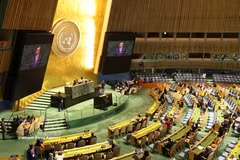
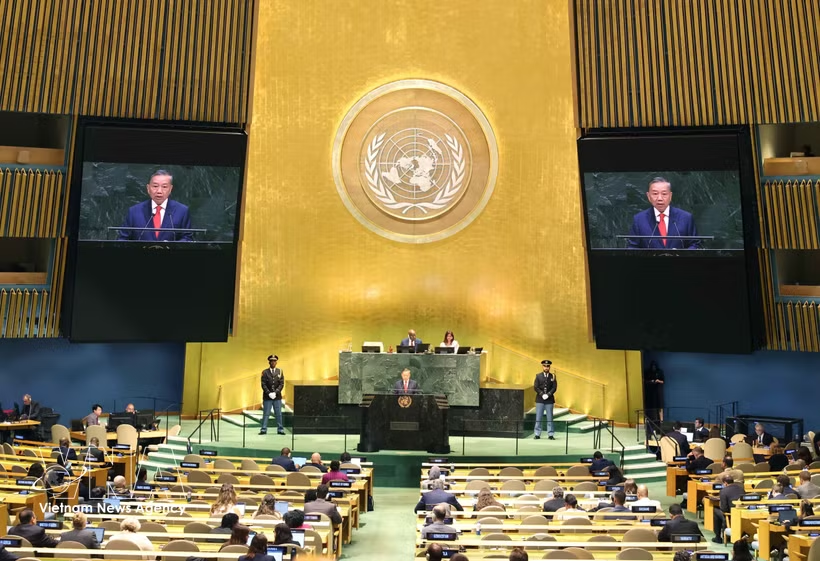
At the high-level general debate of the 81st session of the United Nations General Assembly, before heads of state and government and leaders and representatives of participating countries, General Secretary and President Lam outlined four major directions: restoring trust; promoting fair, inclusive and sustainable development; proactively shaping technology governance; and strengthening multilateralism and the central role of the United Nations.
He also stressed that self-reliance does not mean standing apart from the world, but rather “proactively adapting and cooperating with the world on an equal footing”. Accordingly, Vietnam consistently pursues a foreign policy of independence, self-reliance, self-strengthening, peace, friendship, cooperation and development, along with the multilateralisation and diversification of external relations.
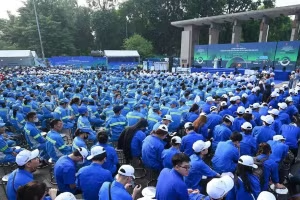
This policy is demonstrated not only at international forums but also through concrete actions. After more than 12 years of participating in UN peacekeeping operations, Vietnam has deployed more than 1,600 officers, personnel and staff from the Vietnam People’s Army and People’s Public Security. On September 22, Level-2 Field Hospital Rotation 8, comprising 63 military personnel, and Engineer Company Rotation 5, with 184 officers and personnel, departed to undertake their missions. These practical contributions demonstrate Vietnam’s commitment to fulfilling its international responsibilities through concrete action.
Vietnam’s relations with Laos, China, Russia, the US, Hungary, Malaysia and many other partners show that external relations are being pursued at multiple levels, from politics, economics, defence and security to education, science and technology and people-to-people exchanges.
The broader the network of relations, the clearer the requirement that their results must contribute to domestic development. Attracting advanced technology requires institutions and human resources capable of meeting the relevant demands. Expanding markets requires businesses to strengthen their competitiveness. Deeper participation in supply chains requires adequate infrastructure, data, logistics and supporting industries. And for Vietnam’s voice on the international stage to carry greater weight, the country needs strong economic, defence and security capabilities and broad social consensus.
The 14th National Party Congress placed foreign affairs among the “key and regular tasks”. In a world full of risks and uncertainties, no country can develop by closing itself off. But international integration does not mean dependence. The key is to expand cooperation while safeguarding independence and self-reliance and harnessing external resources to strengthen domestic capacity.
When positive international relations create greater opportunities for businesses, people and the country to prosper, the effectiveness of foreign affairs will become increasingly visible in people’s daily lives./.