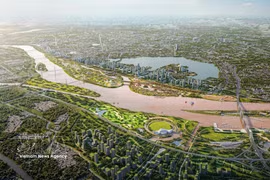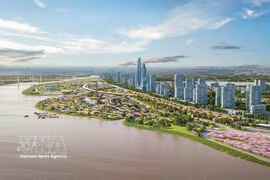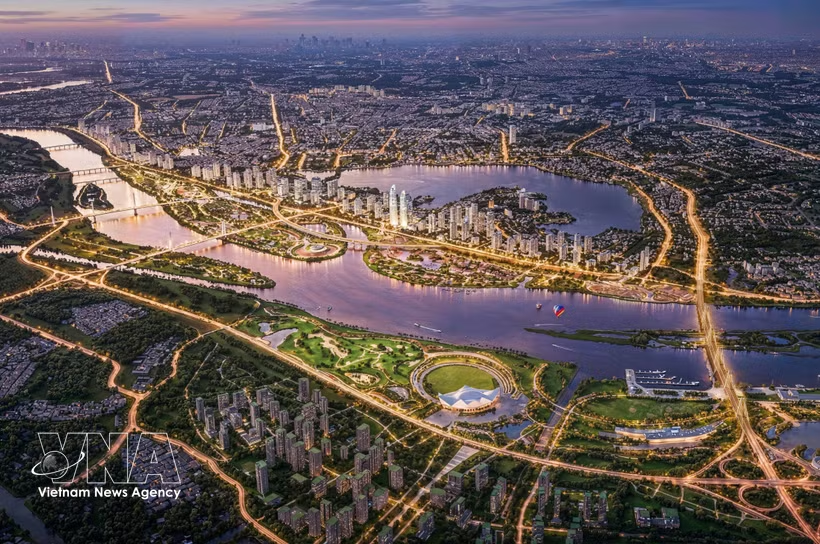
Hanoi (VNA) – A major planning scheme can only be effective when people are provided with sufficient information, clearly understand issues that affect them and have opportunities to contribute their opinions. This is particularly important for the comprehensive adjustment of the Red River urban zone master plan, as the study area stretches about 40km and directly affects many residential areas and the long-term development of Hanoi.
What residents need to know
Hanoi began collecting public opinions on September 7 on the comprehensive adjustment of the master plan, at a scale of 1:5,000, covering the section from Hong Ha Bridge to Me So Bridge. Community consultation will last 20 days from the date the planning documents are made public.
Under Plan No. 176/KH-SXD dated September 5, issued by the municipal Department of Construction, direct consultations are being conducted in 16 wards and communes within the planning boundary and eight others in affected areas. Residents across the city can also study the documents and submit opinions electronically.
Public interest in the planning is understandable, as it involves not only the organisation of urban space along the two riverbanks, but also transport, technical infrastructure, landscape, the environment, flood prevention and control, heritage preservation, and the renovation and upgrading of existing residential areas.
For people living in the study area, their concerns are very specific: how their neighbourhood will be developed; which residential areas will be retained, upgraded or redeveloped; where roads, schools, parks and public facilities will be located; how historical sites, craft villages and religious spaces will be preserved; and what policies will be applied if relocation is required.
These questions need to be answered on the basis of official planning documents. When information is incomplete or interpreted differently, people may confuse a proposal under study with an approved decision, a planning boundary with the scope of land acquisition, or a planning orientation with a specific investment project.
Plan No. 102-KH/TU dated September 5 of the Hanoi Party Committee requires information to be accurate, objective, timely and easy to understand, and ensure unified information sources, data and communication messages from the city to the grassroots level. This is an important foundation for ensuring that public consultation goes beyond a procedural requirement and genuinely enables residents to participate in refining the planning scheme.
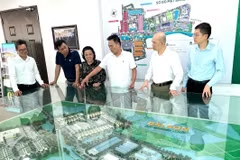
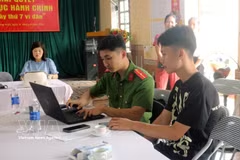
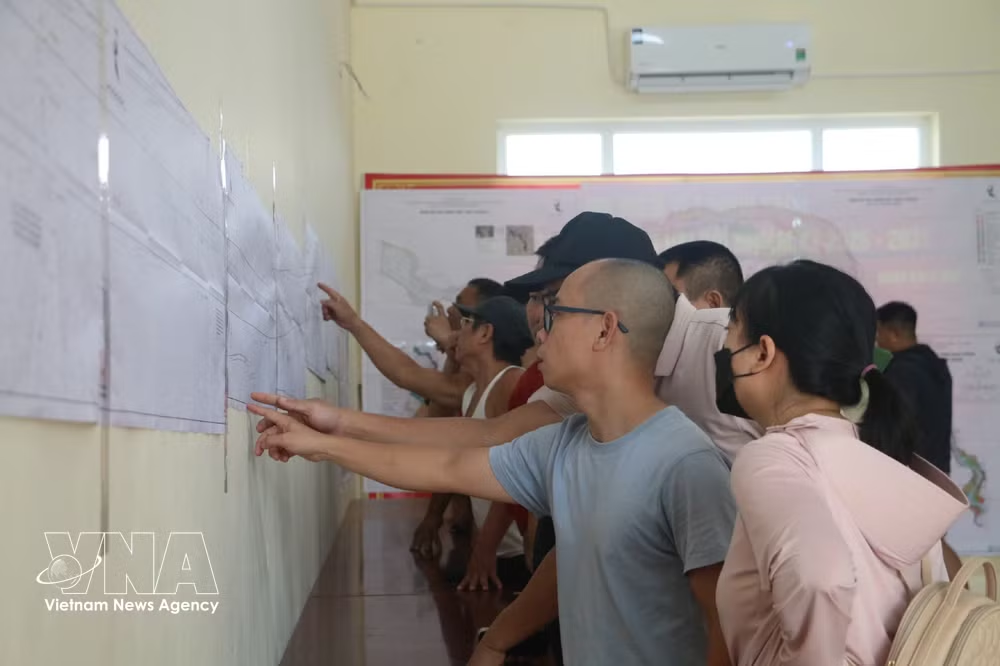
Planning documents and consultation forms are being displayed at ward- and commune-level People's Committee offices and public community facilities. Meanwhile, electronic documents and feedback forms are also available on the websites of the municipal People's Committee, the Department of Construction, the Hanoi Urban Planning Institute and local authorities.
The combination of direct and online consultation provides greater convenience. Residents can study maps and documents in person at display sites or access the materials and submit feedback electronically if they are unable to visit the sites.
Grassroots experience shows that making planning documents public means more than simply putting materials online or displaying drawings at a fixed location. Planning schemes contain complex technical information, symbols and maps, so residents need guidance on how to identify their location and determine the issues on which they can provide meaningful feedback.
Officials at consultation sites therefore have an important role in assisting residents, recording their questions and referring issues beyond their authority to specialised agencies. Information provided at different sites should also be consistent to avoid confusion.
A particularly important distinction is that public consultation on the planning scheme is not the same as decisions on investment, land acquisition, compensation, support, resettlement or the implementation of a specific project. The current consultation concerns the comprehensive adjustment of the Red River urban zone master plan and does not mean that decisions concerning individual land plots or households have already been issued.
Clarifying this distinction will help residents focus their feedback while preventing unnecessary concern caused by unfounded information.
Feedback must be received and explained clearly
Residents also want to know how their opinions will be received, compiled and addressed.
Under Plan No. 176/KH-SXD, the Hanoi Urban Planning Institute will coordinate with the municipal Department of Construction, the Architecture and Planning Project Management Board and relevant agencies to compile, consider and explain public feedback and complete the planning documents before they are submitted for appraisal and approval. The report on the reception and explanation of feedback must be made public.
This is a crucial stage in ensuring that public participation has tangible value. Opinions concerning resettlement, livelihoods, transport, schools, public spaces, the environment, heritage and flood prevention should be grouped by issue for careful consideration and clear responses.
Amid the large volume of information surrounding urban planning, if authorities fail to proactively provide documents and respond promptly to questions, information gaps can quickly be filled with speculation. An unverified drawing or an outdated proposal could easily be mistaken for an official document currently under consultation.
City agencies and local authorities therefore need to maintain unified information sources, regularly update progress and proactively clarify issues attracting public attention. Matters that have been decided must be clearly identified, while proposals still under study or awaiting public feedback should also be explicitly labelled.
Plan No. 102-KH/TU calls for close coordination between information provision and dialogue, reception and response to public feedback. It also assigns responsibility to heads of Party committees, administrations, agencies and localities for delays, negligence or errors in providing information. The Vietnam Fatherland Front and socio-political organisations, together with grassroots officials, are tasked with conveying information to residential areas, understanding public concerns and accurately reporting issues of interest.
Press agencies should verify sources, use terminology accurately and clearly distinguish between planning schemes, investment projects, proposals under study and approved decisions. Sensational or unfounded information concerning land acquisition, site clearance, compensation or resettlement could cause misunderstanding and directly affect people's lives.
Residents should also seek information from official channels, verify sources before sharing them and submit specific feedback on issues concerning their neighbourhoods and daily lives. Practical opinions can help planning agencies identify issues that maps and technical data may not fully capture.
The comprehensive adjustment of the Red River urban zone master plan is an important step in organising a space of particular significance to Hanoi's history and future. The more transparent the process, the clearer the information and the more seriously public opinions are considered, the stronger the foundation for consensus will be.
Transparency, therefore, is not simply about informing people that a planning scheme is being prepared. It is about enabling them to understand, participate in and monitor how their opinions are considered. When information is provided proactively and dialogue is maintained throughout the planning process, social consensus can be built on trust and a shared sense of responsibility./.