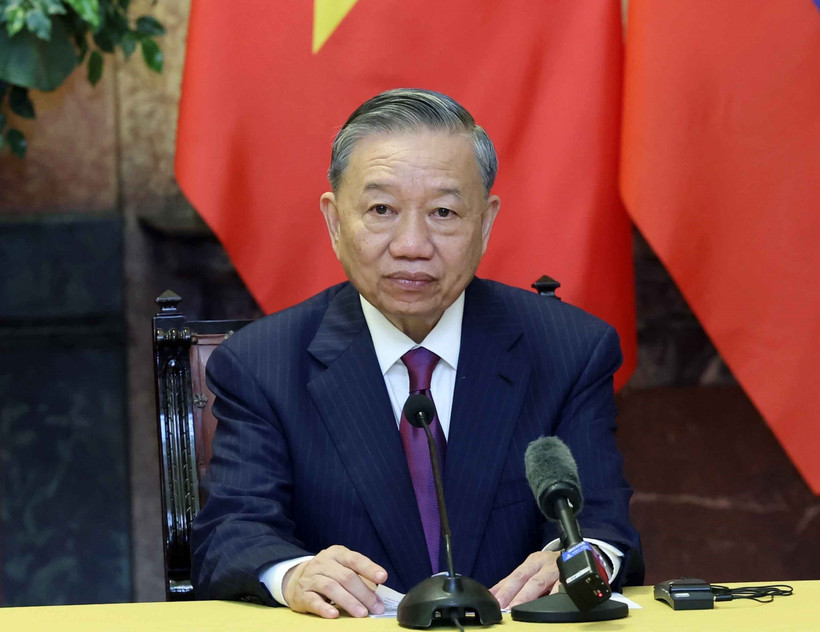
Hanoi (VNA) – Party General Secretary To Lam has written an article requesting breakthroughs in institutions and laws for the country to enter a new era – the era of the nation’s rise.
The Vietnam News Agency (VNA) respectfully introduces a translation of this article:
INSTITUTIONAL, LEGAL BREAKTHROUGHS FOR NATION’S RISE
To Lam
General Secretary of the Communist Party of Vietnam Central Committee
Throughout the course of leading the Vietnamese revolution, our Party has always deeply recognised the vital role of institutions and laws in the development of the country. At the same time, the Party has introduced numerous guidelines and policies aimed at improving the institutional and legal framework in accordance with each historical period, and has achieved many important results. Theoretical mindset and awareness about the socialist rule-of-law state have been continuously improved. Our country has developed a relatively comprehensive, public, transparent, and accessible legal system that fundamentally regulates all aspects of social life, including the Constitution, major codes and laws in civil affairs, business, trade, administration, criminal affairs, litigation, and dispute solution, along with approximately 300 other valid laws and legal codes, creating a legal foundation for socio-economic development, national defence and security assurance, and international integration. It can be affirmed that over the past 80 years, since the establishment of the worker-peasant state, under the leadership of the Party, our country has achieved independence, reunification, freedom, democracy, peace, stability, and development because we have had the Constitution and have successfully implemented the Constitution and laws.
However, we should frankly acknowledge that the work of law-making and law enforcement still faces numerous limitations and shortcomings. Some of the Party’s policies and orientations have not been institutionalised in a timely and comprehensive manner. The mindset of law-building in certain areas remains overly focused on management. The quality of laws has not kept up with practical requirements. There are still overlapping, contradictory, and unclear regulations that hinder implementation and are not conducive to fostering innovation, attracting and unlocking investment resources. The decentralisation and delegation of authority are not strong enough; administrative procedures remain cumbersome and “full of twists and turns”; and compliance costs remain high. Law enforcement continues to be a weak link, lacking timely and effective policy response mechanisms. The research and issuance of policies and laws to address emerging issues are slow, and the legal framework has yet to create favourable conditions to promote new drivers of growth.
Currently, the world is undergoing epochal changes with rapid, complicated, unpredictable and difficult-to-forecast developments. Along with that, the scientific and technological revolution is opening up boundless development space grounded on knowledge and human potential. Domestically, after nearly 40 years of implementing the Doi Moi (Renewal) cause, our country has achieved great and historically significant accomplishments. From a poor, backward country heavily devastated by war, besieged and isolated, Vietnam has now become a development model for many countries in the world, "everyone has food to eat, clothes to wear, and access to education". In 2024, Vietnam’s economy ranked 32nd in the world. Economic, political, cultural, social, scientific - technological, national defence and security capacities have been continuously strengthened. Foreign relations have expanded, and the nation’s international position and prestige have been steadily enhanced.
To realise the nation's aspiration to rise up, we must address numerous tasks, among which a very central priority is to continue improving institutions and laws to fully unleash productive forces, unlock all available resources, harness the country’s potential and strengths, and seize every development opportunity. Therefore, along with the ongoing revolution on streamlining the organisational apparatus and striving for “double-digit” economic growth, the work of law-making and law enforcement must undergo a fundamental transformation. In response to this requirement, on April 30, 2025, amidst the solemn and heroic atmosphere of the 50th anniversary of national reunification, the Political Bureau issued Resolution No. 66-NQ/TW on “Renovating the law making and enforcement process to meet the national development requirements in the new era” - a particularly important thematic resolution containing many strategic decisions. The main objectives of the Resolution are to build a truly democratic, equitable, safe, and transparent society where the people are truly the masters of the country, making decisions on major national matters; to manage and govern a modern society; to create development; and to improve all aspects of life for the people, and firmly protect the socialist Vietnamese Fatherland.
The Resolution sets the target that, by 2030, Vietnam will have a democratic, equitable, synchronic, unified, transparent, and feasible legal system, supported by a strict and consistent enforcement mechanism that will ensure a solid legal foundation for the normal, uninterrupted, and smooth operation of agencies after the apparatus restructuring; solve obstacles arising from reality; pave the way for development creation; and mobilise all citizens and businesses to participate in socio-economic development so that by 2030, Vietnam will become a developing country with modern industry and upper-middle income. In 2025, the “bottlenecks” caused by legal regulations will be fundamentally solved. By 2027, the amendments, supplements, and issuance of new legal documents will be completed to ensure a synchronic legal foundation for the operation of the state apparatus under a three-level administration model. By 2028, the system of laws on investment and business will be perfected to help Vietnam’s investment environment rank among the top three in ASEAN. By 2045, Vietnam will have a high-quality, modern legal system that approaches advanced international standards and practices and is suitable for the country's reality and will be enforced strictly and consistently, respect, ensure and effectively protect human rights and civil rights. Respecting the Constitution and the law will become the standard of conduct for all subjects in society, along with modern national governance with a streamlined, efficient, and effective state apparatus.
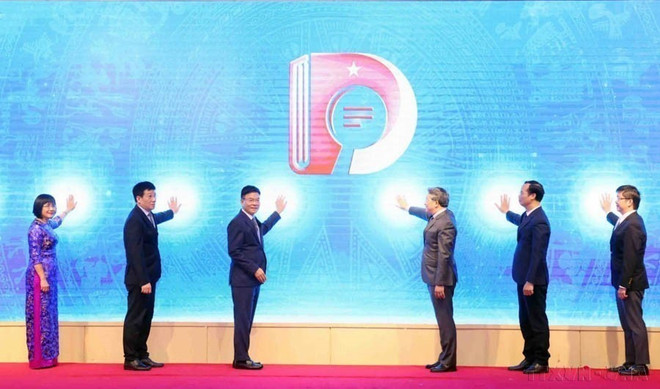
According to Resolution No. 66-NQ/TW, the reform of law making and enforcement in the coming period should closely follow five guiding principles, with the top priority being to "ensure the Party's comprehensive and direct leadership in the law-making work and strengthen the Party’s leadership in law enforcement.” The Resolution also defines “law making and enforcement as the ‘breakthrough of breakthroughs’ in improving the national development institutions in the new era; and as a key task in the process of building and perfecting the Vietnamese socialist rule-of-law state of the people, by the people, and for the people, and under the Party’s leadership.” The Resolution emphasises that law-making must closely follow reality and be “grounded on Vietnam’s practical conditions,” selectively absorb the quintessence of human values, ensure systematicity, seize all opportunities, pave the way, and unlock all available resources. Institutions and laws should become a competitive advantage, a solid foundation, and a powerful driving force for development, creating room for double-digit economic growth, improve people's living standards, and ensure national defence, security, and foreign affairs. The Resolution highlights the improvement of the effectiveness of law enforcement, with a focus on fostering a culture of legal compliance. It affirms that investing in the policy and law-making work is an investment in development.
To bring Resolution No. 66-NQ/TW to life and achieve tangible results, the entire Party, people, and army must thoroughly grasp and effectively carry out the tasks and solutions in the Resolution, especially the following key tasks and solutions:
First, it is a must to ensure the Party’s comprehensive and direct leadership in law-making, while fully promoting Party characteristics in law building and enforcement. Party committees at all levels must comprehensively and directly lead the institutionalisation of the Party’s guidelines and policies into laws, and strengthen the inspection and supervision of this process. Each official and Party member must set an example, take the lead in complying with and adhering to the law, and spread the spirit of respecting the Constitution and law. It is essential to identify the building and improvement of institutions and laws, as well as the inspection and supervision of law enforcement, as a key and regular task for ministries and centrally-run agencies. The heads of ministries and ministerial agencies must take direct leadership and oversight of law-making activities and be primarily responsible for the quality of policies and laws within their ministries or agencies’ jurisdiction.
Second, it is necessary to renew the mindset and orientation of law-making in a way that both ensures state management and encourages creativity, unleashes all production potential, and unlocks all resources for development. Law-making must fully, correctly, and promptly institutionalise the Party’s guidelines and policies; be based on the overall interests of the country; decisively abandon the mindset of "if it can't be controlled, then ban it"; promote democracy, and respect, ensure, and effectively protect human rights and citizens' rights; and ensure a balance between the restriction of rights and the legitimate benefits achieved. Law provisions must be stable, simple and easy to implement, and place people and businesses at the centre. Emphasis should be placed on proactively studying strategies and policies early, based on practical experience and global knowledge, contributing to enhancing predictability and improving the quality of law-making. Alongside certain codes and laws regulating human rights, citizens' rights, and judicial procedures that need to be specific, other laws, particularly those governing development-related matters, should primarily set out framework issues and principles within the scope of the National Assembly’s authority. Meanwhile, practical and frequently changing matters should be assigned to the Government, ministries, agencies, and localities to regulate, ensuring flexibility and alignment with reality.
In the short term, it is necessary to focus on building a favourable, open, transparent, safe legal environment with a low compliance cost; thoroughly reduce and simplify unreasonable investment, business, professional practice conditions and administrative procedures; and promote innovative startups while improving the investment and business environment. It is a need to ensure the genuine freedom to do business, the right to property, and the freedom of contract; equality between businesses of all economic sectors; and recognise the private economic sector as the most important driving force of the national economy. Focus should be placed on developing laws related to science, technology, innovation, and digital transformation. Urgent actions are needed to amend and supplement legal documents to meet the requirements of streamlining the organisational structure of the political system, restructuring administrative units, while maximising decentralisation and delegation of authority based on the principle "localities decide, localities implement, localities take responsibility," and restructuring new development spaces in each area. Another task is to develop and improve the laws on the organisation and operation of judicial and judicial support agencies in line with the goals and directions of judicial reform.
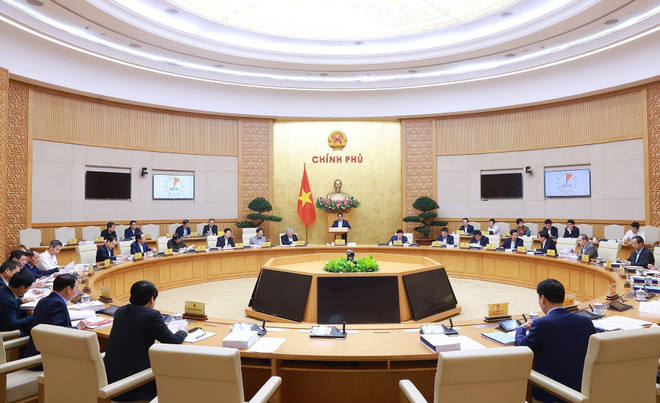
Third, breakthroughs should be created in law enforcement. It is important to strongly promote the spirit of serving the public, a development-oriented mindset, and actions for the common good among officials, civil servants, and public employees. Effective law enforcement needs to be prioritised to promote socio-economic development, science, technology, innovation, digital transformation, and other vital areas of the public. Focus should be given to building a culture of legal compliance, and ensuring the rule of Constitution and the law become the standard of conduct for all subjects in society. It is necessary to pay due attention to legal interpretation and guidance on law implementation. While dialogue as well as the reception and openness to feedback and recommendations should be increased, law-related difficulties and problems facing individuals, organisations, businesses, and localities be promptly resolved. In addition, it is a need to regularly evaluate the effectiveness of laws after their promulgation, promote the application of technology, and build a mechanism for identifying promptly, handling comprehensively and synchronously, and removing "bottlenecks" caused by legal regulations as soon as possible.
Fourth, the effectiveness of international legal cooperation and international law needs to be improved. The capacity of Vietnamese agencies and organisations must be enhanced to ensure the full implementation of international legal obligations. The country should efficiently participate in the building of international institutions and laws, along with the shaping of the international legal order. Emerging international legal issues need to be efficiently handled, especially those involving international investment and trade disputes. A special mechanism should be implemented to attract, recruit, train, and foster highly qualified human resources with practical experience in international law and international legal cooperation, along with in resolving international disputes; while a strategy be developed to increase the presence of Vietnamese experts in international legal organisations and international jurisdiction bodies. International cooperation in legal and judicial affairs also need to be expanded.
Fifth, breakthrough solutions should be carried out to improve the quality of legal human resources; digital transformation accelerated, artificial intelligence (AI) and big data applied, and a special financial mechanism established for law making and enforcement activities. It is necessary to implement specific and outstanding policies while applying appropriate remuneration and contract regimes to attract and improve the quality of human resources participating in law-making and enforcement tasks. More attention should be paid to improving the quality of strategy, policy, and law research institutions of central agencies. Resources should be prioritised for building and developing information technology infrastructure and big data systems, as well as applying digital technology and AI to serve the innovation and modernisation of law making and enforcement. The project on building a big legal database and the one on applying AI to the building, checking and review of legal documents must be immediately implemented. It is important to reform the mechanism for allocating, managing, and using the budget for law-making activities on the principle of timeliness, accuracy, and adequacy, and to associate spending with the results and products of each task and activity. A fund should be established to support the building of policies and laws.
Quality institutions and laws, consistent with development requirements in reality and the aspirations of the people, are the decisive factors for the success of each nation. Therefore, for the country to advance and develop strongly, we must resolutely say “no” to any institutional and legal limitations or shortcomings; make no compromise with any weaknesses in policy design, law drafting, or enforcement. With the mettle and valuable experiences that the Party has accumulated over 95 years of leading the nation's revolution, the experiences gained during 80 years of leading the State in institutional and legal building, especially during 40 years of carrying out the Doi moi (Renewal) process, together with the participation of the entire political system and the support of the whole people, we will certainly succeed in reforming the building and enforcement of laws, helping the country progress into a new era – one of prosperity, civilisation, prosperity and development, building our country "ten times better than it is today" as Uncle Ho once wished./.