PM suggests priorities for elevating, deepening ASEAN-China cooperation

First, Prime Minister Le Minh Hung stressed that the two sides should continuously strengthen strategic trust and maintain an environment of peace and stability. The PM called for expanded exchanges and cooperation, stronger coordination in responding to emerging non-traditional challenges, and enhanced cooperation at the United Nations and other multilateral forums.

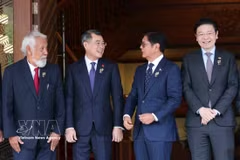
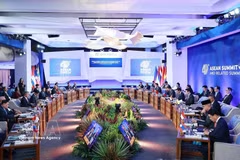
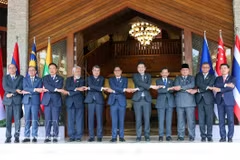
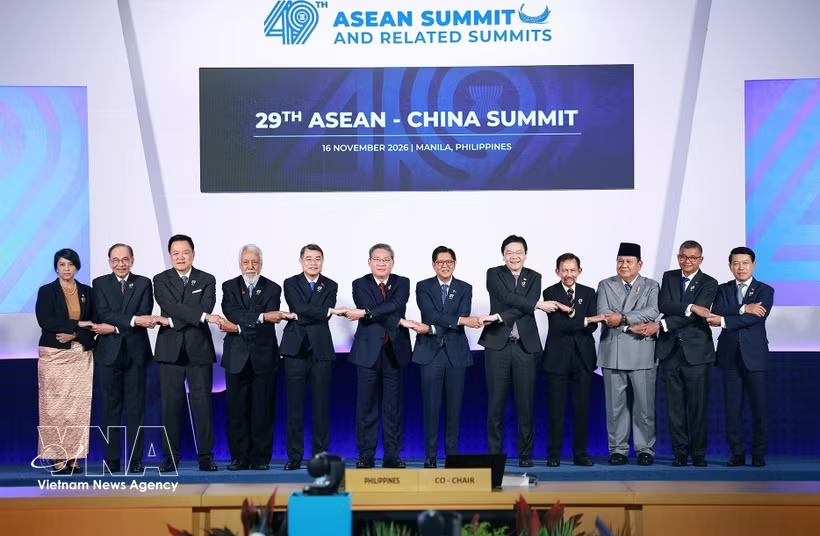
Prime Minister Le Minh Hung (fifth, left) and other ASEAN leaders and Chinese Premier Li Qiang at the 29th ASEAN-China Summit (Photo: VNA)

Manila (VNA) – Prime Minister Le Minh Hung proposed three strategic priorities for elevating and further deepening ties between the Association of Southeast Asian Nations (ASEAN) and China at the 29th ASEAN-China Summit on November 16 in Manila, the Philippines within the framework of the 49th ASEAN Summit and related meetings.

First, PM Hung stressed that the two sides should continuously strengthen strategic trust and maintain an environment of peace and stability. The PM called for expanded exchanges and cooperation, stronger coordination in responding to emerging non-traditional challenges, and enhanced cooperation at the United Nations and other multilateral forums.

Regarding the East Sea, the Vietnamese leader urged both sides to maintain the current momentum and work towards an early conclusion of an effective and substantive Code of Conduct in the East Sea (COC) in accordance with international law, particularly the 1982 United Nations Convention on the Law of the Sea (UNCLOS), while continuing to fully and seriously implement the Declaration on the Conduct of Parties in the East Sea (DOC).

Second, ASEAN and China should improve the quality of cooperation and strengthen strategic connectivity. PM Hung proposed prioritising implementation of the upgraded ACFTA 3.0 Protocol, promoting cross-border railway routes, smart border gates and cross-border economic cooperation zones, connecting the ASEAN Power Grid (APG), upgrading key economic corridors and promoting Mekong subregional development.

Third, science and technology, innovation and digital transformation should become new pillars of cooperation, he said. The PM called for stronger links among innovation centres, research institutes, universities and technology businesses, as well as joint research and high-quality human resource training. On this occasion, he welcomed stronger ASEAN-China cooperation in artificial intelligence.
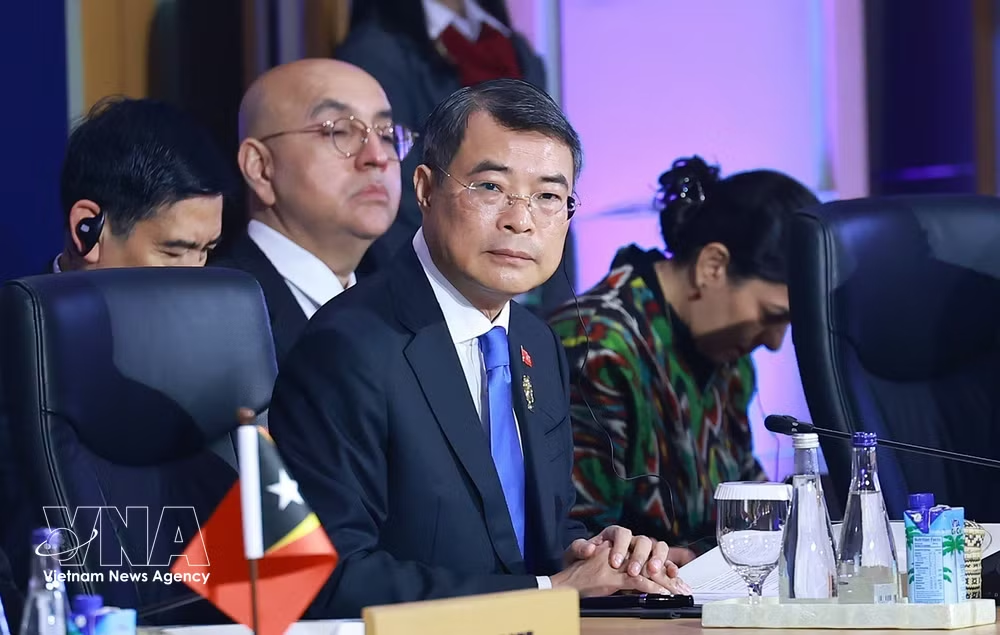
vnanet_potal-thu-tuong-le-minh-hung-du-hoi-nghi-cap-cao-asean-trung-quoc-lan-thu-29-9156800.jpg
Prime Minister Le Minh Hung attends the 29th ASEAN-China Summit on November 16 in Manila, the Philippines (Photo: VNA)

At the summit, as ASEAN and China mark the 35th anniversary of their dialogue relations and the fifth anniversary of their Comprehensive Strategic Partnership (2021-2026), leaders noted and welcomed the comprehensive progress made in ASEAN-China relations across all areas, bringing practical benefits to both sides.

For many consecutive years, ASEAN and China have been each other's leading trading partners. In 2025, two-way trade reached 913.10 billion USD, while Chinese foreign direct investment (FDI) in ASEAN totalled 26.24 billion USD. Political and security cooperation has continued to strengthen through ASEAN-led mechanisms. Cultural and people-to-people exchanges, as well as cooperation in sports and tourism, have also flourished. In 2025, ASEAN countries welcomed 21.8 million Chinese visitors.

Looking ahead, the leaders reaffirmed their determination to deepen the ASEAN-China Comprehensive Strategic Partnership, ensuring that it is closely aligned with and supports the ASEAN Community-building process, while contributing to peace, stability and prosperity in the region.

The two sides agreed to make effective efforts to implement the ASEAN-China Plan of Action for 2026-2030, giving high priority to stronger economic and trade connectivity and, in particular, the effective implementation of the upgraded ASEAN-China Free Trade Area (ACFTA 3.0) Protocol once it takes effect in this December. This is expected to enhance resilience and promote inclusive growth.

They will also expand exchanges and cooperation in science and technology, artificial intelligence (AI) and digital transformation, as well as in energy and food security, infrastructure connectivity, agriculture, poverty reduction and narrowing development gaps. Cooperation in education, healthcare and culture, along with people-to-people exchanges, will also be strengthened.

On regional and international developments, the two sides underscored the need to maintain peace and stability and agreed to strengthen coordination through ASEAN-led mechanisms and multilateral forums, while upholding dialogue, cooperation, multilateralism and international law.

Regarding the East Sea, the leaders shared the importance of maintaining peace, stability, security and safety, as well as freedom of navigation and overflight. They pledged to promote dialogue and confidence-building, peacefully settle disputes, fully and effectively implement the DOC, and work towards the early conclusion of an effective and substantive COC in accordance with international law, including the 1982 UNCLOS.

Chinese Premier Li Qiang proposed that the two sides continue working to maintain peace and stability, remain committed to dialogue to resolve differences, and promote shared development and prosperity through economic integration, stronger connectivity and expanded cooperation in science and technology, AI and other fields, thereby delivering tangible benefits to their people.

At the conclusion of the summit, the leaders adopted a joint statement marking the fifth anniversary of the ASEAN-China Comprehensive Strategic Partnership, along with statements on strengthening cooperation in energy and forestry between the two sides./.
VNA

See more

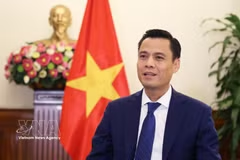
Deputy Minister of Foreign Affairs Dang Hoang Giang (Photo: VNA)

Deputy FM highlights significance of NA President’s participation in AIPA-47

Deputy Minister of Foreign Affairs Dang Hoang Giang said it is the first time NA President Man has led a high-ranking delegation to an AIPA General Assembly in the 16th legislature term. It is a concrete step to follow the 14th National Party Congress’s foreign policy and the 16th NA’s external agenda.

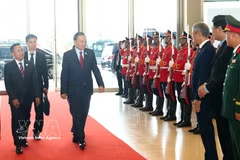
At the farewell ceremony for General Secretary of the Communist Party of Vietnam Central Committee and President To Lam at Techo International Airport in Phnom Penh, Cambodia (Photo: VNA)

Top leader concludes Cambodia trip for 20th Francophonie Summit

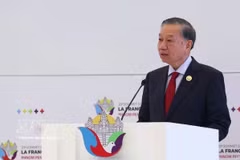
During the summit, General Secretary and President Lam attended the official welcome ceremony hosted by Cambodian King Norodom Sihamoni, the Cambodian Prime Minister and his spouse, and the International Organisation of La Francophonie (OIF) Secretary-General. He also attended the opening session and a roundtable plenary on the summit's main theme, and delivered a speech at the Francophone Business Forum on Innovation (FrancoTech).

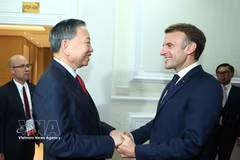
General Secretary of the Communist Party of Vietnam Central Committee and President To Lam (L) meets with French President Emmanuel Macron on November 16 on the sidelines of the 20th Francophonie Summit in Phnom Penh, Cambodia. (Photo: VNA)

Top Vietnamese leader meets French President in Phnom Penh

General Secretary of the Communist Party of Vietnam Central Committee and President To Lam spoke highly of France's role and influence within the Francophone community and expressed his wish to further promote cooperation with the country, contributing to the shared development, prosperity and sustainable stability of the Francophone community and the Vietnam-France Comprehensive Strategic Partnership.

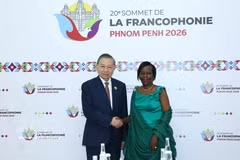
General Secretary of the Communist Party of Vietnam (CPV) Central Committee and President To Lam (left) meets OIF Secretary General Louise Mushikiwabo on November 15, in Phnom Penh, Cambodia, on the sidelines of the 20th Francophonie Summit. (Photo: VNA)

Vietnam promotes cooperation with OIF, Bulgaria, Benin

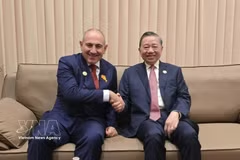
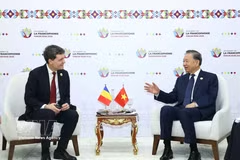
General Secretary of the Communist Party of Vietnam Central Committee and President To Lam met with leaders of the International Organisation of La Francophonie (OIF), Bulgaria and Benin on November 15 on the sidelines of the 20th Francophonie Summit in Phnom Penh, Cambodia.

An overview of the ASEAN Leaders’ Interface with Representatives of the ASEAN Inter-Parliamentary Assembly (AIPA) in Manila on November 15 (Photo: VNA)

Vietnam proposes three key directions for ASEAN-AIPA cooperation

Prime Minister Le Minh Hung affirmed that close and effective coordination between the governments and parliaments of member states is a foundation and important driving force for ASEAN to realise its vision of a united, resilient, dynamic and people-centred community.

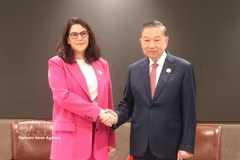
General Secretary of the Communist Party of Vietnam Central Committee and President To Lam meets Moroccan Prime Minister Fatima Ezzahra El Mansouri (Photo: VNA)

Vietnam, Morocco seek to deepen multifaceted cooperation

General Secretary of the Communist Party of Vietnam Central Committee and President To Lam and Moroccan Prime Minister Fatima Ezzahra El Mansouri discussed ways to expand cooperation in promising areas, including agriculture, processing industries, energy, mining, banking and finance, tourism, education and training, and people-to-people exchanges.

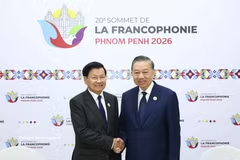
General Secretary of the Communist Party of Vietnam (CPV) Central Committee and President To Lam (right) meets with General Secretary of the Lao People's Revolutionary Party (LPRP) Central Committee and President of Laos Thongloun Sisoulith on the sidelines of the 20th Francophonie Summit in Phnom Penh, Cambodia, on the morning of November 15. (Photo: VNA)

Top Vietnamese, Lao leaders meet in Phnom Penh

General Secretary of the Communist Party of Vietnam (CPV) Central Committee and President To Lam affirmed that the Vietnamese Party, State and people consistently place their trust in and strongly support Laos’ cause of national construction and development, considering Laos’ achievements as shared accomplishments of both countries.