Hanoi (VNA) - The newly issued Resolution No. 23-NQ/TW follows a review of 20 years of implementing Resolution No. 36-NQ/TW and related directives issued by the Politburo and the Secretariat of the Party Central Committee regarding overseas Vietnamese (OV) affairs.
The new resolution upholds the core principles and perspectives of Resolution No. 36, which remain relevant, while marking further refinement of OV affairs. It reflects the country’s development requirements in the new period and changes within Vietnamese communities abroad.
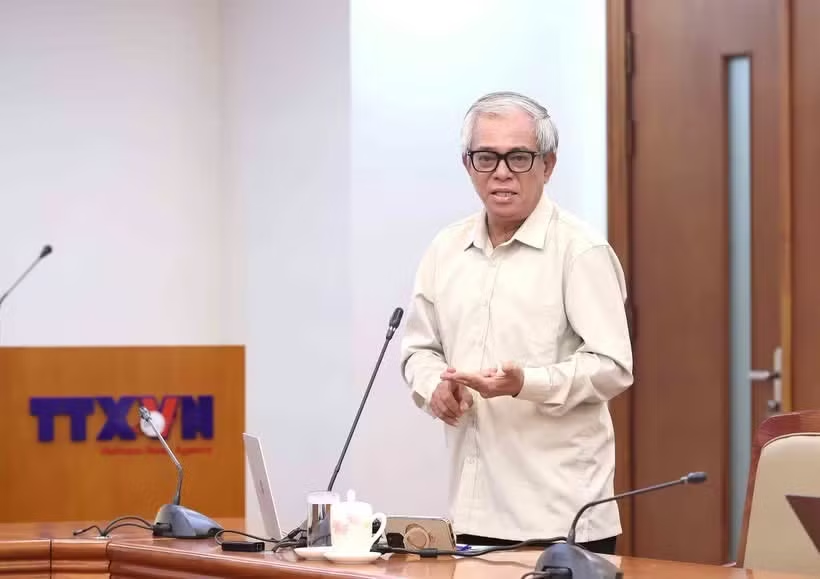
To shed light on the key new features of Resolution No. 23, VietnamPlus, an e-newspaper of the Vietnam News Agency, spoke with Ambassador Pham Quang Vinh, former Deputy Minister of Foreign Affairs.
A new impetus for overseas Vietnamese affairs
Reporter: Could you share some of the breakthrough features of Resolution No. 23-NQ/TW on overseas Vietnamese affairs?
Ambassador Pham Quang Vinh: With more than 6.5 million people living, studying and working in over 130 countries and territories, the Vietnamese community abroad is growing in both size and quality, and becoming increasingly integrated into their host societies.
Resolution No. 23 maintains the consistent stance of the Party and State over the years, which regards the overseas Vietnamese community as an integral part of the great family of Vietnamese ethnic groups.
A prominent new feature of the resolution is its recognition of OVs as a strategic resource contributing to strengthening the country. This should be understood as encompassing not only material resources but also human resources, knowledge and connections.
Alongside this is a shift in approaches to OV affairs, from mobilising, gathering and caring for the community to accompanying them, developing mechanisms, and bringing their resources into full play. This is not merely a change in the way the work is carried out, but also a higher level of awareness of the role of the community in the country’s new development phase.
A change in awareness will lead to the establishment of mechanisms. Previously, the State encouraged overseas Vietnamese to contribute to their homeland on an individual basis, depending on their personal circumstances. As OVs turn towards their homeland, the State created the most favourable conditions for them to do business, develop livelihoods and study, while bringing their families back to Vietnam.
Under Resolution No. 23, the State will develop networks, mechanisms and an ecosystem enabling them to make broader contributions. With advances in technology, they can contribute remotely in all three areas: national construction, national development and national defence.
The resolution also clearly outlines mechanisms for connecting intellectuals, scholars, scientists and businesses to contribute to the homeland.
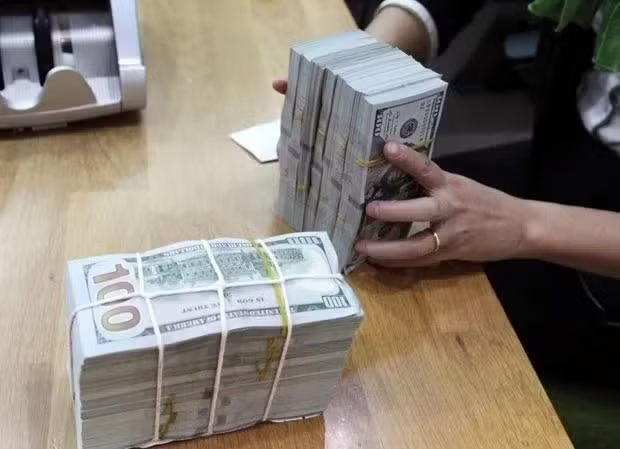
Reporter: Drawing on your experience working at Vietnam’s representative missions to the United Nations, the United States, ASEAN and elsewhere, how do you assess the potential for converting remittance flows into domestic investment funds?
Ambassador Pham Quang Vinh: Amid profound global changes, we need to consider two issues.
First, how to adapt to innovation and advances in science and technology. Second, as the economic policies of countries that Vietnam regards as partners change, we must also make adjustments and promote deeper economic cooperation with them.
Previously, we viewed remittances as a channel for encouraging money to flow back to Vietnam. Today, overseas Vietnamese invest in their homeland not only in production sectors but also in the stock and financial markets. At the same time, they connect with businesses and partners in their host countries to invest in Vietnam.
Reporter: What breakthroughs in economic institutions are needed for Vietnamese entrepreneurs and people abroad to truly experience the State’s enabling role?
Ambassador Pham Quang Vinh: The domestic economy needs to operate in line with the principles of the market economy, mobilise capital and strengthen joint ventures and partnerships in business and production.
This must go hand in hand with breakthroughs in institutional reform, removing bottlenecks and implementing Resolution No. 68-NQ/TW, issued in 2025, on private sector development.
More importantly, we must aim to improve the quality of the economy, encompassing both its production capacity and economic integration, as clearly outlined in Politburo Resolution No. 10-NQ/TW on the development of the foreign-invested economic sector.
I believe the “measure” of success is not how much capital flows into the country, but, more importantly, what that capital contributes to Vietnam’s economy and technology transfer.
These core principles, along with the new mechanisms under Resolution No. 23, need to be popularised among overseas Vietnamese. I believe that the resolution, together with previously adopted policies, will generate strong synergies and encourage OVs to contribute their resources to national development.
Consolidating the position of Vietnamese people abroad
Reporter: What is the significance of recognising the resources of overseas Vietnamese as a component of the country’s overall strength in strengthening the great national unity bloc?
Ambassador Pham Quang Vinh: First of all, we clearly recognise that OVs are an inseparable part of the great family of Vietnamese ethnic groups and an integral part of the great national unity bloc.
Resolution No. 23 introduces a very new perspective: building a Vietnamese community overseas with a secure legal status, deep integration into host societies and stable development.
Not all overseas Vietnamese enjoy stable positions in their host countries, and some live in more complex and challenging circumstances. Under the new policy, the State will not only help them stabilise their lives but also strengthen their role and standing. This will enable Vietnamese people abroad to serve as “cultural ambassadors” who promote Vietnam, its culture and its people, strengthening the great national unity bloc, enhancing the country’s soft power and raising its international standing.
By preserving the Vietnamese language and cultural identity, overseas Vietnamese serve as a bridge between their homeland and their host countries, promoting Vietnam’s image abroad. If their position is firmly consolidated, they will be able to carry out cultural diplomacy more effectively.
Reporter: How should the role of Vietnam’s representative missions abroad be reflected amid the many new developments in work relating to overseas Vietnamese?
Ambassador Pham Quang Vinh: Vietnam’s representative missions abroad need to become strategic hubs connecting OVs with the homeland and linking members of the Vietnamese community with one another in their host countries.
Resolution No. 23 highlights the role of representative missions in coordinating with domestic agencies to develop a map of OV resources. This means digitising data on the Vietnamese community abroad, including its potential and resources that could contribute to national development.
Representative missions must understand the country’s domestic needs, such as requirements in the semiconductor and chip industries. On that basis, they can connect supply and demand and establish networks linking ministries, sectors, organisations, localities and, in particular, businesses to serve as bridges and fully unleash the resources of the overseas Vietnamese community.
Reporter: Thank you very much./.