Digital tools give new impetus to Vietnamese language teaching abroad

Technology and the Internet have made Vietnamese language teaching and learning more accessible. Online teaching tools, language-learning applications and a growing range of Vietnamese entertainment content, including films, music, TikTok videos and YouTube programmes, are providing learners with more opportunities to engage with the language.

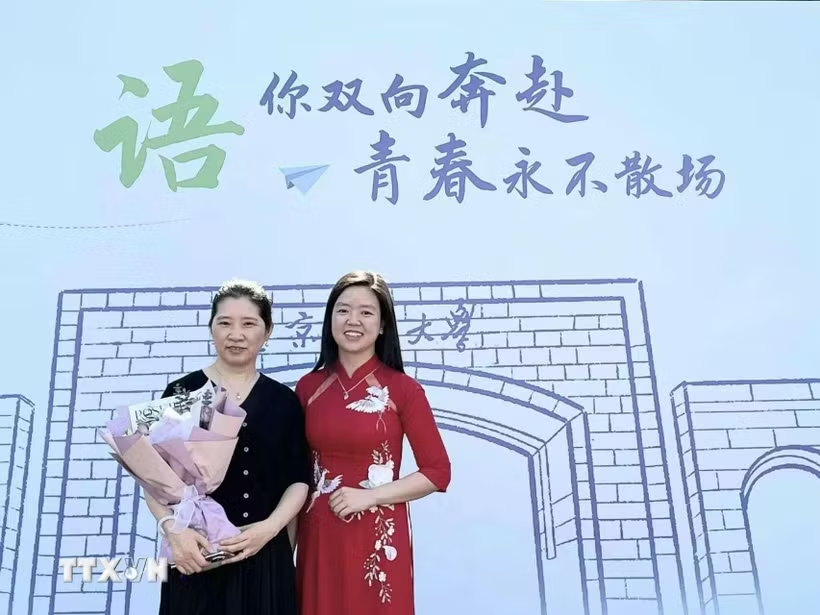
Dr Ha Ngoc Huyen (right), lecturer of Vietnamese language at the School of Foreign Studies, Beijing University of International Business and Economics. (Photo: VNA)

Beijing (VNA) - Technology, government support and families' commitment to preserving their cultural roots are helping expand Vietnamese language education among overseas communities, particularly younger generations of Vietnamese descent, according to Dr. Ha Ngoc Huyen, a lecturer of Vietnamese language at the School of Foreign Studies, Beijing University of International Business and Economics.

Huyen said technology and the Internet have made Vietnamese language teaching and learning more accessible. Online teaching tools, language-learning applications and a growing range of Vietnamese entertainment content, including films, music, TikTok videos and YouTube programmes, are providing learners with more opportunities to engage with the language.

Government support has also expanded. In 2025, the Vietnamese Embassy in China organised Vietnamese language classes for the Vietnamese community and citizens living in the country. The State Committee for Overseas Vietnamese has also held training courses, both in person and online, to equip overseas Vietnamese teachers with language-teaching methods.

Having taught at the embassy's programme, Huyen said she has seen strong commitment among Vietnamese parents to passing on their language and cultural heritage to their children. Their determination, she noted, is a major source of encouragement for teachers.

However, maintaining a Vietnamese-speaking environment remains the biggest challenge. Young people born and raised overseas often use the local language as their mother tongue, while Vietnamese is spoken mainly at home. As a result, they may gradually lose fluency, mispronounce words or become reluctant to speak Vietnamese.

To address this, Huyen has adopted more creative and interactive teaching methods, using Vietnamese culture as a gateway to language learning.
She introduces students to Vietnamese festivals and traditions, encouraging them to compare these with their Chinese counterparts. Such activities help spark interest in the language while deepening students' appreciation of their Vietnamese heritage.

Songs, poems, word-guessing games and pictures also make lessons more engaging. Practical activities, such as role-playing market shopping, preparing Vietnamese dishes and ordering food at Vietnamese restaurants, allow students to use the language in everyday situations and see its practical value.

Beyond teaching overseas Vietnamese, Huyen also introduces Vietnamese language and culture to Chinese students at her university, helping broaden the country's cultural reach. She said Chinese students are particularly interested in three aspects of Vietnam: cuisine, history and heritage, and traditional arts.

Pho, banh mi and Vietnamese coffee are among their favourite topics. Others are keen to explore the Nguyen Dynasty, Hoi An ancient town, Ha Long Bay and Champa relics. Traditional art forms, including water puppetry, cheo (traditional opera) and Hue royal court music, have also attracted considerable interest.

However, many other distinctive Vietnamese cultural values remain relatively unknown internationally. These include Dong Ho and Hang Trong folk paintings, Vietnamese poetry, folk songs and proverbs, as well as village traditions and beliefs associated with wet-rice cultivation.

Huyen suggested using more creative digital and cultural initiatives to introduce these heritage values to international audiences. Short videos on TikTok, Instagram and YouTube could showcase the making of traditional paintings, banh com (young green rice flakes cakes) and scenes of rice cultivation and harvesting on terraced fields.

Exhibitions in China and pocket-sized bilingual publications featuring Vietnamese poetry, folk songs and proverbs could also help local audiences gain a deeper understanding of the country's culture and everyday life./.

source
See more

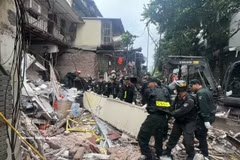
Prime Minister Le Minh Hung visits a victim of the Hanoi blast (Photo: VNA)

Prime Minister visits victims of Hanoi explosion

Prime Minister Le Minh Hung on November 24 afternoon visited victims of an explosion on Nguyen Van Tuyet street in Dong Da ward, Hanoi, asking the medical facilities to mobilise all available resources, personnel, equipment and medicines to provide intensive treatment and care for the injured, minimising fatalities and lasting injuries resulting from the incident.

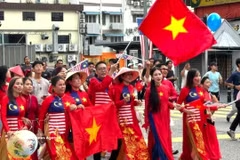
Participants at the Malaysia–Vietnam friendship "ao dai" parade in Kuala Lumpur (Photo: VNA)

Promoting national identity as bridge connecting the world

According to Nguyen Thi Thanh Van, Vice President of the Vietnam Business Association in Malaysia (VMBIZ), the strongest bonds within the Vietnamese community in Malaysia stem from simple yet sacred values: family, roots and a shared sense of Vietnamese identity.

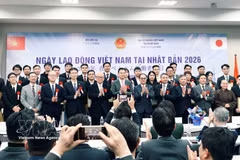
Commendation letters are presented to outstanding skilled Vietnamese workers and exemplary Japanese employers and organisations at the event on November 22, 2026. (Photo: VNA)

Vietnam honours workers in Japan, promotes labour cooperation

Deputy Minister of Home Affairs Vu Chien Thang encouraged Vietnamese workers in Japan to regard the country as their second home and make the most of their working opportunities to gain knowledge, skills and experience, thereby contributing to Japan’s economic development and Vietnam’s nation-building efforts when they return home.

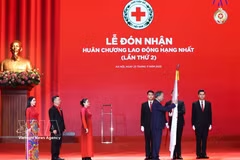
General Secretary of the Communist Party of Vietnam Central Committee and President To Lam presents the Vietnam Red Cross Society with the first-class Labour Order for the second time (Photo: VNA)

Top leader calls for building society where compassion becomes way of life

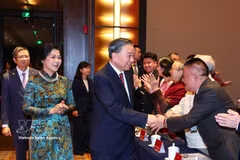
General Secretary of the Communist Party of Vietnam Central Committee and President To Lam, who is also Honorary President of the Vietnam Red Cross Society (VRC), expressed appreciation for the millions of compassionate individuals, families, collectives, agencies, organisations and businesses at home and abroad who have voluntarily mobilised support and contributed their efforts, knowledge, material resources and experience to improve the lives of people in need. Whether substantial contributions or simple acts of sharing, all are valuable expressions of compassion and responsibility towards the community.

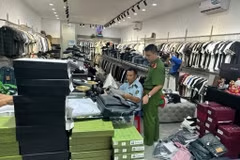
The police and market management forces in Dong Nai city examine a business that is alleged to sell counterfeit brand goods. (Photo: VNA)

Authorities step up crackdown on counterfeit goods sold online

According to the National Steering Committee 389, violators are increasingly using platforms such as Facebook, TikTok, Shopee and Telegram, as well as livestream sales, to distribute smuggled goods, counterfeit products and items violating intellectual property rights.

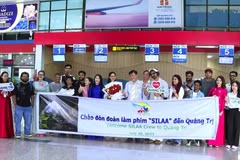
The SILAA film crew visited Quang Tri in July 2025. (Photo: baoquangtri.vn)

Quang Tri promotes tourism through Bollywood cinema for first time

According to the provincial People’s Committee, the programme aims to promote Quang Tri’s image, potential, strengths and distinctive tourism products to Indian and international markets through Bollywood films. It also seeks to attract international film producers, directors, studios and crews to explore the province and select local destinations as filming locations.

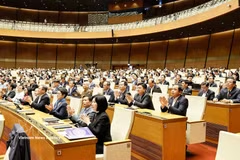
The law amending and supplementing several articles of the Labour Code, the Law on Archives, the Law on Gender Equality, the Law on Red Cross Activities and the Law on Employment is passed during the ongoing second session of the 16th National Assembly, with 461 of the 463 deputies present voting in favour. (Photo: VNA)

NA approves two additional paid public holidays

The 16th National Assembly (NA) on November 21 approved amendments to five laws, including the Labour Code, notably adding July 27 and November 24 to the list of paid public holidays for workers.

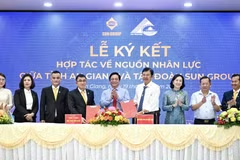
The Department of Education and Training of An Giang province and Sun Group sign a memorandum of understanding on human resources development for 2026-2031. (Photo: thanhnien.vn)

Phu Quoc needs over 14,000 workers ahead of APEC 2027

As major infrastructure projects serving APEC 2027, including the airport, convention centre, transport networks and resort complexes, are taking shape in Phu Quoc, preparations are also underway to develop a workforce capable of operating these world-level facilities.

Job seekers attend a job fair at the headquarters of the Ho Chi Minh City Employment Service Centre. (Photo: VNA)

Unemployed workers getting training support surges nearly 63%

According to the Department of Employment under the Ministry of Home Affairs, 705,970 people nationwide were approved for unemployment benefits in the period, up 4.48% from the same period last year. Total unemployment benefit payments approved exceeded 19.9 trillion VND (772.25 million USD), a rise of 9.93%.

Border guard forces work with individuals involved in a transnational online fraud ring that is recently dismantled in Cambodia. (Photo: VNA)

Vietnam joins 12 countries in effort against online fraud

Vietnam and 12 other countries on November 19 issued a statement of principles on strengthening cooperation against online fraud and scam centres, aimed at enhancing information sharing, coordinating investigations and disrupting the activities of transnational criminal networks.

General Secretary of the Communist Party of Vietnam Central Committee and President To Lam and his spouse Ngo Phuong Ly visit the former residence of President Ho Chi Minh in Kunming city, Yunnan province, China, on the afternoon of November 19. (Photo: VNA)

Top leader visits President Ho Chi Minh relic site in Kunming

The former residence of President Ho Chi Minh, located at No. 89-91 on Hua Shan Nan street in Kunming, is where the leader lived and worked during his revolutionary activities in Kunming, Yunnan province. It holds a special and prominent position within the conservation area of the city's historic cultural and commercial district.

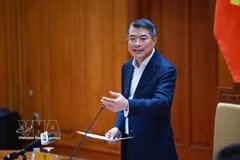
Prime Minister Le Minh Hung speaks at the meeting. (Photo: VNA)

Emulation drives push socio-economic development: Prime Minister

PM Hung, who is head of the council, said 2026 is the opening year to implement the Resolution of the 14th National Party Congress and resolutions on socio-economic development for the 2026-2030 period adopted by the Party Central Committee, Politburo and National Assembly.