Authorities step up crackdown on counterfeit goods sold online

According to the National Steering Committee 389, violators are increasingly using platforms such as Facebook, TikTok, Shopee and Telegram, as well as livestream sales, to distribute smuggled goods, counterfeit products and items violating intellectual property rights.

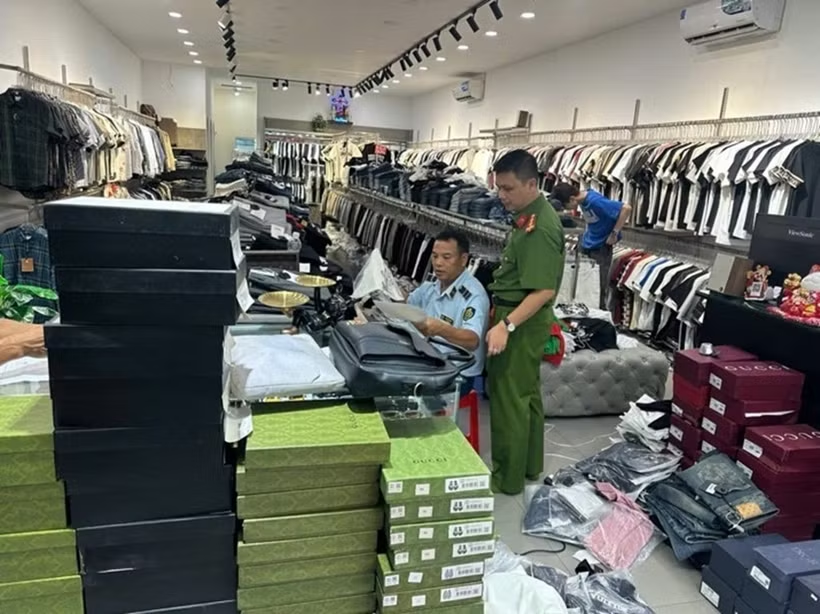
The police and market management forces in Dong Nai city examine a business that is alleged to sell counterfeit brand goods. (Photo: VNA)

Hanoi (VNA) – Authorities are facing growing challenges in combating smuggling, trade fraud and counterfeit goods as violators increasingly exploit e-commerce platforms, social media and delivery services to distribute illegal products on a large scale.

According to the Standing Office of the National Steering Committee for Anti-smuggling, Counterfeit Goods and Trade Fraud (National Steering Committee 389), ministries, sectors and localities detected and handled 39,716 violations in the third quarter of 2026, up 24.38% year on year.

Of the total, 2,510 cases involved the trading and illegal transportation of prohibited or smuggled goods, an increase of 53.7%. Another 34,357 cases involved trade and tax fraud, up 17.32%, while 2,849 cases concerned counterfeit goods and intellectual property rights violations, surging 180.69%.

The total amount collected for the State budget reached nearly 5.7 trillion VND, up 56.38% from the same period last year. Authorities also initiated proceedings against 329 cases and 519 individuals.

According to the Standing Office of the National Steering Committee 389, violators are increasingly using platforms such as Facebook, TikTok, Shopee and Telegram, as well as livestream sales, to distribute smuggled goods, counterfeit products and items violating intellectual property rights.

A common practice involves advertising dietary supplements and cosmetics as products imported from the Republic of Korea or China. Traders then purchase unverified ingredients, pills and raw materials, together with packaging, seals and labels from overseas, before bringing them into Vietnam for repackaging and sale at high prices under the guise of imported or hand-carried goods.

Many traders do not operate from permanent business premises. Instead, they rent apartments or private houses as warehouses, conduct transactions entirely online, use bank accounts registered under other people's names and hire technology-based delivery drivers to transport products.

Colonel Tran Duc Dong, Chief of the Standing Office, said smuggled and counterfeit goods, as well as products infringing intellectual property rights, are causing serious damage to the economy.

Counterfeit goods generally have lower production costs and are sold at cheaper prices, creating unfair competition for legitimate businesses. This undermines their competitiveness and weakens incentives to invest in research, development and innovation.

The consequences are particularly serious in the pharmaceutical, food and dietary supplement sectors, where substandard products can threaten public health and safety while eroding consumer confidence.


Dong noted that the use of e-commerce platforms, social networks, delivery services and fake online accounts to conduct large-scale illegal trading has made it increasingly difficult for authorities to detect and handle violations.

He said the enforcement results reflect the Government's determination, together with coordinated efforts by ministries, localities and relevant agencies to ensure a transparent market, protect public safety and promote sustainable development.

Strengthening inspections, crackdowns on online violations

The Standing Office has advised the National Steering Committee 389 to direct ministries and local authorities to step up measures against online trade fraud and counterfeit goods.

One priority is to provide law enforcement officers with training to improve their ability to identify, detect and handle violations in the digital environment.
Authorities are also working to develop interconnected databases and promote information sharing among police, market surveillance and customs forces, tax agencies, banks and postal service providers.

The initiative aims to help identify online sellers, trace the origins of goods and detect suspicious trading activities more effectively.

Alongside digital monitoring, enforcement agencies have been instructed to strengthen inspections of e-commerce activities and follow up on violations at distribution channels, warehouses and goods collection points.

The Government has also assigned ministries and sectors to develop national and specialised databases under its action plan through 2030 for combating smuggling, trade fraud, counterfeit goods and intellectual property rights violations.

Dong said the Standing Office will continue urging relevant agencies to follow the roadmap for data connectivity and information sharing.

He also called for further improvements to the legal framework, product standards and quality regulations, alongside stricter specialised inspections and post-market checks, particularly in food safety.

Public communication should also be strengthened to warn consumers about fraudulent sales practices, including products falsely advertised as imported or hand-carried goods. Publicising violations and violators will help protect consumers and safeguard the reputation of Vietnamese brands./.

VNA
See more

The SILAA film crew visited Quang Tri in July 2025. (Photo: baoquangtri.vn)

Quang Tri promotes tourism through Bollywood cinema for first time

According to the provincial People’s Committee, the programme aims to promote Quang Tri’s image, potential, strengths and distinctive tourism products to Indian and international markets through Bollywood films. It also seeks to attract international film producers, directors, studios and crews to explore the province and select local destinations as filming locations.

The law amending and supplementing several articles of the Labour Code, the Law on Archives, the Law on Gender Equality, the Law on Red Cross Activities and the Law on Employment is passed during the ongoing second session of the 16th National Assembly, with 461 of the 463 deputies present voting in favour. (Photo: VNA)

NA approves two additional paid public holidays

The 16th National Assembly (NA) on November 21 approved amendments to five laws, including the Labour Code, notably adding July 27 and November 24 to the list of paid public holidays for workers.

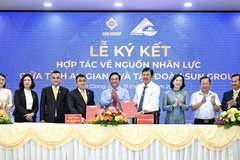
The Department of Education and Training of An Giang province and Sun Group sign a memorandum of understanding on human resources development for 2026-2031. (Photo: thanhnien.vn)

Phu Quoc needs over 14,000 workers ahead of APEC 2027

As major infrastructure projects serving APEC 2027, including the airport, convention centre, transport networks and resort complexes, are taking shape in Phu Quoc, preparations are also underway to develop a workforce capable of operating these world-level facilities.

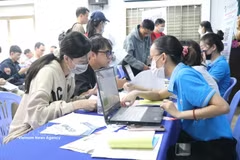
Job seekers attend a job fair at the headquarters of the Ho Chi Minh City Employment Service Centre. (Photo: VNA)

Unemployed workers getting training support surges nearly 63%

According to the Department of Employment under the Ministry of Home Affairs, 705,970 people nationwide were approved for unemployment benefits in the period, up 4.48% from the same period last year. Total unemployment benefit payments approved exceeded 19.9 trillion VND (772.25 million USD), a rise of 9.93%.

Border guard forces work with individuals involved in a transnational online fraud ring that is recently dismantled in Cambodia. (Photo: VNA)

Vietnam joins 12 countries in effort against online fraud

Vietnam and 12 other countries on November 19 issued a statement of principles on strengthening cooperation against online fraud and scam centres, aimed at enhancing information sharing, coordinating investigations and disrupting the activities of transnational criminal networks.

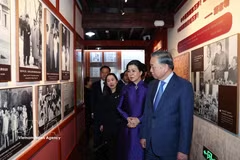
General Secretary of the Communist Party of Vietnam Central Committee and President To Lam and his spouse Ngo Phuong Ly visit the former residence of President Ho Chi Minh in Kunming city, Yunnan province, China, on the afternoon of November 19. (Photo: VNA)

Top leader visits President Ho Chi Minh relic site in Kunming

The former residence of President Ho Chi Minh, located at No. 89-91 on Hua Shan Nan street in Kunming, is where the leader lived and worked during his revolutionary activities in Kunming, Yunnan province. It holds a special and prominent position within the conservation area of the city's historic cultural and commercial district.

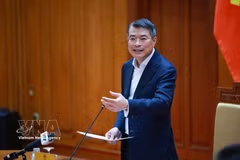
Prime Minister Le Minh Hung speaks at the meeting. (Photo: VNA)

Emulation drives push socio-economic development: Prime Minister

PM Hung, who is head of the council, said 2026 is the opening year to implement the Resolution of the 14th National Party Congress and resolutions on socio-economic development for the 2026-2030 period adopted by the Party Central Committee, Politburo and National Assembly.

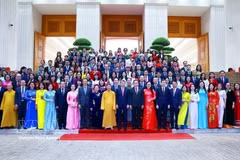
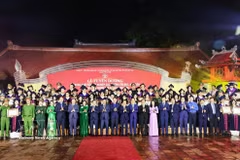
Delegates pose for a group photo with the outstanding graduates at the 2026 ceremony honouring outstanding university graduates in Hanoi. (Photo: VNA)

Hanoi honours 99 outstanding university graduates

Addressing the event, Nguyen Van Phong, Deputy Secretary of the Hanoi Party Committee, said the Resolution of the 18th Hanoi Party Congress for the 2025-2030 tenure identified building a contingent of officials with strong political mettle, professional capacity, strategic vision and dedication as one of the city’s three strategic breakthroughs.

An official of the Bank for Social Policies in Lao Cai province guides local women in using the mobile application. (Photo: VNA)

Efforts made to create value from digital environment

As digital services become more accessible and public feedback is increasingly heard, Vietnamese citizens are expected to move from simply benefiting from digital transformation to actively contributing to the development of a prosperous digital nation, where people's happiness and satisfaction remain the ultimate measures of success.

The Viet Youth Readiness Hub of the Canada Vietnam Council for Culture & Education (CVCEC) during a Vietnamese language lesson for Vietnamese-Canadian children in Toronto, Canada. (Photo: VNA)

Vietnamese culture connects generations in Canada

Beyond language skills, children learn about Vietnamese history, stories of filial devotion and national heroes, and the importance of respecting parents and teachers. Weekend classes begin with the national anthem, while festivals and traditional holidays offer opportunities to make greeting cards, prepare traditional cakes and learn to wrap 'banh chung' (square sticky rice cakes).