Buenos Aires (VNA) – Argentine journalist Luz Martí on November 17 launched a book recalling the life and work of war correspondent Ignacio Ezcurra, a reporter for the newspaper La Nación, who was killed in Saigon in 1968 while covering the war in Vietnam.
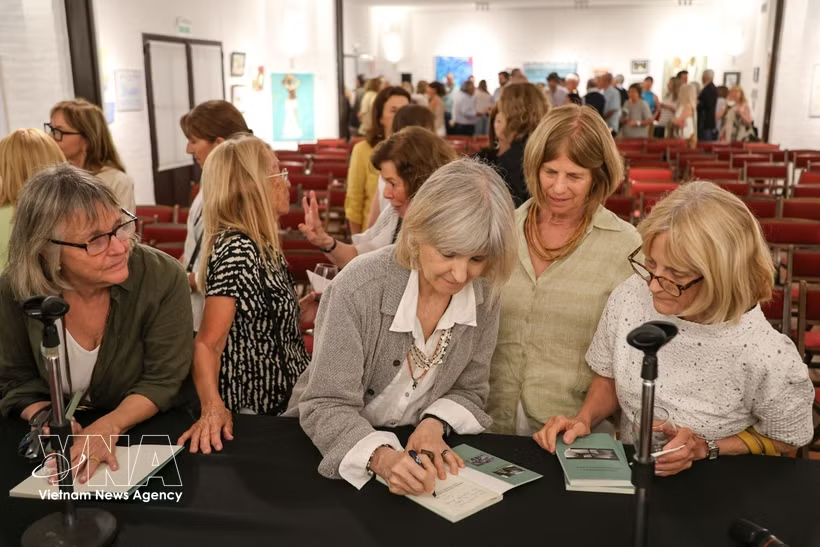
Titled "Ignacio Ezcurra: Behind Your Story, Mine" (Ignacio Ezcurra: Bajo tu historia, la mía), the book launch took place at the house where Ezcurra was born and grew up. The building, located in San Isidro on the outskirts of Buenos Aires, now serves as the headquarters of the San Isidro Bar Association.
The event brought together his family members, friends, former colleagues and people interested in journalism history. It was not only an occasion to introduce a new publication but also an opportunity to honour a journalist whose career was cut short at a young age.
Drawing on historical documents, witness accounts and extensive research, Martí portrays Ezcurra as a journalist driven by a strong desire to uncover the truth and willing to take risks to report directly from the field.
Through his personal story, the book also offers insights into the war in Vietnam, the immense suffering endured by the Vietnamese people and growing international opposition to the US military intervention in the country.
Born into a well-off Argentine family, Ezcurra was regarded as one of the outstanding journalists of his generation. He was known for his courage, sharp observation and sense of social responsibility.
Before travelling to Vietnam, he studied in the US on a scholarship from the Inter American Press Association. During his time there, he had the opportunity to meet and report on prominent figures in the civil rights movement of African- American people, including Martin Luther King Jr.
While working for La Nación, Ezcurra persistently requested the newspaper send its own correspondent to Vietnam, despite already subscribing to Associated Press news services. He wanted to report firsthand from both sides of the conflict, particularly to gain access to the Vietnam People's Army and the Liberation Army of South Vietnam.
His request was eventually approved, and he arrived in Vietnam in 1968. However, he reportedly disappeared and was killed in Saigon in May that year. Although images of his body were recorded, his remains have never been identified, leaving unanswered questions for his family, colleagues and those who remember him.
The book places his story against the backdrop of the war in Vietnam in 1968, including the General Offensive and Uprising during the Lunar New Year (Tet), fierce fighting and civilian casualties in Hue, and the My Lai massacre. It also examines how reports and images from the battlefield changed international public opinion and fuelled protests against the US war in Vietnam.
Journalist Carlos Reymundo Roberts, founder and co-director of the Master's Programme in Journalism jointly run by La Nación and Torcuato Di Tella University, said Martí initially joined a project supporting a documentary about Ezcurra's disappearance. Her research, interviews with people who had known him and examination of archival materials eventually inspired her to write the book.
Roberts described Ezcurra as an exceptional reporter whose curiosity, courage, keen observation and professional responsibility remain valuable qualities for journalists today.
Through Ezcurra's story, Martí also pays tribute to war correspondents who risked their lives to bring the reality of the war to the world. The book recalls the support extended to Vietnam's struggle for independence and freedom by intellectuals, artists, students and progressive movements across Latin America.
Nearly six decades after Ezcurra set out for Vietnam, his story continues to connect people in the two countries. The book is not only a tribute to a courageous journalist but also a reminder of the enduring values of truth, solidarity, courage and the pursuit of peace./.
VNA