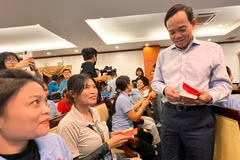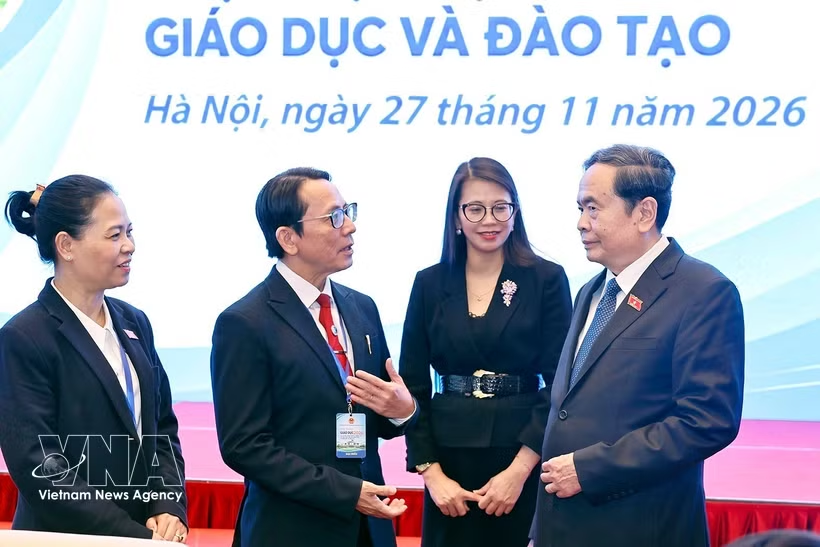
Hanoi (VNA) – National Assembly President Tran Thanh Man has called for effective implementation of education policies to translate major decisions into better learning conditions, higher training quality and broader development opportunities for teachers and learners.
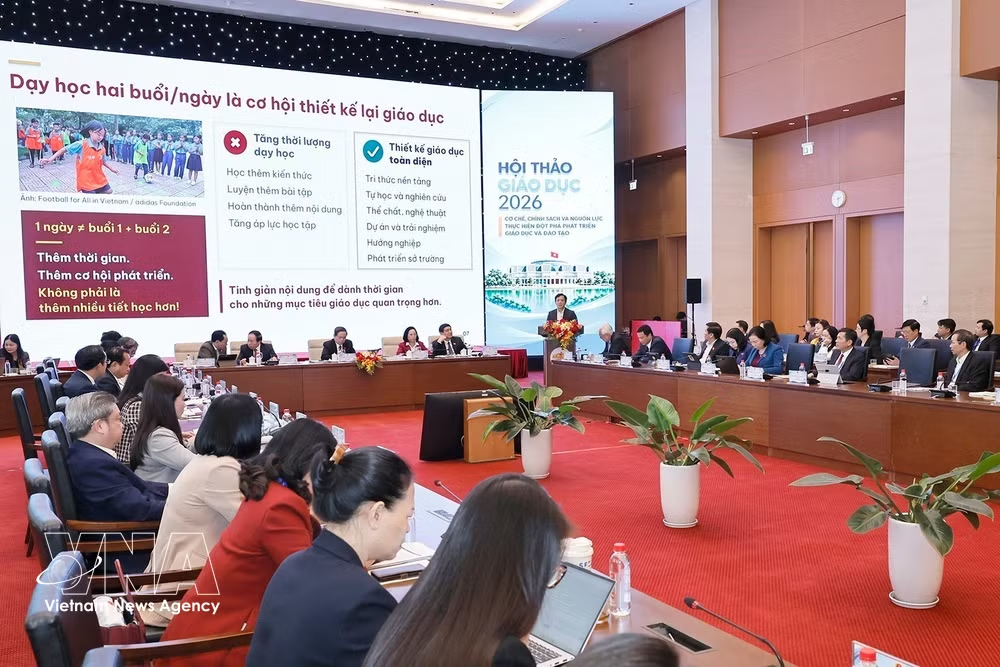
Addressing a conference on mechanisms, policies and resources for breakthrough development in education and training in Hanoi on November 27, the NA leader noted that the legislature adopted a series of laws and resolutions on education, teachers and national target programmes. However, he stressed that establishing an institutional framework and allocating resources are not enough without effective implementation.
He said the key task now is to ensure that guiding regulations are fully issued and enforced, resources reached the right places at the right time, and assigned responsibilities translated into tangible results.
Recalling the direction of General Secretary of the Communist Party of Vietnam Central Committee and President To Lam that all education policies must be measured by learners' progress, happiness and future, he stressed that any obstacles must be addressed where they arise and at the level with the relevant authority, while matters beyond that authority must be promptly reported together with specific solutions.
Right policies must not be held back simply because of poor coordination among agencies, he said.
He asked the Ministry of Education and Training to review and complete the general education curriculum in line with Resolution No. 71-NQ/TW, ensuring it remains streamlined, practical and feasible without overburdening schools, teachers and students.
Examinations must be conducted in a fair, rigorous, scientific and effective manner, accurately assessing students' abilities without adding to the pressure and financial burden on students, their families and society. Examination plans should remain stable and announced well in advance early, while full-day schooling must not become an avenue for exam preparation or additional tutoring during school hours, he said.
The NA leader stressed the need to strengthen moral education and promote shared responsibility between schools and families, urging parents to take an active role in supervising their children's daily activities and studies rather than leaving this responsibility solely to teachers.
The teaching workforce must be developed to meet requirements in terms of size, structure and quality, with training and professional development closely linked to recruitment, deployment and remuneration, he said, adding that efforts must be made to address teacher shortages, and promptly fill all approved teaching positions.
Priority should be given to addressing shortages of teachers, classrooms and teaching facilities in disadvantaged, ethnic minority, mountainous and border areas, as well as localities currently facing overcrowding, he stressed.
For higher education, the NA leader urged national universities and key public universities to take the lead in strategic fields, with institutional autonomy serving to improve quality rather than reduce State investment or shift costs to learners. He said training programmes should better match national development needs, with stronger focus on key engineering disciplines and strategic technologies, while maintaining a balanced range of other essential fields.
In vocational education, he called for commensurate investment, stronger international cooperation and closer business involvement throughout the training process. Training institutions should move towards providing flexible programmes that respond to the needs of learners, enterprises and the labour market.
NA President Man also stressed that the reorganisation of the school network must be guided by educational quality and students' right to education, rather than simply reducing the number of institutions. He said no students should be forced to drop out because of longer travel distances following the reorganisation.
Recommendations already identified must be monitored until the problems are resolved, while persistent shortcomings must be addressed at their root by clearly identifying the responsibilities of the relevant agencies and their heads, he said.
He noted that the Party and State have introduced various policies, including tuition exemption for preschool and general education students from the 2025-2026 academic year and the construction of 248 school sites in mountainous and ethnic minority areas. The priority now is to implement these policies effectively and identify specific solutions and responsibilities for every obstacle./.