Vietnam prioritises STEM talent to fuel high-tech development

With Vietnam seeking to develop high-tech industries such as semiconductors, artificial intelligence (AI), big data and renewable energy, demand for skilled workers is rising. This requires not only expanding the workforce but also improving its quality and capacity to master and develop new technologies.

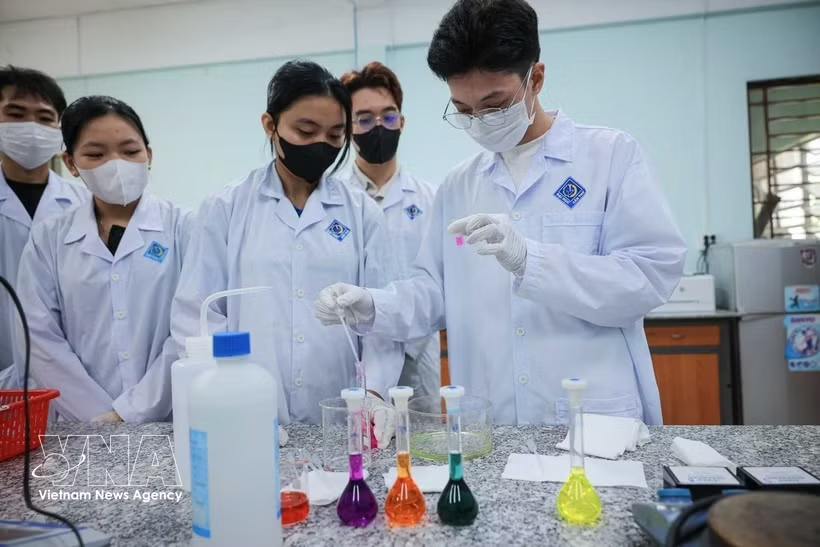
Research and laboratory activities at the University of Science, Vietnam National University, Hanoi. (Photo: VNA)

Hanoi (VNA) - As the global race for scientific and technological advancement intensifies, developing a highly skilled STEM (science, technology, engineering and mathematics) workforce is essential for Vietnam to adapt to, access and master emerging technologies, particularly strategic ones, and strengthen its technological capabilities.

Prioritising STEM education

With Vietnam seeking to develop high-tech industries such as semiconductors, artificial intelligence (AI), big data and renewable energy, demand for skilled workers is rising. This requires not only expanding the workforce but also improving its quality and capacity to master and develop new technologies.

Minister of Education and Training Hoang Minh Son said Politburo Resolutions No. 57-NQ/TW and No. 71-NQ/TW set strategic orientations for science and technology development and education and training. Universities play a key role in developing scientific and technological human resources, making STEM education fundamental to advancing high and strategic technologies.
vnanet-dao-tao2.jpg
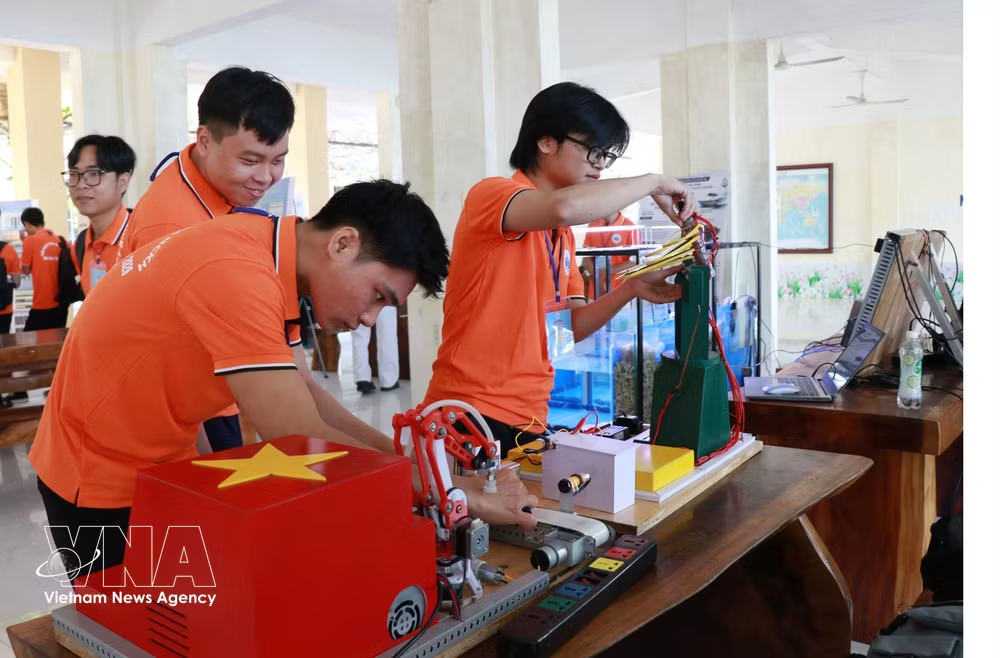
Students of Nha Trang University assemble a product developed through scientific research (Photo: VNA)

Prime Ministerial Decision No. 1002/QD-TTg, issued in 2025, approved a project on training human resources for high-tech development (Project 1002), aiming to build a skilled STEM workforce to meet demand from high-tech industries. The project focuses on nurturing talent for research and development in priority strategic and high technologies, helping Vietnam attract investment from global technology corporations while supporting economic restructuring and sustainable growth driven by science, technology, innovation, digital transformation and green transition.

Preferential credit policies for STEM students and scholarships in basic sciences, key engineering disciplines and strategic technologies have also helped boost enrolment. Localities and universities have invested in STEM classrooms, digital laboratories and innovation spaces, while introducing integrated STEM education models.

Nguyen Tien Thao, Director of the Department of Higher Education, said enrolment trends showed growing interest in STEM, basic sciences and strategic technology disciplines.

In the 2025-2026 academic year, the education sector implemented seven initiatives on Project 1002 and STEM talent development, 10 on energy workforce training, four on railway-related human resources and 23 on STEM, strategic technologies and key engineering.

The Ministry of Education and Training (MoET) also approved 103 talent training programmes at engineer and master's levels across 23 universities and established 13 networks of training centres of excellence.

By the end of August, 212,601 of the 633,415 candidates confirming university admission had enrolled in STEM fields, accounting for 33.56%. Nationwide, learners in eight STEM disciplines totalled 848,286, or about 30.3% of all learners.

From quantity to quality

Despite growing interest in STEM, expanding enrolment is only the first step. Training quality and the capacity to meet technological development needs remain key challenges.

Incoming students' quality remains uneven, while higher education infrastructure, teaching staff, laboratories and learning environments are insufficient to support advanced training, research and technological development. STEM and postgraduate enrolment also remains below 2030 targets, while some disciplines are not closely aligned with labour market demand or universities' training capacity.

At Vietnam National University-Ho Chi Minh City, four member universities have proposed investing about 535 billion VND (20.6 million USD) in laboratories for STEM talent training. Such programmes require smaller classes, higher academic standards and substantial operating and infrastructure costs, posing challenges without appropriate funding mechanisms.

Experts say developing high-quality scientific and technological personnel requires training reform, talent development and stronger research environments, rather than simply opening more courses. STEM programmes should closely integrate education, research and innovation.

Prof. Dr. Le Anh Tuan, Director of Hanoi University of Science and Technology, said STEM development should begin at school to ensure a strong pipeline of qualified university students. An ecosystem linking education, research, innovation and businesses is also needed to turn university research into products and value for society. He held that attracting outstanding lecturers and scientists, including overseas talent, requires special mechanisms and financial support. Training engineers, master's students and doctoral candidates should also be linked with strong research groups in strategic and high-tech fields, with closer business cooperation to ensure graduates meet labour market needs, he continued.

The MoET said STEM and strategic technology disciplines will be prioritised without lowering admission or graduation standards, while universities, research institutes, technology enterprises and international scientists would be encouraged to participate.

By 2030, the sector aims for STEM students to account for 35% of enrolment at each education level, with around 20,000 learners in STEM talent programmes and 6,000 doctoral candidates pursuing STEM disciplines./.
VNA

See more

Officials of the Vietnamese Ministry of Education and Training and the UK Department for Education pose for a group photo. (Photo: VNA)

Vietnam eyes stronger education cooperation with UK

At a meeting with Baroness Smith of Malvern, Minister of State (Minister for Skills) at the Department for Education, the two sides exchanged experience in general education reform, digital transformation, teacher development policies and efforts to make English a second language in schools.

Prime Minister Le Minh Hung visits a victim of the Hanoi blast (Photo: VNA)

Prime Minister visits victims of Hanoi explosion

Prime Minister Le Minh Hung on November 24 afternoon visited victims of an explosion on Nguyen Van Tuyet street in Dong Da ward, Hanoi, asking the medical facilities to mobilise all available resources, personnel, equipment and medicines to provide intensive treatment and care for the injured, minimising fatalities and lasting injuries resulting from the incident.

Participants at the Malaysia–Vietnam friendship "ao dai" parade in Kuala Lumpur (Photo: VNA)

Promoting national identity as bridge connecting the world

According to Nguyen Thi Thanh Van, Vice President of the Vietnam Business Association in Malaysia (VMBIZ), the strongest bonds within the Vietnamese community in Malaysia stem from simple yet sacred values: family, roots and a shared sense of Vietnamese identity.

Dr Ha Ngoc Huyen (right), lecturer of Vietnamese language at the School of Foreign Studies, Beijing University of International Business and Economics. (Photo: VNA)

Digital tools give new impetus to Vietnamese language teaching abroad

Technology and the Internet have made Vietnamese language teaching and learning more accessible. Online teaching tools, language-learning applications and a growing range of Vietnamese entertainment content, including films, music, TikTok videos and YouTube programmes, are providing learners with more opportunities to engage with the language.

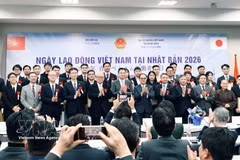
Commendation letters are presented to outstanding skilled Vietnamese workers and exemplary Japanese employers and organisations at the event on November 22, 2026. (Photo: VNA)

Vietnam honours workers in Japan, promotes labour cooperation

Deputy Minister of Home Affairs Vu Chien Thang encouraged Vietnamese workers in Japan to regard the country as their second home and make the most of their working opportunities to gain knowledge, skills and experience, thereby contributing to Japan’s economic development and Vietnam’s nation-building efforts when they return home.

General Secretary of the Communist Party of Vietnam Central Committee and President To Lam presents the Vietnam Red Cross Society with the first-class Labour Order for the second time (Photo: VNA)

Top leader calls for building society where compassion becomes way of life

General Secretary of the Communist Party of Vietnam Central Committee and President To Lam, who is also Honorary President of the Vietnam Red Cross Society (VRC), expressed appreciation for the millions of compassionate individuals, families, collectives, agencies, organisations and businesses at home and abroad who have voluntarily mobilised support and contributed their efforts, knowledge, material resources and experience to improve the lives of people in need. Whether substantial contributions or simple acts of sharing, all are valuable expressions of compassion and responsibility towards the community.

The police and market management forces in Dong Nai city examine a business that is alleged to sell counterfeit brand goods. (Photo: VNA)

Authorities step up crackdown on counterfeit goods sold online

According to the National Steering Committee 389, violators are increasingly using platforms such as Facebook, TikTok, Shopee and Telegram, as well as livestream sales, to distribute smuggled goods, counterfeit products and items violating intellectual property rights.

The SILAA film crew visited Quang Tri in July 2025. (Photo: baoquangtri.vn)

Quang Tri promotes tourism through Bollywood cinema for first time

According to the provincial People’s Committee, the programme aims to promote Quang Tri’s image, potential, strengths and distinctive tourism products to Indian and international markets through Bollywood films. It also seeks to attract international film producers, directors, studios and crews to explore the province and select local destinations as filming locations.

The law amending and supplementing several articles of the Labour Code, the Law on Archives, the Law on Gender Equality, the Law on Red Cross Activities and the Law on Employment is passed during the ongoing second session of the 16th National Assembly, with 461 of the 463 deputies present voting in favour. (Photo: VNA)

NA approves two additional paid public holidays

The 16th National Assembly (NA) on November 21 approved amendments to five laws, including the Labour Code, notably adding July 27 and November 24 to the list of paid public holidays for workers.

The Department of Education and Training of An Giang province and Sun Group sign a memorandum of understanding on human resources development for 2026-2031. (Photo: thanhnien.vn)

Phu Quoc needs over 14,000 workers ahead of APEC 2027

As major infrastructure projects serving APEC 2027, including the airport, convention centre, transport networks and resort complexes, are taking shape in Phu Quoc, preparations are also underway to develop a workforce capable of operating these world-level facilities.