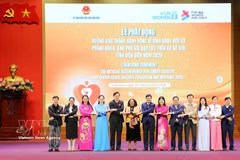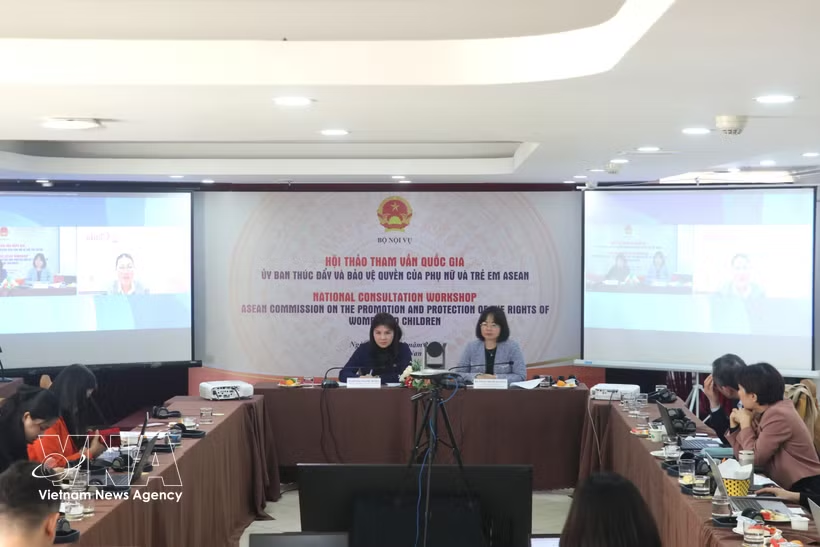
Hanoi (VNA) – Vietnam highlighted commitments to making contributions to ASEAN's collective efforts to ensure the full rights of women and children at the 2026 ASEAN Commission on the Promotion and Protection of the Rights of Women and Children (ACWC) National Consultation Workshop on November 26.
Cao Huy, Deputy Minister at the Ministry of Home Affair, Vietnam’s focal agency for cooperation with the ACWC, stressed that Vietnam consistently seeks to align the implementation of regional commitments with its national development goals and priorities, while actively, proactively and responsibly participating in ASEAN cooperation mechanisms.
Over the past decade, Vietnam has promulgated and revised numerous laws and codes to better incorporate gender equality, while implementing a range of programmes and projects directly aimed at promoting it.
These include the National Strategy on Gender Equality for 2021–2030; the Programme on Prevention of and Response to Gender-Based Violence for 2026–2030; the Programme to Promote Women's Equal Participation in Leadership and Management Positions at All Levels of Policy-making for 2021–2030; the Communications Programme on Gender Equality through 2030; and the project supporting gender equality activities in ethnic minority areas for 2018–2025.
These efforts have yielded notable results. Vietnam has narrowed 70.7% of its gender gap, exceeding the global and regional averages. In the area of economic participation and opportunity, the country scored 75.2%, placing it among the world's 50 leading economies.
In the public sector, the 2026–2031 term has seen, for the first time, five women holding senior leadership positions, including one Politburo member, one Vice President, two Vice Presidents of the National Assembly and one Deputy Prime Minister. More than 82% of provincial-level localities have women among their key leaders.
In the private sector, women hold 38.6% of senior management positions at medium-sized enterprises, while women account for 39.1% of executive directors, significantly higher than the ASEAN average of 24.2%.
Highlighting these achievements as an important foundation for Vietnam to make further contributions to ASEAN's collective efforts, Huy said ensuring the full rights of women and children is a long-term task requiring close coordination among State management agencies, participation by social organisations, and support and cooperation from domestic and international partners.
The workshop featured four sessions. The first three focused on reviewing the implementation of the ACWC Work Plan for 2021–2025, orientations for the 2026–2030 work plan, and the results of the two ASEAN Regional Plans of Action on the Elimination of Violence against Women and the Elimination of Violence against Children for 2016–2025. Participants also discussed updates to the regional action plans for 2026–2035.
Barnev Theodore Soukotta, Senior Programme Officer at the Poverty Eradication and Gender Division of the ASEAN Secretariat, introduced the ACWC Work Plan for 2026–2030, which focuses on three key outcome areas: promoting digital inclusion and empowerment; building safe environments and protection systems; and mainstreaming the rights of women and children across ASEAN. These priorities are aligned with the ASEAN Socio-Cultural Community's strategic framework.
Participants exchanged views, proposed initiatives and practical cooperation activities, and discussed ways to incorporate Vietnam's priorities, experience and practices into the ACWC and ASEAN's common agenda in the new period./.