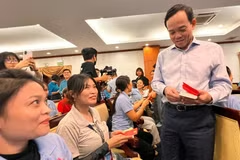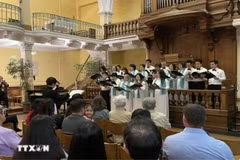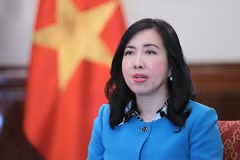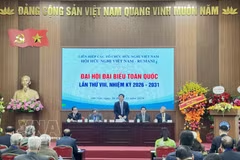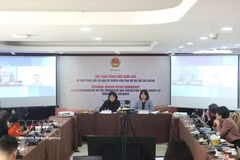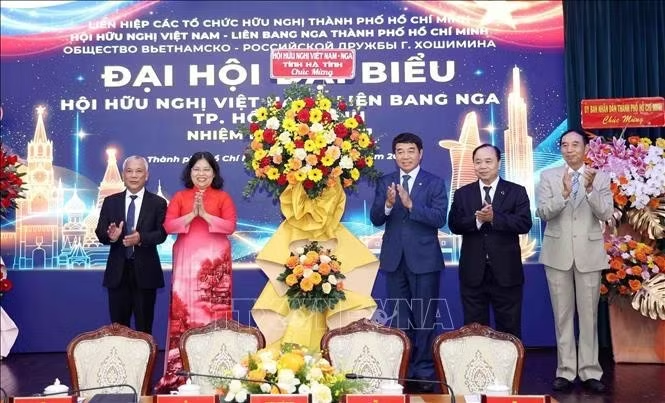
Ho Chi Minh City (VNA) – The first congress of the Ho Chi Minh City Vietnam–Russia Friendship Association for the 2026–2031 tenure was held on November 27, setting a course for more practical and effective people-to-people diplomacy.
The event was attended by Vo Van Minh, Chairman of the Ho Chi Minh City People’s Council; Nguyen Loc Ha, Standing Vice Chairman of the municipal People’s Committee; Senior Lieutenant General Vo Van Tuan, former Deputy Chief of the General Staff of the Vietnam People’s Army and Standing Vice Chairman of the Vietnam–Russia Friendship Association Central Committee; and Maria Georgievna Mizonova, Consul General of Russia in Ho Chi Minh City.
The congress approved the association’s first-term executive committee, comprising 31 members, with 23 elected at the congress and the remaining positions to be filled later. A three-member inspection board was also elected.
At its first meeting, the executive committee elected a nine-member standing board and Nguyen Truong Nhat Phuong, Vice Chairwoman of the municipal People’s Council, as chairwoman of the association for the 2026–2031 tenure.
During 2022–2026, the association, formed through the merger of its counterparts in Ho Chi Minh City, Binh Duong and Ba Ria–Vung Tau, fulfilled its role as a bridge of friendship. Its activities helped promote the Party and State’s foreign policy of independence, self-reliance, multilateralisation and diversification of external relations, while strengthening the social foundation of the Vietnam–Russia Comprehensive Strategic Partnership.
Under the new motto, “Innovation – Connectivity – Practicality – Effectiveness”, the association aims to strengthen its organisation and shift its focus from traditional friendship exchanges towards substantive cooperation. It will also promote links between Ho Chi Minh City and Russian localities and partners in priority fields while encouraging greater participation by young people, intellectuals and businesses.
Key priorities include expanding its network of chapters at universities, research institutes and businesses; connecting members with Russian experts and entrepreneurs living and working in the city; digitising membership and alumni databases; and developing a Vietnam–Russia people-to-people diplomacy partner map to facilitate links with Russian localities.
The association plans to diversify people-to-people and cultural diplomactic activities, including those involving the youth. It will also leverage the city’s strengths to promote practical cooperation in the economy, trade, energy, infrastructure, science and technology, digital transformation, artificial intelligence, education and tourism.
Its executive committee pledged to mobilise resources from members, universities, the Vietsovpetro joint venture and the business community to deliver the new action motto and reinforce people-to-people ties as a pillar of the Vietnam–Russia Comprehensive Strategic Partnership./.