Vietnamese culture connects generations in Canada

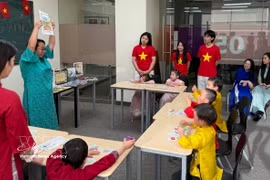
Beyond language skills, children learn about Vietnamese history, stories of filial devotion and national heroes, and the importance of respecting parents and teachers. Weekend classes begin with the national anthem, while festivals and traditional holidays offer opportunities to make greeting cards, prepare traditional cakes and learn to wrap 'banh chung' (square sticky rice cakes).

The Viet Youth Readiness Hub of the Canada Vietnam Council for Culture & Education (CVCEC) during a Vietnamese language lesson for Vietnamese-Canadian children in Toronto, Canada. (Photo: VNA)

Ottawa (VNA) – In response to the Vietnam Culture – Great National Unity Week from November 18–24, initiatives by the Canada Vietnam Cultural & Educational Council (CVCEC) demonstrate how preserving cultural identity helps strengthen community bonds and nurture affection for the homeland.

Speaking to a Vietnam News Agency correspondent in Canada, CVCEC Chairwoman Phan Thi Quynh Trang said the Vietnamese language, filial piety, family values and the tradition of remembering one's roots are key elements connecting generations of Vietnamese people in Canada. Although grandparents, parents and children may speak different languages in daily life, they share common values in family relationships, conduct and cultural heritage.

She cited Vietnamese language classes on Prince Edward Island (PEI), eastern Canada, where children have few opportunities to use their mother tongue outside their families. Initiated by teacher Hoang Minh Ha, with contributions from teachers Nguyen Thi Thanh Binh and Ngo Nguyen Ngoc Dieu Anh, the programme has expanded to three classes with 30 students.

Beyond language skills, children learn about Vietnamese history, stories of filial devotion and national heroes, and the importance of respecting parents and teachers. Weekend classes begin with the national anthem, while festivals and traditional holidays offer opportunities to make greeting cards, prepare traditional cakes and learn to wrap 'banh chung' (square sticky rice cakes).

These activities bring cultural values into children's everyday lives, allowing them to better understand traditions familiar to their grandparents and parents.

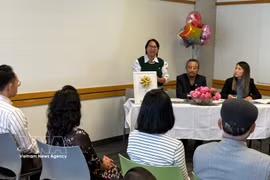
At the closing ceremony in June, parents and students honoured the teachers and recognised students' achievements before joining a food festival organised by the parents' committee, highlighting the importance of cooperation between families and classrooms in preserving cultural heritage.

Trang also stressed the need to empower young people by entrusting them with meaningful responsibilities, enabling them to become storytellers of Vietnam rather than merely listeners.

The Viet Youth Readiness Hub (VYRH) reflects this approach. In April, its members independently organised a Hung Kings' Commemoration Day celebration, while launching a Vietnamese-language book collection and hybrid classes for young children.

During Asian Heritage Month in May, VYRH members joined CVCEC in introducing the traditional five-panel 'ao ngu than' tunic to Toronto's mayor. They also promoted Vietnamese coffee at the Asialicious Carnival 2026 and contributed ideas to improve Vietnamese-language learning applications for children.

As part of the November 18–24 programme, the group plans to introduce 'ao dai' (Vietnamese traditional long dress) and 'banh mi' (Vietnamese baguette) to international students at Vega Academy and the International Business University in Toronto on November 18. CVCEC language classes will also mark Vietnamese Teachers' Day on November 20, while the council plans to launch its first online Vietnamese-language exchange class for foreigners in Toronto.

Drawing on its experience, Trang said community cohesion requires regular activities and proactive coordination among associations to encourage greater participation by families and young people.

In line with the Politburo's Resolution No. 23-NQ/TW on overseas Vietnamese affairs, she proposed establishing a shared cultural calendar among local associations to coordinate schedules, mobilise resources and avoid overlapping activities. Each organisation could retain its signature event while aligning activities with major occasions such as Tet (Lunar New Year), the Hung Kings' Commemoration Day, National Day and Vietnam Culture Day.

Such cooperation would preserve each association's identity while building a joint annual programme around the Vietnamese language, national culture and children's needs.

Through maintaining their mother tongue, empowering young people and working together, Vietnamese communities in Canada are passing national cultural values on to future generations, helping sustain their connection with the homeland./.
VNA

See more

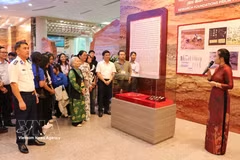
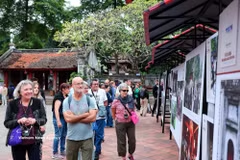
Delegates and local residents explore the themed exhibition “Coastal and Island Archaeology in Ho Chi Minh City: New Discoveries in 2020–2025”. (Photo: VNA)

Archaeological exhibition showcases 300 artefacts in Ho Chi Minh City

The exhibition presents 150 artefacts and 150 documentary photographs collected through archaeological surveys, field investigations and excavations over the past five years. The items were unearthed at notable sites including Cu Bi, Quang Thanh, Go Nan, Kim Long, Go Dat Nai, Giong Lon, Con Dao and Vong Thanh Da Trang. The findings have helped researchers shed light on traces of ancient settlements, craft workshops, distinctive burial practices, as well as ancient citadels and trading ports.

A TTU–VWAI representative hands the National Steering Committee 515 delegation several sets of dossiers on martyrs’ burial sites and artefacts that TTU–VWAI experts collected and studied during joint work to search for, recover and identify Vietnamese martyrs’ remains. (Photo: VNA)

Vietnam, US step up cooperation in search for fallen soldiers’ remains

Ambassador Nguyen Quoc Dung pressed partners to adopt four strategic tracks: a two-way verification process, standardised and professionalised outputs, breakthrough use of digital technology and AI, and maximum diplomatic patronage and resources, all aimed at converting documentary research into field investigation capacity.

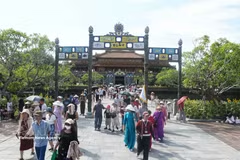
Visitors tour the Hue Imperial Citadel. (Photo: VNA)

Hue cuts heritage site entrance fees to attract more tourists

Under the first scheme, visitors using new tourist transport services to Hue will receive a 50% discount on entrance fees. Eligible services include the Hue – Phong Nha heritage railway, the Hue – Da Nang heritage steam train, and new domestic and international air routes, including charter and scheduled flights. The incentive does not cover existing air routes with increased flight frequencies.

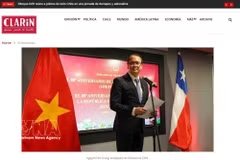
Screenshot of the article. (PhotoVNA)

Chilean media spotlight Vietnam’s growing global role

Chilean newspaper El Clarín recently published an interview with Vietnamese Ambassador to Chile Nguyen Viet Cuong, highlighting Vietnam’s foreign policy of independence and self-reliance and international integration, its contributions to regional cooperation, and prospects for bilateral ties as the two countries mark the 55th anniversary of diplomatic relations.

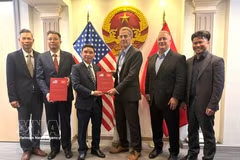
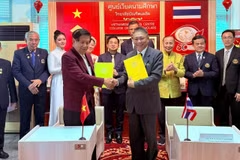
The exchange of a Memorandum of Understanding (MoU) on academic cooperation between the Vietnamese Consulate General in Khon Kaen and College of Asian Scholars. (Photo: VNA published)

Vietnam Studies Centre opens in northeastern Thailand

The centre would serve as a valuable academic hub for teaching and promoting Vietnamese language, culture and history, while fostering people-to-people exchanges and connecting younger generations of the two countries.

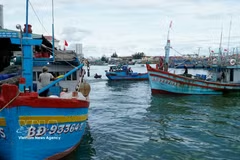
Fishing boats enter and leave Quy Nhon port (Photo: VNA)

Gia Lai tightens controls over vessels to combat IUU fishing

Inspections by an inter-sectoral working group identified weaknesses in managing ineligible fishing vessels, controlling vessels entering and leaving ports, seafood traceability, handling violations and implementing support policies for decommissioned vessels, according to the committee.

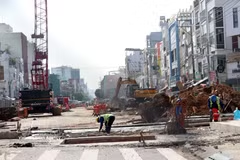
Construction site for the Ben Thanh - Tham Luong metro project on Cach Mang Thang Tam street (Photo: VNA)

Ho Chi Minh City plans five TOD areas along Metro Line No. 2

According to the Ho Chi Minh City Department of Planning and Architecture, the boundaries of the five TOD areas along Metro Line No. 2 (Ben Thanh – Tham Luong) have been approved, covering a total area of approximately 939 ha. The city is now drawing up plans for these areas.

Russian and CIS tourist groups visit the central city of Da Nang in 2026. (Photo: VNA)

Vietnam gains popularity among Russian tourists

Vietnam recorded the fastest growth in Russian tourist arrivals among mass-tourism destinations in the first nine months of 2026, according to data from the Association of Tour Operators of Russia (ATOR) and Russia’s Federal Security Service (FSB).

The 24th Asian Maritime and Fisheries Universities Forum takes place in Hai Phong city. (Photo: VNA)

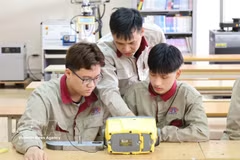
Leading Asian maritime universities gather for Hai Phong forum

Vietnam needs engineers, seafarers, experts and managers who can adopt and develop advanced technologies for the maritime industry and future marine economy. That is why Vietnam attaches special importance to international cooperation in education, training and research.

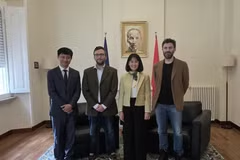
Vietnamese Ambassador to Italy Nguyen Phuong Anh (second from right) poses for a photo with journalists. (Photo published by VNA)

Italian journalists seek to promote positive image of Vietnam

During his visit to Vietnam, freelance journalist Federico Giuliani, a regular contributor to the daily il Giornale, was impressed by the country's landscapes, cuisine, rich cultural traditions, dynamic cities and hospitable people in Hanoi, Hoi An and Ha Long Bay.

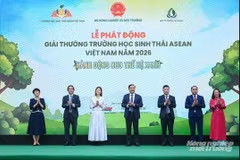
The Ministry of Agriculture and Environment launched the 2026 ASEAN Eco-Schools Award at Tay Ha Noi Primary and Secondary School in Xuan Phuong ward, Hanoi, on the morning of November 13. (Photo: nongnghiepmoitruong.vn)

Vietnam plans to go green by expanding ASEAN eco-schools model

At the launch ceremony, Deputy Minister of Agriculture and Environment Le Trong Yen said schools play an important role in shaping young people's knowledge, character, and habits. Daily practices such as saving electricity and water, sorting waste and caring for trees could help students understand the value of natural resources and their responsibility towards the environment, while spreading positive habits to families and communities.