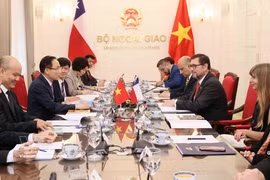
Hanoi (VNA) – Vietnam’s rising international standing and active role in multilateral forums, including APEC and BRICS, have come under the spotlight in Chilean media ahead of Chilean President José Antonio Kast’s official visit to Vietnam.
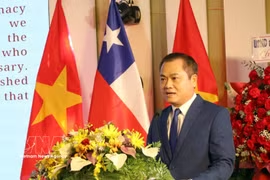
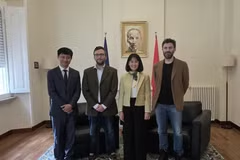
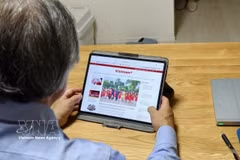
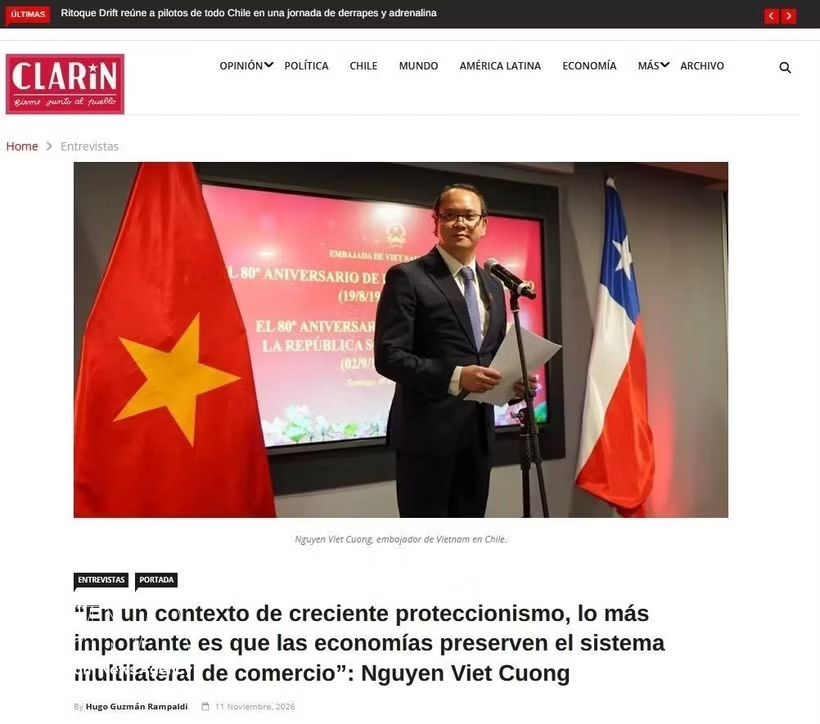
Chilean newspaper El Clarín recently published an interview with Vietnamese Ambassador to Chile Nguyen Viet Cuong, highlighting Vietnam’s foreign policy of independence and self-reliance and international integration, its contributions to regional cooperation, and prospects for bilateral ties as the two countries mark the 55th anniversary of diplomatic relations.
Cuong reaffirmed Vietnam’s commitment to an open, fair and rules-based multilateral trading system, describing it as vital to global trade stability, economic integration and growth.
Amid rising protectionism and tariff barriers, economies must uphold multilateral trade rules, deepen regional integration and resolve differences through dialogue, he said.
The ambassador cited World Trade Organisation (WTO) Director-General Ngozi Okonjo-Iweala’s assessment during her meeting with Prime Minister Le Minh Hung in September that Vietnam was a prominent example of the success of the WTO and the rules-based multilateral trading system.
Vietnam supports comprehensive and substantive WTO reform, including the full restoration of its dispute settlement mechanism, he said.
On foreign policy amid major-power competition, Cuong stressed Vietnam’s consistent pursuit of the foreign policy of independence, self-reliance, resilience, peace, friendship, cooperation and development, alongside the diversification and multilateralisation of its external relations.
Vietnam does not join military alliances or side with one country against another, while maintaining comprehensive strategic partnerships with all five permanent members of the United Nations Security Council, he noted.
With its interests closely tied to peace, stability and cooperation, Vietnam prioritises dialogue, respect for international law and mutually beneficial partnerships, aspiring to be a friend and reliable partner of all countries.
The ambassador also highlighted Vietnam’s role in BRICS, which it joined as a partner country in June 2025. He described the grouping as an additional channel for cooperation, rather than an alternative to existing international mechanisms.
Vietnam is engaging in BRICS initiatives that match its development priorities, particularly in digital transformation, science and technology, innovation, human resource development, the green economy, clean energy and sustainable supply chains.
Together with its participation in APEC, the WTO, ASEAN and other multilateral forums, the status of a BRICS partner country gives Vietnam greater scope to expand cooperation, strengthen dialogue and contribute to global peace and development, he said.
The Vietnamese Prime Minister’s attendance at the 18th BRICS Summit in India in September further demonstrated the country's proactive engagement with international partners and cooperation frameworks.
Turning to APEC, Cuong described the forum as a key platform for economic connectivity across the Pacific, bringing Vietnam and Chile closer despite their geographical distance.
APEC has helped economies on both sides of the Pacific expand dialogue, trade and investment. The signing of the Vietnam-Chile Free Trade Agreement on the sidelines of the 2011 APEC Economic Leaders’ Meeting was a case in point, he said.
Vietnam’s hosting of APEC for the third time in 2027, following the 2006 and 2017 editions, also featured prominently in the interview.
Each time Vietnam hosted the forum, it marked a milestone in the country's international integration. In 2006, Vietnam hosted APEC as its accession to the WTO was approved. In 2017, the APEC Economic Leaders’ Week in Da Nang saw ministers from 11 economies agree on the name and core provisions of the Comprehensive and Progressive Agreement for Trans-Pacific Partnership (CPTPP).
For APEC 2027, Vietnam is preparing the agenda, infrastructure and organisational arrangements. The National Committee for APEC 2027 has been established, with five subcommittees overseeing substantive matters, logistics, security and healthcare, communications and culture, and protocol.
The APEC Economic Leaders’ Week is scheduled for Phu Quoc. Vietnam is also exploring new initiatives, including an innovation competition and an APEC Cities Forum, to boost business links, trade and investment and showcase Vietnamese localities.
Cuong expressed hope that APEC 2027 would deliver tangible benefits to member economies and people across the region. He also welcomed the participation of Chile and other Latin American partners, noting that Chile and Peru help amplify South America's voice and reinforce APEC's trans-Pacific character.
The interview also traced the historical ties between Vietnam and Chile, which are celebrating 55 years of diplomatic relations (March 25, 1971-2026).
Chile established diplomatic relations with Vietnam on March 25, 1971, becoming one of the first South American countries to do so. After ties were restored in 1990, bilateral relations continued to deepen, reaching the comprehensive partnership level in 2007. The bilateral FTA was signed in 2014.
Cuong described the friendship forged through solidarity between the two peoples as a valuable legacy that must be preserved and nurtured by future generations.
President Kast’s official visit to Vietnam is an important diplomatic milestone in the anniversary year and an opportunity to inject fresh momentum into bilateral ties, the ambassador said.
He pointed to significant potential for cooperation in trade, investment, supply chain connectivity, logistics, science and technology, people-to-people exchanges and coordination at multilateral forums, particularly APEC 2027.
Bilateral trade reached nearly 2.1 billion USD in 2025, up around 40% from 2024, according to Chilean statistics. Vietnam is Chile’s largest trading partner in ASEAN, while Chile ranks fourth among Vietnam’s trading partners in Latin America.
With complementary economies, the two countries have room to expand trade in agricultural and aquatic products, industrial goods and equipment for the energy transition. Education, training, culture and defence also offer promising avenues for cooperation, Cuong said./.