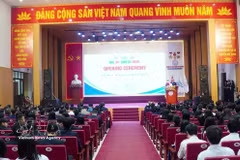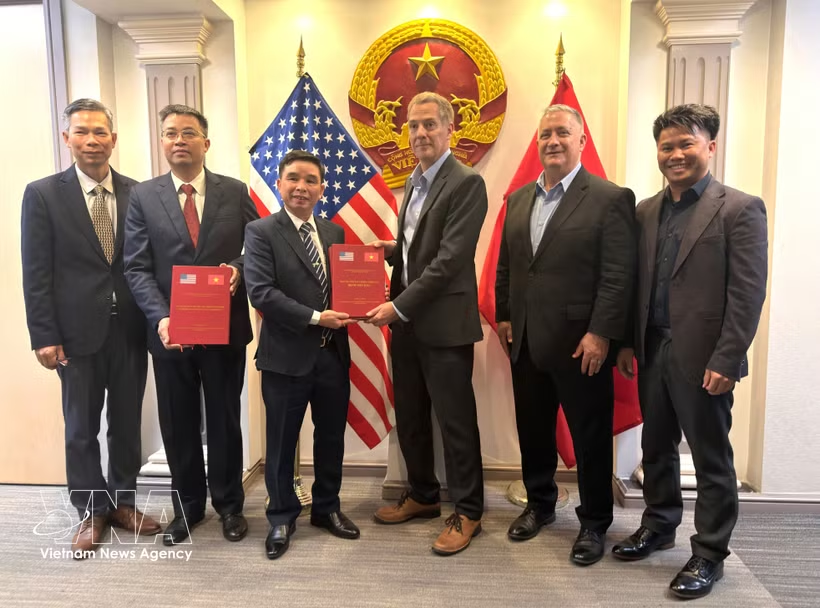
Washington, D.C. (VNA) – Texas Tech University and Vietnam’s National Steering Committee on Search, Collection and Identification of Martyrs’ Remains (National Steering Committee 515) convened a workshop in Washington on November 15 on archival research methods, access to US National Archives and Records Administration records and new tools to support the search for and identification of those missing from the war in Vietnam.
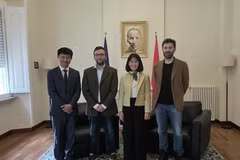
Attendees included members of National Steering Committee 515, representatives of the US Department of War, the US Defence POW/MIA Accounting Agency, the US Embassy in Hanoi, the Vietnamese Embassy in Washington, the US-ASEAN Business Council and researchers from Texas Tech and the University of Georgia.
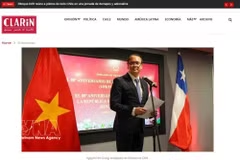
Vietnamese Ambassador to the US Nguyen Quoc Dung said this mission receives attention from the Vietnamese Party, State, and people, fulfilling the heartfelt longing of countless families who have waited for news of their loved ones for decades. As time goes by, there are fewer witnesses, the terrain changes, and the search becomes increasingly difficult. Every piece of information could be one step closer to bringing our sacrificed heroes back to their families and homeland.
The embassy and the Office of the Defence Attaché are deeply aware of the significance and urgency of this mission and are enhancing cooperation with US partners as a vital mission. Cooperation in overcoming war legacies also reinforces trust and deepens Vietnam-US relations, he said.
Dung pressed partners to adopt four strategic tracks: a two-way verification process, standardised and professionalised outputs, breakthrough use of digital technology and AI, and maximum diplomatic patronage and resources, all aimed at converting documentary research into field investigation capacity.
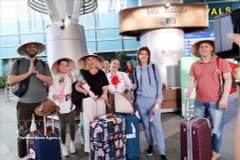
Col. Le Van Son, who leads the National Steering Committee 515 delegation, said cooperation in addressing war aftermath, especially searching for and recovering martyrs’ remains, has become a key pillar of Vietnam-US relations. The work has run for years, helping heal war wounds, build trust and support sustainable bilateral ties, he said.
Son said US organisations and individuals have supplied Vietnam with documents, artefacts and personal effects tied to Vietnamese soldiers who died or went missing, through high-level meetings and working sessions in both countries. Vietnam is checking, cross-referencing and verifying the material for remains search, recovery and identification. It is also urging Vietnamese veterans and citizens holding US servicemen’s artefacts to return them, which he called a sign of Vietnam’s goodwill in war aftermath cooperation.
According to him, the trip focuses on researching and receiving records, documents and artefacts on Vietnamese soldiers who died, lost contact or went missing, especially materials tied to the 52 dossiers on collective martyrs’ graves Vietnam has handed to US partners.
To sharpen search, recovery and identification work, Son asked US partners to step up exchanges and supply more information, documents, artefacts and personal effects from US military records and data, particularly on the 52 collective grave dossiers supplied by Vietnam.
The Vietnamese official said he wants closer cooperation and more effective war aftermath work, especially searching for, recovering and identifying martyrs’ remains.
Texas Tech University Vietnam Wartime Accounting Initiative (TTU–VWAI) representatives described their methods for researching NARA archives, showing how captured documents, US military records, burial diagrams and historical maps can be combined to reconstruct wartime events, locate potential burial sites and produce evidence-based investigation reports. They also outlined TTU–VWAI’s early work on AI-assisted tools to search, process and cross-check documents and other military and historical sources.
Delegates discussed deeper research coordination by setting priority areas and issues, standardising how documents are recorded, cited and verified, creating a unified investigation report template and improving information and research data sharing.
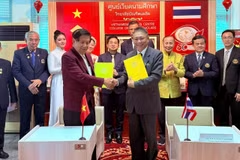
A TTU–VWAI representative handed the National Steering Committee 515 delegation several sets of dossiers on martyrs’ burial sites and artefacts that TTU–VWAI experts collected and studied during joint work to search for, recover and identify Vietnamese martyrs’ remains./.