Singaporean PM outlines key directions for national development

Wong called on all Singaporeans to connect, collaborate and “shape our future together” so that the miracle of the last 60 years can continue, even as the external environment is more contested, unpredictable and challenging for small states.

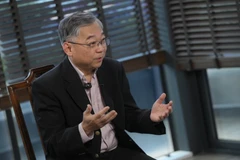
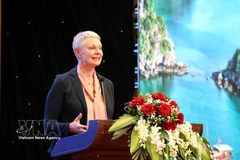
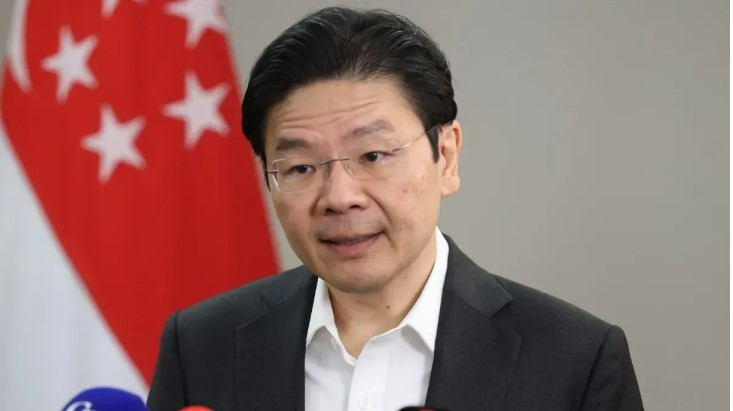
Singaporean Prime Minister Lawrence Wong (Photo: sbr.com.sg)

Singapore (VNA) - Singaporeans can expect more to be done to enhance social mobility, build a vibrant economy and strengthen solidarity, Prime Minister Lawrence Wong said in his maiden speech in the 15th Parliament on September 24.

To the young, he pledged: “We will not let you down. We are building Singapore for you, and with you,” reported the Straits Times.

Wong called on all Singaporeans to connect, collaborate and “shape our future together” so that the miracle of the last 60 years can continue, even as the external environment is more contested, unpredictable and challenging for small states.

In a wide-ranging speech that spanned around 40 minutes, the PM also pledged to strengthen safety nets and deepen a sense of solidarity among Singaporeans as he outlined the broad strokes of the country’s path forward. Amid stronger headwinds, a maturing economy and an ageing population, he noted, many young people worry that they may not do better than their parents.

The Government will do more to keep social mobility alive so that the “escalator keeps moving”, and everyone has the opportunity to realise their full potential, he said.

Early childhood initiative KidStart will be expanded, and support programmes for lower-income families like ComLink+ will be enhanced so that more families can get help earlier and more children can gain a stronger footing in life, according to the PM.

Reforms in education must also follow into the workplace, and Singapore has to change how people are hired and promoted, he said. This applies to the public service and the private sector.

While the Government has substantially raised the salaries of once undervalued but vital roles, such as pre-school teachers and allied health professionals, it will continue to professionalise skilled trades. But while pay matters, mindset is also important, said Wong, adding that the deeper change must come from society, and a lot depends on how society as a whole views the different pathways people may choose.

On the economy, Wong said maintaining competitiveness and dynamism was essential. The government would energize the business ecosystem, aiming to make Singapore more attractive to start-ups and global firms, while acknowledging that not all ventures would succeed and adaptability was necessary.

Retirement adequacy was another focus, with plans to ensure citizens could save more consistently throughout their working lives. He stressed that the government will continue to strengthen support for vulnerable groups, including children in difficult circumstances and people with disabilities. He also pointed to the SkillsFuture programme as providing stronger employment security than conventional unemployment insurance elsewhere.

Wong noted that income inequality had narrowed in Singapore through policies such as property and stamp duties on the wealthy, as well as public housing and CPF redistribution to lower-income groups. He pledged to continue innovating in social policy under the principle of building a “Singapore together.”

Finally, the PM called for constructive politics based on integrity and seriousness, urging both the government and citizens to build social capital, community cohesion, and connections across race, language, religion and socio-economic background. Community consultation channels, he added, were already being expanded to support these goals./.

VNA

See more

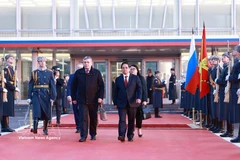
Singaporean Prime Minister Lawrence Wong (R) welcomes Thai Prime Minister Anutin Charnvirakul (Photo: thestar.com)

Thailand, Singapore enhance bilateral collaboration

The Thai and Singaporean PMs witnessed the signing of several memoranda of understanding (MoUs), notably an MoU on rice trade cooperation between the two governments, under which Thailand agreed to sell Singapore up to 100,000 tonnes of rice annually.

Indonesia to add 30 urban trains in Jakarta

Indonesia to add 30 urban trains in Jakarta

The addition of new trains is expected to help Indonesia ease traffic congestion, improve the quality of public transport services, and promote sustainable socio-economic development in Indonesia’s most densely populated urban area.

Illustrative image (Photo: Antara)

Indonesia to end diesel imports by 2026

Indonesian Minister of Energy and Mineral Resources Bahlil Lahadalia has reported to President Prabowo Subianto that Indonesia is on track to stop importing diesel fuel by early 2026, marking a major milestone in national energy independence.

Director General of the Metal, Machinery, Transportation Equipment, and Electronics (ILMATE) Industry at the Ministry of Industry Setia Diarta during the Opening of GIIAS Makassar on November 5. (Photo: ANTARA)

Indonesia to downstream EV batteries in two years

Indonesia is projecting the downstreaming of electric vehicle (EV) batteries for motorcycles and cars within the next two years, according to Director General of the Metal, Machinery, Transportation Equipment, and Electronics (ILMATE) Industry at the Ministry of Industry Setia Diarta.

At the launch of the programme. (Photo: nationthailand.com)

Thailand launches programme to reduce healthcare costs for citizens

Under the new Memorandum of Understanding (MoU), private hospitals in Thailand must provide complete and accurate prescriptions listing drug names and usage details. This transparency allows patients to choose whether to buy their medicines directly from the hospital or from registered pharmacies outside.

Illustrative photo (Photo: bangkokpost.com)

Thailand delivers tepid rice export forecasts for 2026

Thailand maintains its export target for next year at 7.5 million tonnes, including 3.5 million tonnes of white rice, 1.7 million tonnes of hom mali rice, 1.4 million tonnes of parboiled rice, 600,000 tonnes of Thai fragrant rice and 300,000 tonnes of sticky rice.

ASEAN Secretary-General Kao Kim Hourn (Photo: Bernama)

ASEAN Secretary-General: Higher education will shape the region’s future

The ASEAN chief revealed that the ASEAN Socio-Cultural Community (ASCC) Strategic Plan designates education as a driver for equity and sustainable development. Its agenda calls for enhancing access to quality education, promoting lifelong learning, and integrating green skills into curricula. In short, academic purpose serves societal and community purpose.

Thailand aims for 129 gold medals at 33rd SEA Games

Thailand aims for 129 gold medals at 33rd SEA Games

At the 32nd SEA Games held in Phnom Penh, Cambodia, from May 5–17, 2023, Thailand ranked second overall with 108 gold, 96 silver, and 108 bronze medals. Vietnam topped the standings with 136 gold, 105 silver, and 114 bronze medals.