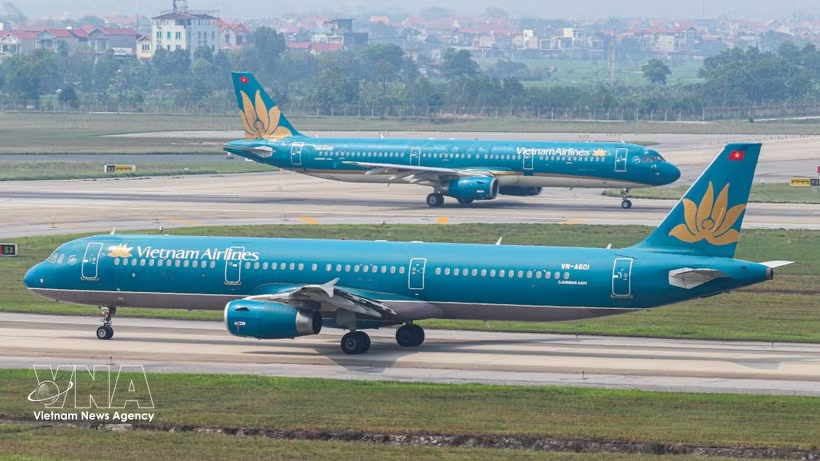
Hanoi (VNA) – Vietnam Airlines is pressing ahead with an ambitious fleet expansion strategy to build a stronger long-haul network and enhance its global competitiveness, despite mounting pressures from soaring fuel prices and exchange rate fluctuations.
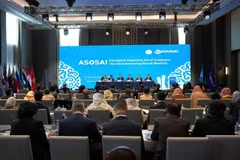
Speaking at the airline's 2026 Annual General Meeting of Shareholders on June 28, Chairman Dang Ngoc Hoa said fleet modernisation will be a key pillar of the national flag carrier's development strategy for 2025–2035, with a vision to 2040.
Under the plan, Vietnam Airlines will acquire new narrow-body and wide-body aircraft to expand both domestic and international operations, strengthen its transcontinental route network and meet growing travel demand.
The expansion comes as the airline pursues flexible operating strategies, digital transformation and innovation while seeking to achieve its 2026 business targets amid a volatile global operating environment.
Fuel, exchange rates weigh on earnings
Chief Accountant Tran Van Huu acknowledged that fuel remains the airline industry's single largest operating expense, typically accounting for around 30% of total costs.
He said Vietnam Airlines had based its 2026 business plan on an average jet fuel price of 85 USD per barrel, reflecting forecasts made by international economic organisations before tensions escalated in the Middle East.
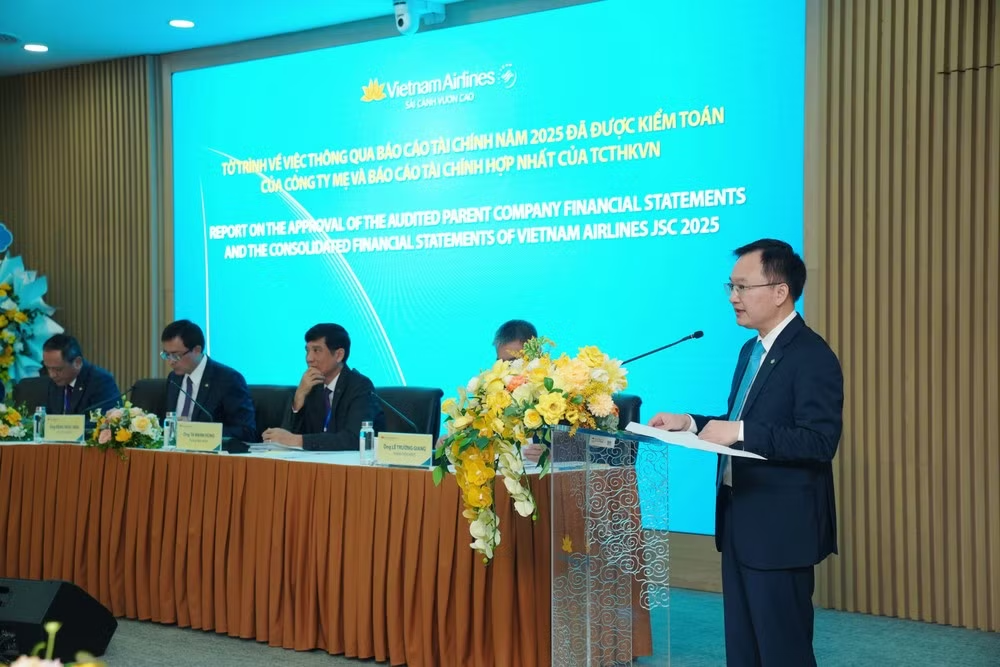
During the first quarter, business performance largely followed those projections, enabling the airline to post a profit of nearly 4 trillion VND (153 million USD), highlighting the effectiveness of its post-pandemic restructuring efforts.
However, the outbreak of conflict in the Middle East in March dramatically altered market conditions. Jet fuel prices surged to 195 USD per barrel during the second quarter, peaked at 200 USD per barrel in April before easing to about 151 USD per barrel in May. The average price for the quarter reached 182 USD per barrel, more than double the level assumed in the airline's original business plan.
According to Huu, every 1 USD increase in fuel prices raises Vietnam Airlines' annual operating costs by approximately 300 billion VND (11.5 million USD). As a result, fuel expenses increased by more than 7 trillion VND (268 million USD) during the second quarter alone, placing considerable pressure on profitability.
Despite the sharp rise in costs, Vietnam Airlines responded quickly by implementing a range of cost-saving measures while capitalising on higher passenger demand created by disruptions to Middle Eastern carriers. The airline restructured its route network, deployed larger aircraft on European services to improve fuel efficiency and benefited from government policies reducing certain taxes and fees.
Huu said Vietnam Airlines expects its second-quarter loss to be limited to around 2 trillion VND (76.5 million USD). Overall, the airline is projected to record a profit of roughly 2 trillion VND (76.5 million USD) for the first six months of 2026.
Assuming fuel prices average about 120 USD per barrel for the remainder of the year, Vietnam Airlines expects to remain profitable in 2026, although earnings are likely to be significantly lower than in 2025.
Expanding fleet and global network
President and Chief Executive Officer Le Hong Ha said the airline had viewed the recent market disruption not only as a challenge but also as an opportunity to strengthen its international position.
As passenger traffic through the Middle East declined, Vietnam Airlines expanded capacity on European routes by deploying larger aircraft and opening additional services. Seat occupancy on European flights reached 91%, one of the airline's highest load factors.
The carrier has simultaneously optimised its route network, postponed non-essential expenditures, strengthened revenue management and sought government support measures to mitigate rising operating costs.
Digital transformation, technological innovation and sustainable development remain among Vietnam Airlines' three strategic priorities.
The airline plans to complete a shared digital data platform by the end of 2026 to improve operational integration while expanding the use of artificial intelligence in flight operations and maintenance to enhance productivity. Vietnam Airlines also aims to strengthen its technological capabilities and accelerate sustainability initiatives to reduce emissions, lower operating costs and improve long-term competitiveness.
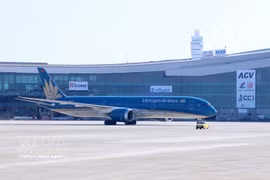
Chairman Dang Ngoc Hoa said the airline plans to invest in 50 narrow-body aircraft, scheduled for delivery between 2030 and 2032, while leasing an additional 20 narrow-body aircraft to support capacity growth.
The new narrow-body fleet will primarily serve domestic routes and regional international services with flight times of less than five hours.
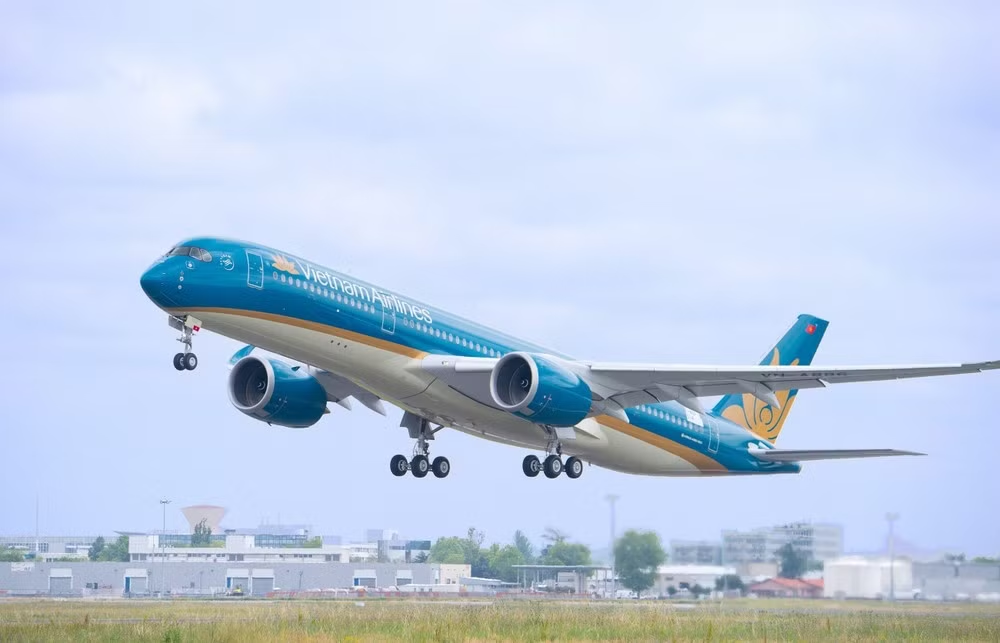
Vietnam Airlines is also preparing an investment proposal for 20–30 wide-body aircraft to be delivered between 2031 and 2035, alongside plans to lease 12 additional wide-body aircraft during 2028–2030. The expansion is intended to strengthen the carrier's long-haul and intercontinental network and build a more competitive global fleet.
The airline also plans to introduce dedicated cargo aircraft during 2026–2027 and will continue evaluating both dry-lease and wet-lease options to supplement fleet capacity in line with market demand.
Shareholders at the meeting also endorsed the development of the Vietnam Airlines Development Strategy to 2045, which aims to reinforce the airline's role as Vietnam's national flag carrier, enhance regional competitiveness, and support socio-economic development goals./.