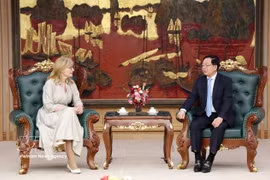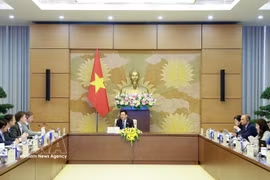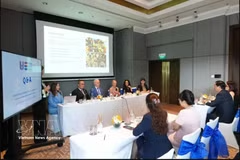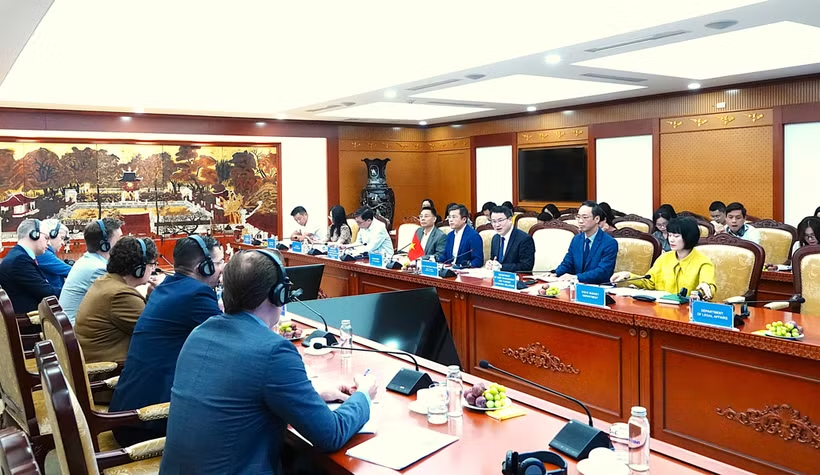
Hanoi (VNA) – Deputy Minister of Finance Tran Quoc Phuong and Ambassador Julien Guerrier, Head of the European Union Delegation to Vietnam, co-chaired a meeting of the Steering Committee for Component 1 of the Enhancing Economic Governance Programme (EEGP) in Hanoi on June 11.
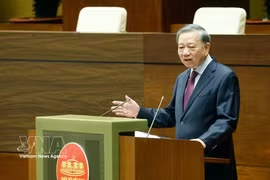
In his opening remarks, Phuong highlighted the growing Vietnam-EU relationship, which was elevated to a Comprehensive Strategic Partnership, with economic, trade, investment and sustainable development cooperation serving as key pillars.
He noted that after more than three decades of cooperation, the EU has become one of Vietnam’s leading partners, contributing significantly to the country’s international integration and sustainable development. Agreements such as the EU-Vietnam Free Trade Agreement (EVFTA) and the EU-Vietnam Investment Protection Agreement (EVIPA) have provided a solid foundation for stronger bilateral economic ties.
Amid global challenges, including climate change, digital transformation, population ageing and economic uncertainties, Phuong praised the EU’s support for Vietnam in pursuing sustainable development, green growth and improved governance. He said cooperation priorities under the Multiannual Indicative Programme (MIP) for 2021–2027, the Global Gateway initiative and Team Europe align closely with Vietnam’s development objectives.
The Ministry of Finance is a direct beneficiary of the EEGP through two components. Component 1, launched in October 2022, focuses on strengthening medium-term public financial management, including budget management and revenue forecasting, public debt management, and tax policy reform.
According to Phuong, the component has delivered positive results, helping to improve institutions and strengthen capacity in budget, debt and revenue management. Research, policy advisory services, training and international experience-sharing activities have supported economic governance reforms towards greater transparency and efficiency.
At the meeting, representatives of the German Agency for International Cooperation (GIZ) reported on the project’s implementation. Jointly funded by the EU and the German Government with a budget of 14 million EUR (16.1 million USD), the programme is being carried out from 2022 to 2026 to support Vietnam in strengthening economic governance, reducing poverty and promoting sustainable growth.
After more than three years of implementation, the project has recorded notable results across its three pillars. In budget management, it supported revisions to the State Budget Law, which took effect on January 1, 2026, and helped develop macroeconomic and revenue forecasting tools to enhance Vietnam’s forecasting capacity.
In public debt management, the project contributed to revisions of the 2025 Law on Public Debt Management, helping to improve the legal framework in line with international standards. In taxation, it supported reviews and reforms of key tax policies aimed at expanding fiscal space and improving revenue administration.
The programme has also promoted international integration in finance and taxation, strengthened information exchange, and incorporated gender equality considerations into public financial management.
Guerrier praised the close cooperation among the EU, Germany and Vietnam’s Ministry of Finance in implementing the EEGP, saying the programme has advanced fiscal reforms, modernised budget management tools, enhanced transparency and improved state budget revenue mobilisation.
He stressed the importance of continuing reforms in budget management, tax policy, public debt management and customs while increasing consultations with the business community, particularly European enterprises, to ensure policies remain practical and conducive to a transparent and stable investment environment.
German Ambassador to Vietnam Helga Margarete Barth reaffirmed Germany’s commitment to supporting Vietnam in public financial management, noting that over three decades of cooperation have helped improve transparency, accountability and efficiency of resource allocation.
The Steering Committee agreed in principle to extend Component 1 by nine months until June next year.
Phuong said the extension would help maximise the programme’s impact, strengthen economic governance and support Vietnam’s sustainable development goals./.