Hanoi (VNA) – Retailers are increasingly focusing on shopping experiences, digital transformation and modern trade ecosystems to retain customers as deep discounts alone are no longer enough to stimulate consumer spending amid cautious purchasing behaviour.
Summer price-cutting race
With the summer shopping season underway, major retailers have launched extensive promotional campaigns to boost consumption demand. However, insiders say sustainable consumption growth will depend on greater value created for consumers rather than relying solely on price cuts.
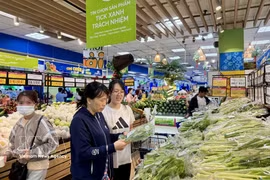
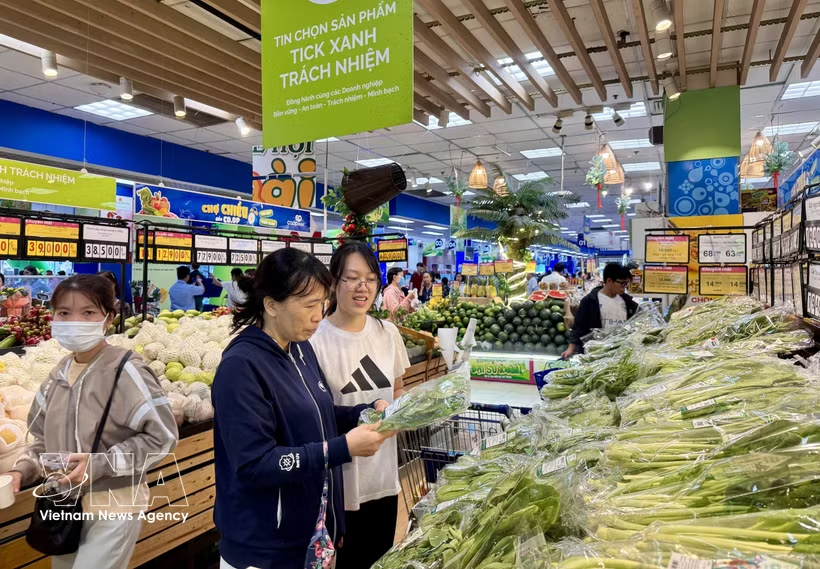
Since late May, big retail chains have rolled out large-scale discount programmes targeting seasonal products. Saigon Co.op has offered discounts of up to 50% across its supermarket and convenience store networks, covering beverages, fresh food, fruit, healthcare products and household goods.
In Hanoi, the Lotte Mart system has launched summer promotions featuring discounts of up to 50% alongside exclusive membership benefits. Meanwhile, GO! supermarkets have slashed prices on thousands of essential products ranging from fresh produce and dairy products to beverages and frozen foods.
The competition is equally intense online. During the June 6 mega sale campaign, e-marketplace Lazada introduced major discount vouchers, free shipping, extended return policies and promotional offers for thousands of domestic and international brands. Its integration of TMALL and Gmarket storefronts has also expanded access to authentic products from China and the Republic of Korea (RoK) at competitive prices.
The wave of promotions reflects retailers’ efforts to stimulate spending as consumers become more selective and value-conscious in the face of economic uncertainties.
Consumption stimulus goes hand in hand with domestic market development
However, retail experts said discounts remain only a short-term solution. Consumers today are increasingly concerned not only with affordability but also with product quality, convenience, shopping experiences and additional services.
Tran Thi Phuong Lan, Chairwoman of the Association of Vietnam Retailers, said businesses need to change their demand stimulation strategies. Rather than focusing exclusively on sales promotions, retail outlets should evolve into experiential destinations that combine shopping with cultural, entertainment and community activities.
Experts also emphasised that consumption stimulus efforts must be pursued across both physical and digital retail channels.
Data show that e-commerce has emerged as one of the strongest drivers of consumption growth. Vietnam’s e-commerce market has reached an estimated value of 31 billion USD, accounting for roughly 11% of total retail sales and consumer service revenues. This indicates e-commerce is not merely a supplementary sales channel but forms an important part of the modern trading system.
To support businesses, the Ministry of Industry and Trade (MoIT) is revising regulations on promotional activities, aiming to simplify administrative procedures and reduce paperwork to facilitate businesses’ operation.
The shift comes as the Government identifies the domestic market as one of the key drivers of economic growth. Under Government Resolution No. 88/NQ-CP on domestic market development and consumer demand promotion, the objective extends beyond boosting short-term spending to strengthening the domestic market, enhancing links between production and consumption, and improving the economy’s capacity to absorb goods and services.
To achieve these goals, the MoIT is implementing measures to improve commercial infrastructure, logistics networks and consumer promotion programmes.
Developing outlet shopping centres linked to tourism and leisure destinations is seen as one notable initiative. By 2030, Vietnam aims to establish at least five major outlets in Hanoi, Ho Chi Minh City, Da Nang, Quang Ninh and An Giang, while exploring on-site tax refunds for international visitors at downtown duty-free stores. The model is expected to boost retail sales and create new shopping attractions for domestic and foreign tourists./.
VNA