Vietnam expected to become influential partner of BRICS: Russian scholar

Prof. Dr. Georgy Toloraia, Executive Director of the National Committee for BRICS Research and Director of the Centre for Russian Strategy in Asia at the Institute of Economics of the Russian Academy of Sciences, expressed his confidence that Vietnam will become a substantial and influential partner of BRICS.

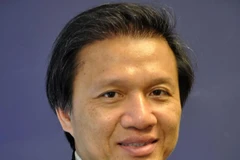
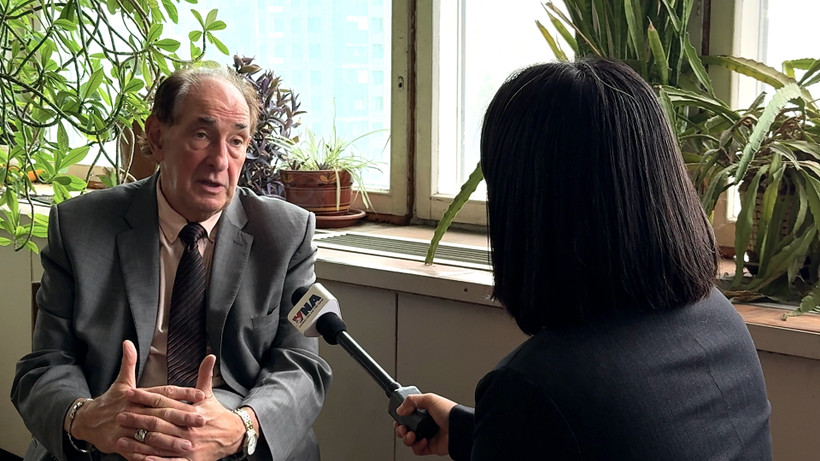
Prof. Dr. Georgy Toloraia, Executive Director of the National Committee for BRICS Research and Director of the Centre for Russian Strategy in Asia at the Institute of Economics of the Russian Academy of Sciences. (Photo: VNA)

Hanoi (VNA) – Brazil, which is holding the rotating chair of BRICS for 2025, has officially announced Vietnam as a “partner country” of BRICS – the bloc of emerging economies advancing global cooperation and international governance reform.

Prof. Dr. Georgy Toloraia, Executive Director of the National Committee for BRICS Research and Director of the Centre for Russian Strategy in Asia at the Institute of Economics of the Russian Academy of Sciences, expressed his confidence that Vietnam will become a substantial and influential partner of BRICS.

A long time before Vietnam became a BRICS partner, there were many articles in Russia expressing the desire for Vietnam to make a decision on this soon. Toloraia emphasised that he did not think that Vietnam hesitated to decide, noting that Vietnam had always strongly supported the BRICS initiative and the partnership with the bloc but the country needed time to complete domestic procedures. Both BRICS and Russia fully understand and respect this.

He congratulated Vietnam on its decision and acknowledged the Vietnamese delegation will attend the upcoming BRICS Summit in Brazil. This marks a significant step, as BRICS is a key instrument in establishing a new global order, initially in economy and finance, then more broadly in fostering a multipolar world. BRICS is an important forum for countries in the Southern and Eastern hemispheres to find common views, create shared platforms, coordinate policies, and cooperate with each other.

Vietnam’s role as a rapidly developing country with substantial international standing and positive regional relations is highly significant, he emphasised.

Toloraia highlighted Vietnam’s strong ties with BRICS members such as Russia, China, and India, and its solid position within the Association of Southeast Asian Nations (ASEAN), which includes countries involved in BRICS such as Indonesia and Thailand, with Malaysia also holding a partner status like Vietnam. This positions Vietnam well to contribute to BRICS initiatives. Moreover, partner countries can choose which formats or activities to join first, gradually expanding engagement. He regards Vietnam as a very valuable partner and somewhat a “model partner” for others, drawing on its cooperative experience with Russia and China. He expressed his hope this path could eventually lead to full BRICS membership.

On sectors where Vietnam could focus cooperation and prospects, Toloraia stressed the natural progression from a unipolar to a multipolar world - an inevitability like the daily rising sun. Countries sooner or later participate actively or passively; those passive miss advantages of active engagement. Vietnam has no reason to be passive, especially as Southeast Asia is increasingly a global power centre with growing influence and strategic importance. The active engagement in BRICS aligns closely with Vietnam’s national interests.

He identified many fields for Vietnam’s involvement - finance, including new payment systems; energy; food security and agriculture, where Vietnam has experience and stakes; science and technology, with rapid development and interest in cooperating on new technologies; infrastructure; logistics and transport; and education. Vietnam is a crucial logistics hub and boasts a rich cultural and civilisational heritage.

Regarding Vietnam-BRICS cooperation balance, Toloraia emphasised BRICS operates on equality, respect for sovereignty, non-interference, and consensus. Although Vietnam is currently a partner, these principles have been fully appled. As a partner nation, Vietnam will have opportunities to understand BRICS members’ genuine concerns, which are essential for effective collaboration and safeguarding its standing, he concluded./.

VNA
See more

Vietnamese association in Thailand elects leadership for 2026–2028 term (Photo: VNA)

Vietnamese community in Thailand elects new executive board for 2026–2028 term

Established in July 2012 under the Thai Government approval, the Association of Vietnamese in Thailand currently has 26 local chapters and a women’s committee, and has played an active role in preserving cultural identity, supporting community development, and fostering people-to-people ties between Vietnam and Thailand.

National Assembly Chairman Tran Thanh Man speaks at the event (Photo: VNA)

National Assembly Standing Committee convenes 53rd session

NA Chairman Man said the 53rd session will review and approve two resolutions on specific matters relating to the organisational structure and the contingent of prosecutors of the Supreme People’s Procuracy, as well as consider the NA’s people's aspiration report in December 2025.

Prime Minister Pham Minh Chinh meets with Uruguayan President Yamandú Orsi on the sidelines of the expanded BRICS Summit on July 7, 2025. (Photo: VNA)

Vietnam–Uruguay relations poised for further elevation: Uruguayan Ambassador

Uruguayan Ambassador to Vietnam Raúl Juan Pollak Giampietro noted that although the two countries have yet to formally establish a comprehensive partnership, the foundations of bilateral cooperation have been steadily strengthened and expanded, particularly in the fields of economy and trade, science and technology, agriculture, and people-to-people exchanges.

Assaf Talgam, a historian and a journalist of Zo HaDerekh, the official newspaper of the Communist Party of Israel. (Photo: VNA)

CPV's leadership - central factor shaping Vietnam’s enduring stability, impressive achievements: Israeli historian

Talgam said that from a comparative and historical perspective, the CPV’s leadership has been the central factor underpinning the country’s enduring political stability and impressive development trajectory. In a world marked by rapid and unpredictable changes, few political organisations have been able to maintain continuity of leadership while simultaneously adapting their governance approach as effectively as the CPV.

Prime Minister Pham Minh Chinh presents Certificates of merit from the Government’s Party Committee to individuals with outstanding achievements. (Photo: VNA)

Prime Minister outlines five specific strategies for Government’s Party Committee

PM Chinh noted that the Government’s Party Committee exercised comprehensive leadership over the Government's operations, proactively and effectively responded to emerging issues, with a particular focus on socio-economic development. As a result, 2025 witnessed high economic growth, sustained macroeconomic stability and ensured major balances.

Politburo member, Standing member of the Party Central Committee’s Secretariat Tran Cam Tu attends the rehearsal. (Photo: VNA)

Security forces stage rehearsal for 14th National Party Congress

The People’s Public Security forces have been praised for their core role in closely working with the army and relevant ministries and agencies, with success in thwarting hostile plots at an early stage, drastically combating fake news and disinformation surrounding the 14th National Party Congress.