Vietnam, Laos promote cooperation in personnel training for communications, ideological work

Vietnam and Laos should strengthen experience sharing in political, ideological and ethical affairs, theoretical research, practical reviews, public opinion orientation and protection of the Party’s ideological foundation, while paying greater attention to emerging issues related to digital transformation and the application of science and technology in communications and ideological work

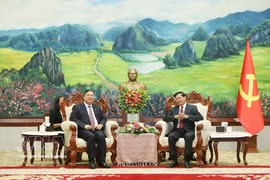
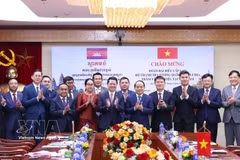
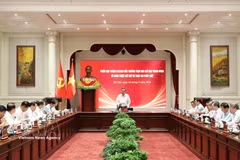
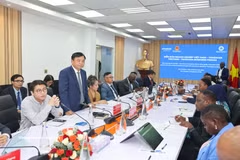
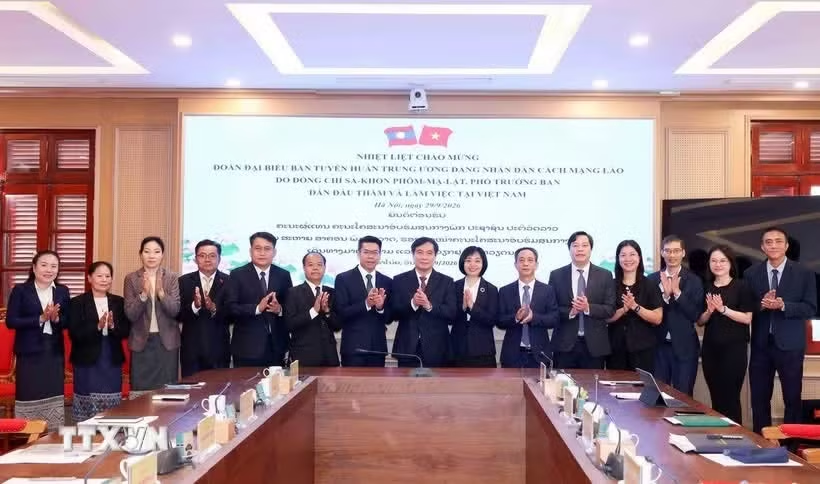
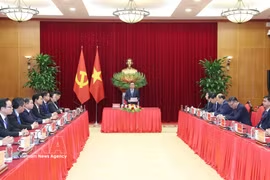
Vietnamese and Lao officials at the event (Photo: VNA)

Hanoi (VNA) – Vietnam and Laos will continue cooperation to enhance the quality of professional training courses for Lao propaganda and training officials, while expanding exchanges of young officials and relevant professional personnel in line with the conditions of both sides.

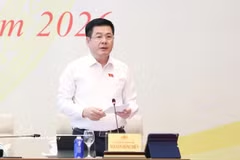
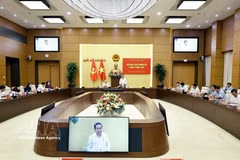
Phan Xuan Thuy, Deputy Head of the Communist Party of Vietnam (CPV) Central Committee’s Commission for Publicity, held talks with Sakhone Phommalath, Deputy Head of the Lao People’s Revolutionary Party (LPRP) Central Committee’s Commission for Propaganda and Training, in Hanoi on September 29, as the Lao delegation is on a working visit to Vietnam.

Reviewing cooperation between the two commissions during 2022-2026, Sakhone Phommalath highlighted the outcomes in promoting information on achievements of the two Parties and States and the tradition of solidarity between the two countries, and conducting professional exchanges and training for their officials.

He stressed that regular dissemination of information about Vietnam-Laos cooperation have helped raise public awareness in both countries of the great friendship, special solidarity and comprehensive cooperation between Vietnam and Laos, which continue to deepen.

Thuy said that in line with the Politburo’s policy, on August 1, the Commission for Information, Education and Mass Mobilisation was renamed the Commission for Publicity, while its function of giving advice regarding mass mobilisation was transferred to the Party Committee of the Vietnam Fatherland Front and central socio-political organisations.

The commission now focuses on two strategic advisory functions for the Party in information and education, with emphasis on political, ideological and ethical affairs; communications; external information; guidance and orientation for the press and publishing sector; theoretical research and practical reviews; monitoring and orienting public opinion; protecting the Party’s ideological foundation; culture and arts; and Party building in terms of ideology.

According to Thuy, the two commissions have maintained delegation exchanges, talks and experience sharing across various areas of information and education. Cooperation at the local level has also continued to expand, particularly among localities sharing the border. All nine Vietnamese localities sharing the border with Laos have signed cooperation agreements covering communications and ideological work.

Regarding training and capacity building for Lao propaganda and training officials, the Ho Chi Minh National Academy of Politics organises an annual professional training course on information and training work for LPRP officials.

From 2023 to 2026, 70 Lao officials took part in these courses, including 36 central-level and 34 local-level officials. The programme is updated annually, focusing on political and theoretical knowledge, information and training work, and related professional skills.

For future cooperation, Thuy proposed that the two commissions promptly finalise a draft cooperation agreement for 2027-2031, submit it to the competent authorities and make necessary preparations for its signing in 2027 on the occasion of important anniversaries in bilateral relations.

They should also strengthen experience sharing in political, ideological and ethical affairs, theoretical research, practical reviews, public opinion orientation and protection of the Party’s ideological foundation, while paying greater attention to emerging issues related to digital transformation and the application of science and technology in communications and ideological work, he said.

They should also step up cooperation in press and publishing, external information and communications on new media platforms, and coordinate in identifying, combating and refuting false and distorted information about bilateral relations, Thuy suggested./.
VNA

See more

☀️ Morning digest on September 29

☀️ Morning digest on September 29

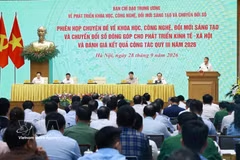
A meeting exploring ways science and technology, innovation and digital transformation can contribute more to socio-economic growth; the opening of the Asia-Pacific Dialogue on Heritage and Authenticity; and Vietnam winning a bronze medal in the men's sepak takraw at ASIAD 2026 are among news highlights on September 28 evening.

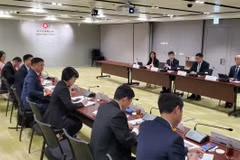
Officials at the talks between the Government Inspectorate of Vietnam and the Cambodian Ministry of Inspection in Hanoi on September 28, 2026 (Photo: VNA)

Vietnamese, Cambodian inspectors reinforce collaboration

The Government Inspectorate of Vietnam broadly accepted the Cambodian ministry's proposals to maintain, renew and make more effective regular meetings between professional units and training establishments, and increase exchanges of senior, expert and specialised working-group delegations.

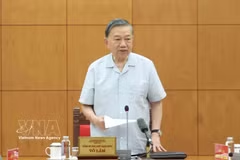
General Secretary of the Communist Party of Vietnam Central Committee and President To Lam speaks at the September meeting of the Standing Board of the central steering committee on institution improvement and law enforcement on September 28. (Photo: VNA)

Urgent action needed to address law enforcement as weak link: Top leader

Chairing the September meeting of the Standing Board of the central steering committee on institution improvement and law enforcement, which also saw the attendance of Politburo members: Prime Minister Le Minh Hung and Standing Member of the Party Central Committee’s Secretariat Tran Cam Tu, General Secretary and President Lam said the effectiveness of lawmaking and enforcement should be measured by the removal of bottlenecks, lower compliance costs, better mobilisation of resources, stronger discipline and the effective protection of the legitimate rights and interests of people and businesses.

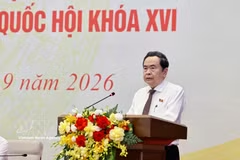
National Assembly (NA) President Tran Thanh Man speaks at the first conference of full-time deputies of the 16th-tenure NA. (Photo: VNA)

Top legislator stresses importance of sound policies, robust regulations, consistent legal system, smooth enforcement

National Assembly (NA) President Tran Thanh Man noted that the 16th-tenure NA has handled a substantial legislative workload from the beginning of its term, with about 45 draft laws and resolutions expected to be considered at the second session. Many have a broad scope and directly affect the State apparatus, the investment and business environment, and the rights and interests of people and enterprises.

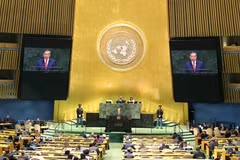
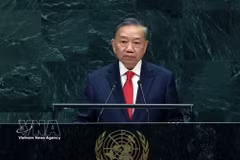
General Secretary of the Communist Party of Vietnam Central Committee and President To Lam delivers remarks at the 81st session of the United Nations General Assembly. (Photo: VNA)

Statecraft leaves strong imprint on Vietnam’s diplomacy

Ton Sinh Thanh, who is former Vietnamese Ambassador to India and senior lecturer at the Diplomatic Academy of Vietnam, said that General Secretary and President Lam’s message at the UNGA that restoring trust does not require countries to eliminate differences but to responsibly manage them was particularly significant amid growing polarisation and divisions worldwide.

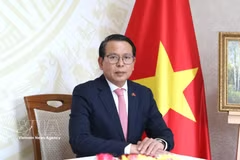
Vietnamese Ambassador to Belarus Nguyen Van Trung (Photo: VNA)

Vietnamese community in Belarus helps strengthen bilateral ties: Ambassador

The Vietnamese community in Belarus had embraced the resolution, recognising that the Party and State consider OVs not only an integral part of the nation but also an important force making practical contributions to national socio-economic development and defence, said Ambassador to Belarus Nguyen Van Trung.

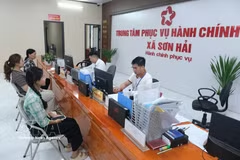
Residents at the Public Service Centre of Son Hai Commune (Bac Ninh) to handle public administrative procedures. (Photo: VNA)

Addressing bottlenecks to improve administrative system operations

To make the model more effective, however, bottlenecks in personnel, data, resources and coordination mechanisms identified in the third round of inspection and supervision by the Politburo and Party Central Committee Secretariat must continue to be addressed.