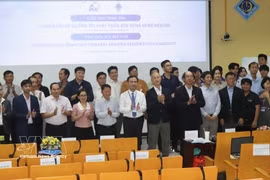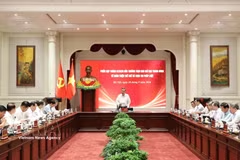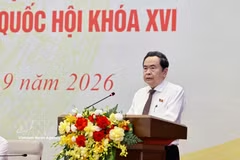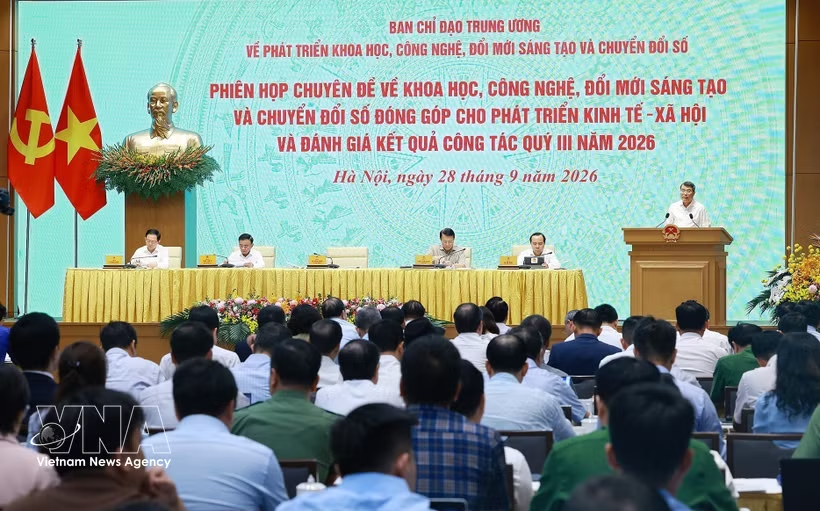
Hanoi (VNA) – Prime Minister Le Minh Hung, head of the Central Steering Committee on science and technology development, innovation, and digital transformation, chaired a thematic meeting in Hanoi on September 28 to explore ways these fields can contribute more effectively to socio-economic growth and to review progress from the third quarter of 2026.
In his opening remarks, PM Hung said the meeting aimed to concretise the implementation of the Party Central Committee’s Resolution No. 19-NQ/TW on renewing the country’s development model, alongside the Politburo’s Resolution No. 57-NQ/TW and directions given by General Secretary of the Communist Party of Vietnam Central Committee and President To Lam on digital transformation in the political system.
He asked participants to assess how science, technology, innovation and digital transformation have contributed to the renewal of the growth model, particularly the goal of achieving double-digit growth, and identify measures to make these contributions more substantive, effective and measurable.
As 2026 is the first year of implementing the Resolution of the 14th National Party Congress, with a growth target of at least 10%, the PM noted that GDP grew 8.18% in the first half of the year. To meet the annual target, growth in the second half would need to reach nearly 12%, requiring strong efforts across all sectors.
He emphasised that although traditional growth drivers like investment, consumption, and exports are still important, Vietnam can no longer depend on capital and cheap labour. The only way to maintain strong double-digit growth, he said, is by boosting productivity through science, technology, innovation, and digital transformation.
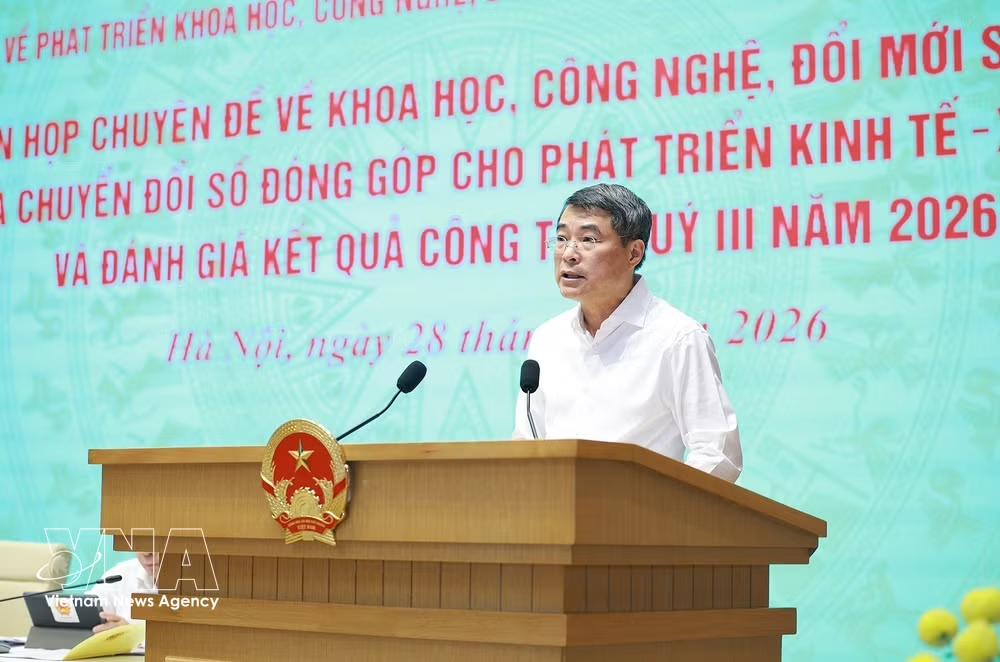
Resolution No. 57 sets a target for the digital economy to account for at least 30% of GDP by 2030, while total factor productivity (TFP) is expected to contribute more than 55% to growth. Therefore, science, technology, innovation and digital transformation must move beyond a supporting role to become key, direct and measurable growth drivers, particularly by raising labour productivity and the economy’s competitiveness.
After one year and nine months of implementing this resolution, institutional barriers have largely been addressed, a list of strategic technologies approved, and progress made in digital infrastructure, data and online public services. However, PM Hung noted that actual results remained below expectations and have yet to generate enough strategic products or make clear contributions to growth, labour productivity and national governance.
He identified the biggest bottleneck as not awareness, policy or resources, but implementation capacity and accountability, especially that of leaders.
The Government leader called for a shift from measuring inputs to measuring growth outcomes, focusing on labour productivity, digital technology revenue, added value and contributions to local and national economic growth rather than the number of documents, research projects or digital platforms.
He also urged ministries and localities to focus on digitalising key industries, developing the data economy and digital technology enterprises, using public procurement and investment as initial markets for new technologies, and expanding digital skills, education, healthcare and payments while ensuring cybersecurity and personal data protection.
He asked each ministry, sector and locality to identify immediate tasks, specific products, deadlines and measurable contributions to its growth targets following the meeting./.