Vietnam receives 2026 Government Leadership Award

The award recognises Vietnam’s efforts to develop policies, improve institutions and build infrastructure for digital transformation. The 2023 Telecommunications Law and Politburo Resolution No. 57-NQ/TW on breakthroughs in science and technology, innovation and national digital transformation provide important foundations, establishing digital infrastructure as a cornerstone of the digital economy and society.

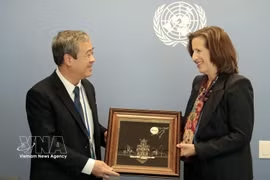
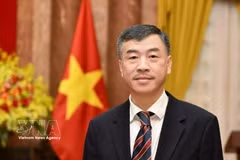
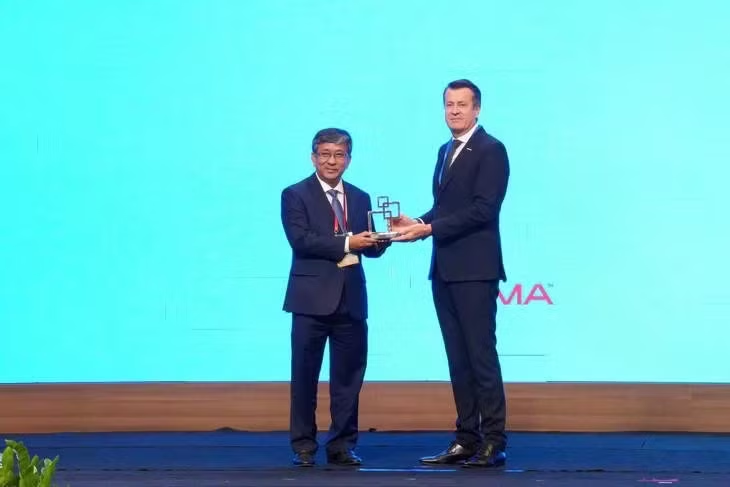
Deputy Minister of Science and Technology Tran Trung Tinh (L), representing the Vietnamese Government, receives the GSMA Government Leadership Award 2026 from the Global System for Mobile Communications Association (GSMA) (Photo: suckhoedoisong.vn)

Quang Ninh (VNA) – The Ministry of Science and Technology, representing the Vietnamese Government, received the GSMA Government Leadership Award 2026 from the Global System for Mobile Communications Association (GSMA) at the opening of the Ministerial Roundtable on Digital and Artificial Intelligence on October 28, as part of Vietnam International Digital Week 2026 (VIDW 2026) in Quang Ninh city.

The annual award honours one country each year, selected by an independent international panel of experts involving representatives from organisations such as the International Telecommunication Union (ITU), the Organisation for Economic Co-operation and Development (OECD) and the GSMA. It recognises governments that demonstrate sustained policy leadership, strategic vision and an outstanding regulatory environment to promote mobile and digital development, as well as ambitions translated into concrete action.

Vietnam is the only country to receive the award in 2026. Brazil won in 2025 for its effective spectrum management policies and innovative telecommunications regulations, while Trinidad and Tobago received the award in 2024 and India in 2023.

The award recognises Vietnam’s efforts to develop policies, improve institutions and build infrastructure for digital transformation. The 2023 Telecommunications Law and Politburo Resolution No. 57-NQ/TW on breakthroughs in science and technology, innovation and national digital transformation provide important foundations, establishing digital infrastructure as a cornerstone of the digital economy and society.

Speaking at the award ceremony, Julian Gorman, GSMA’s head for Asia-Pacific, said Vietnam has been honoured for its approach to linking national ambitions with policy direction, implementation capacity and cooperation with industry.

He praised Vietnam’s strategic vision of treating telecommunications connectivity as economic infrastructure, its policies to promote network investment, its development of 5G and its people-centred approach. These foundations, he said, would enable Vietnam to further develop its digital economy, strengthen industrial capabilities and play a greater role in shaping the future of the global telecommunications industry.

According to the GSMA, Vietnam’s digital economy is projected to account for 30% of GDP by 2030. The country’s ability to attract foreign direct investment in semiconductors, artificial intelligence and smart manufacturing is seen as a key driver of economic restructuring, technological advancement and national competitiveness.

The GSMA’s Digital Nations 2026 report on building trusted digital ecosystems in Asia-Pacific highlights Vietnam’s progress across five pillars: infrastructure, innovation, data governance, cybersecurity and human skills.

These pillars are closely interconnected and underpin the sustainable development of the digital ecosystem. Modern connectivity infrastructure broadens access to services, innovation drives new products and business models, and data governance and cybersecurity help build trust. Digital skills, meanwhile, enable people and businesses to make effective use of the opportunities offered by technology.

One of Vietnam’s notable achievements highlighted by the GSMA is the rapid development of next-generation telecommunications infrastructure. By 2026, the country had installed more than 40,000 5G base stations, covering approximately 92% of the population and placing it among the world’s fastest countries in deploying 5G and expanding coverage.

Alongside infrastructure expansion, internet connectivity has also improved significantly. According to i-Speed, the measurement system operated by the Vietnam Internet Network Information Centre (VNNIC) under the Ministry of Science and Technology, mobile and 5G internet speeds in Vietnam rose sharply in 2026, exceeding 500 Mbps for the first time early in the year, with one operator reaching a peak of 617 Mbps. The national average download speed cited in the announcement remained above 437 Mbps.

According to Ookla’s Speedtest Global Index, based on data updated for August and September 2026, Vietnam ranked eighth worldwide for mobile broadband speed for the first time in September, with a median download speed of 230.31 Mbps. This marked an improvement from 10th place in July and ninth in August. Hanoi also entered the top five cities worldwide for mobile network speeds.

For fixed broadband, Vietnam ranked seventh globally in July 2026, with a speed of 307.11 Mbps, before placing eighth in August at 301.48 Mbps, more than twice the global average of 129.68 Mbps. In September, the country remained among the world’s top 10, with a speed of 297.64 Mbps.

Alongside 5G deployment, Vietnam is stepping up efforts to eliminate mobile coverage gaps and expand broadband access. The completion of the 2G network shutdown and implementation of the public telecommunications service programme under Decision No. 777/QD-TTg in 2026 have provided a basis for telecommunications operators to extend connectivity to disadvantaged areas.

A key campaign in 2026 brought coverage to 1,856 locations, including 788 hamlets and villages and 1,068 residential clusters in remote, mountainous, border and island areas. In addition to expanding terrestrial infrastructure, Vietnam is testing low-Earth orbit satellite internet solutions to improve connectivity in areas where conventional telecommunications networks are difficult to deploy.

Vietnam’s goal of ensuring that 100% of its population can access digital services requires continued coordination between regulators and telecommunications operators. It also calls for infrastructure development to be accompanied by stronger digital skills, information security and access to services that meet people’s practical needs./.

VNA

See more

Illustrative image (Photo: VNA)

Skilled workforce key to advancing Vietnam’s marine economy: insiders

According to Nguyen Tien Thao, Director General of the Higher Education Department under the Ministry of Education and Training, said 13 institutions in Vietnam offer training related to marine resources and the marine economy. In 2026, 44 disciplines enrolled students, up 18.9% from 2025, while successful applicants increased 16.1% to 5,153. However, training remains limited in scale.

A panorama of Hoan Kiem lake (Photo: VNA)

Hanoi proposes 859-million-USD project to revamp Hoan Kiem Lake area

Implemented in Hoan Kiem and Cua Nam wards, the project aims to create a large square directly connecting Hoan Kiem Lake with Cach mang thang tam (August Revolution) Square, the Hanoi Opera House, the Vietnam National Museum of History, and nearby areas. It also seeks to expand public spaces, reorganise the traffic system and underground spaces, preserve and promote heritage values, and introduce appropriate cultural and service facilities.

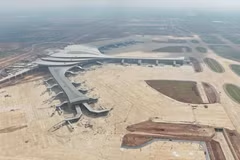
At the construction site of Long Thanh International Airport in late September 2026 (Photo: VNA)

ACV proposes traffic priority for Long Thanh airport links

Preparations for Long Thanh International Airport’s commercial launch in late 2026 are being accelerated. ACV said construction of Component Project 3, which covers essential airport facilities, is about 86% complete. Four of the 16 main bidding packages have been completed, while the remaining 12 are being fast-tracked for completion in this December. Most are expected to meet the deadline.

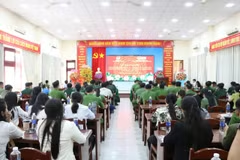
An overview of the conference (Photo: daibieunhandan.vn)

Hanoi completes sampling of all planned martyrs’ graves

In 2026, the search and recovery of martyrs’ remains and the implementation of the 500-day campaign were identified as particularly important political tasks, reflecting the traditions of gratitude and remembrance, as well as the responsibility of the Party organisation, authorities, armed forces and people towards fallen heroes. Hanoi has now completed the campaign’s first phase.

A representative of the Quang Ngai Border Guard Command speaks at the meeting. (Photo: VNA)

Quang Ngai sets deadline for eCDT installation

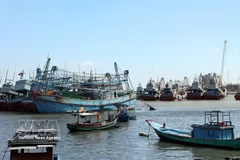
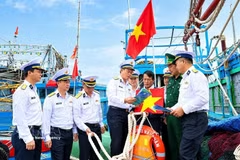
At a meeting on October 27 to review the province’s IUU fishing prevention plan implementation, Vice Chairman of the provincial People’s Committee Do Tam Hien called on local departments and authorities to meet the deadline and strengthen round-the-clock monitoring of fishing vessels at high risk of IUU violations.

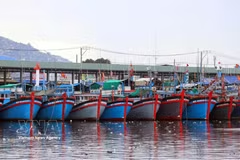
Illustrative image (Photo: VNA)

Former Ho Chi Minh City planning official expelled from Party

The Communist Party of Vietnam Central Committee’s Secretariat has decided to expel Su Ngọc Anh, former member of the Ho Chi Minh City Party Committee, and former Deputy Secretary of the Party Committee of of the municipal Department of Planning and Investment and former Deputy Director of the department from the Party as a disciplinary measure.

Hoang Dinh Thang, Chairman of the Union of Vietnamese Associations in Europe and member of the Presidium of the Vietnam Fatherland Front Central Committee (Photo: VNA)

Great National Unity Day in Europe: Youth build stronger, more united community

There are many untapped assets in the Vietnamese community in Europe, including knowledge, management experience, science-technology, economic resources and international connections. Linked effectively, they could contribute more directly to Vietnam’s development, and the community can keep serving as a friendship bridge between Vietnam and European countries.

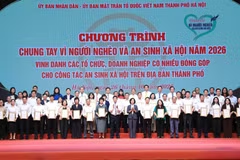
President of the Vietnam Fatherland Front Committee of Hanoi Bui Huyen Mai and Standing Vice Chairman of the municipal People's Committee Duong Duc Tuan receive the donations and present letters of appreciation to the participating organisations (Photo: thanhuyhanoi.vn)

Hanoi mobilises over 9.3 million USD to support the poor

At the event, 12 organisations received certificates of merit from the Hanoi Party Committee and 14 others were commended by the Chairperson of the municipal People’s Committee for contributions to the “For Vietnam’s Seas and Islands” Fund. Another 19 organisations were recognised for fundraising and relief efforts for people affected by natural disasters in 2025, while 20 organisations and businesses were honoured for their social welfare contributions.

The Canada-Vietnam Cultural and Educational Council officially launches the Viet Youth Readiness Hub and opens a community Vietnamese language class for children (Photo: VNA)

Vietnamese language education network expanded across Canada

In line with the Political Bureau’s Resolution No. 23-NQ/TW on overseas Vietnamese affairs, CVCEC’s initiative combines technology and educational cooperation to connect previously independent classes, expand access to Vietnamese language learning and help young people maintain their ties with the homeland.

Phuoc An Minh Bridge is 3 metres wide and 33 metres long, meeting the design standards for new rural bridges. (Photo: VNA)

An Giang mobilises resources to improve social welfare

Local authorities have stepped up efforts to mobilise donations from businesses, organisations and philanthropists to build bridges, roads and houses, supporting poverty reduction and new-style rural development.

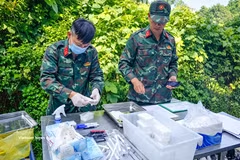
Collecting samples for DNA testing (Photo: VNA)

Dien Bien province collects 81 DNA samples to identify war martyrs

Dien Bien has 7,398 graves of martyrs and youth volunteers across 11 cemeteries, 6,894 of which contain remains. In the first phase of the 500-day campaign, authorities exhumed and sampled 4,607 graves in seven cemeteries, meeting 100% of the plan, and handed 4,343 eligible samples to the Military Forensic Institute for testing.