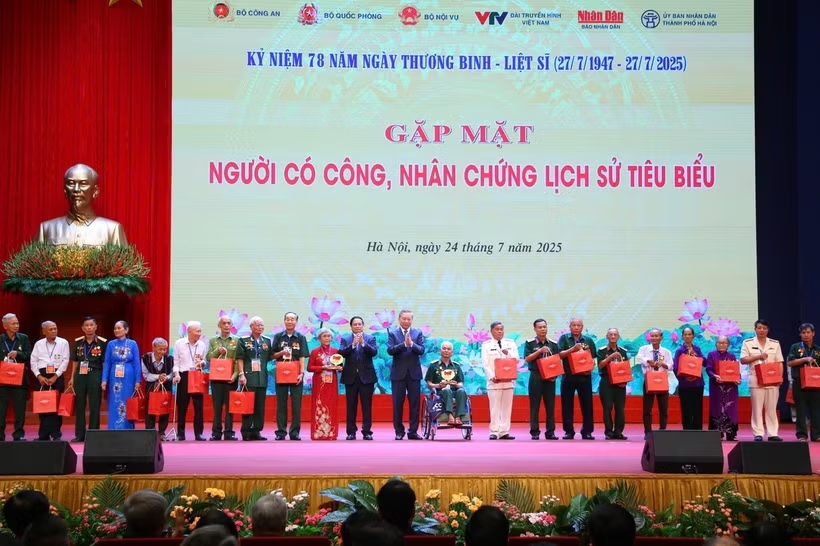
Hanoi (VNA) - For nearly eight decades, Vietnam’s tradition of honoring war heroes and those who have rendered services to the nation has remained an enduring moral compass.
Known as “Den on dap nghia” (repaying gratitude) and “Uong nuoc nho nguon” (when drinking water, remember its source), this commitment is both a political responsibility and a deeply felt duty, shaping policies that extend far beyond material assistance.
President Ho Chi Minh’s early message, calling for stable housing, vocational training, and memorials to honour martyrs remains the guiding principle. It urges not only remembrance but also tangible action to improve lives and uphold dignity for wounded soldiers, martyrs’ families, and all those who contributed to the nation’s independence and freedom.
In 2025, this commitment has taken the form of a nationwide housing initiative for national contributors and their families. The Ministry of Home Affairs reports that by July 23, all 44,000 planned homes both new builds and repairs, were essentially completed. The programme prioritised eliminating makeshift or dilapidated shelters before War Invalids and Martyrs’ Day on July 27, fulfilling Prime Minister Pham Minh Chinh’s directive to mark the occasion with concrete results.
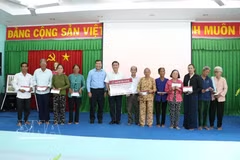
These houses are more than bricks and mortar, they symbolise collective gratitude and a promise that the sacrifices made for the country will never be forgotten. Across provinces, community members, soldiers, and local authorities have joined forces to provide secure, comfortable homes for those who once risked everything for the nation.
Financial support has also expanded significantly. The standard monthly allowance for national contributors in 2025 is over 70% higher than in 2021, improving living conditions and easing daily burdens.
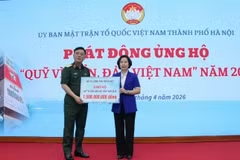
During Tet and other major national holidays this year, authorities distributed more than 1.4 trillion VND (53.28 million USD) in aid to 3.26 million recipients, reflecting the country’s determination to match words of gratitude with meaningful assistance.
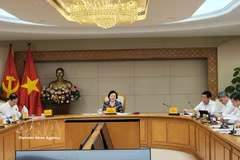
Yet the effort goes beyond meeting current needs. The government is working to modernise and expand policies to ensure comprehensive care. The Ministry of Home Affairs is finalising a decree to replace Decree 131/2021, incorporating lessons from recent years and addressing new issues.
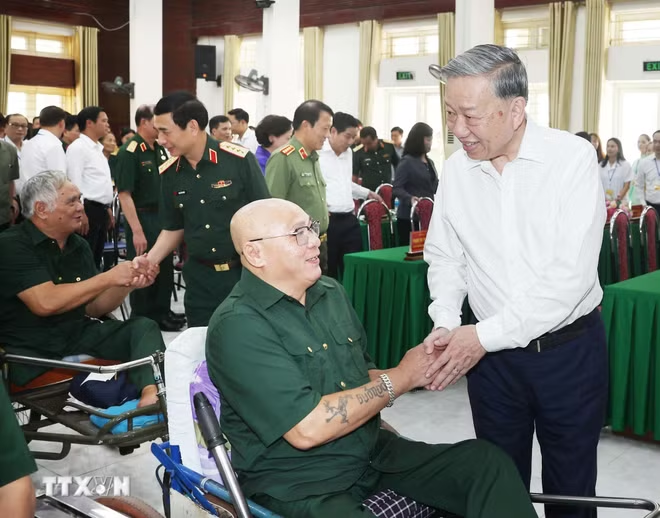
Another regulation under development will adjust monthly allowances for wartime youth volunteers, including those who served in southern battlefields from 1965 to 1975. Both are expected to be submitted to the government in the third quarter of 2025.
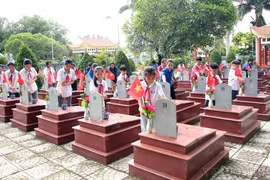
One of the most emotional undertakings is the identification of unknown martyrs. For families who have waited decades for answers, each name restored to a gravesite is a profound moment of closure.
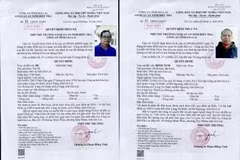
Advances in DNA technology and the persistent work of search and recovery teams have brought many such reunions. In the first six months of 2025, nearly 400 sets of remains were submitted for DNA testing. Authorities issued 196 new “To Quoc Ghi Cong” (Recognition of National Merit) certificates, reissued almost 2,000, and processed thousands of archival requests for martyr records.
This work is supported by a new regulation setting technical and financial standards for DNA testing, designed to streamline the process and make identification efforts more efficient. The aim is to bring home as many as possible of the 200,000 martyrs still uncollected and to identify the nearly 300,000 whose remains remain unnamed.
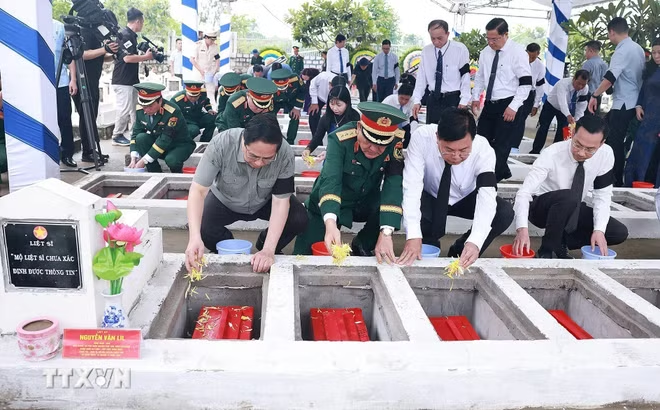
Officials emphasise that national contributors are not only recipients of care but also enduring symbols of Vietnamese resilience and patriotism. Their stories continue to inspire younger generations, reinforcing the ideals of sacrifice and unity. Many are still active in their communities, serving as role models and passing on the values that sustained the nation through its most difficult times.
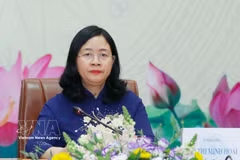
Minister of Home Affairs Pham Thi Thanh Tra has pledged that future policies will be comprehensive, inclusive, and humane, ensuring that no one is left behind, especially those in remote or disadvantaged areas. The approach aligns with Resolution 42 of the 13th Party Central Committee, which calls for the highest level of preferential treatment in the social policy system for national contributors.
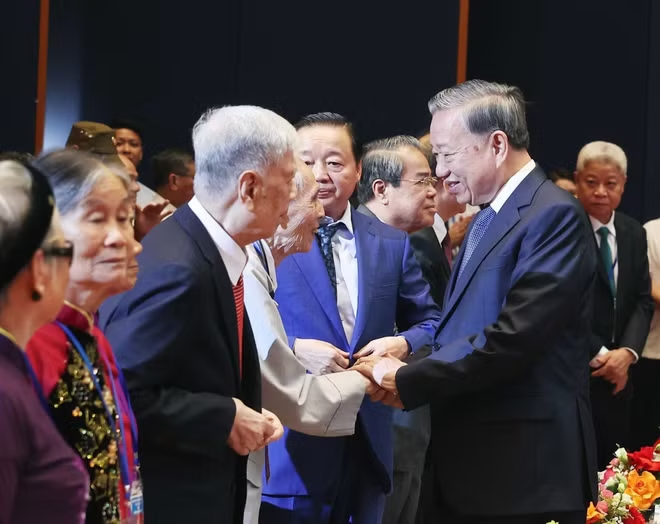
Party General Secretary To Lam has also stressed that the country’s present achievements, from economic renewal to international integration will not have been possible without the sacrifices of over 1.2 million martyrs and 9.2 million recognised contributors. He described them as “the immortal soul of the nation” and the highest embodiment of Vietnamese revolutionary heroism.
The flame of gratitude, kindled during the early years of independence, continues to burn brightly. It is visible in the secure homes built for elderly veterans, in the allowances that make daily life easier, in the solemn memorials that preserve history, and in the tears of families reunited, at last with their loved ones’ names and remains.
As Vietnam moves forward, these policies are more than administrative measures. They are expressions of a collective conscience, binding generations together in the shared understanding that freedom comes at a cost and that cost must always be honored./.