Vietnam weathering tariff storm, poised to lead Asia’s growth: HSBC

Despite repeated tariff-related shocks, Vietnam’s trade continued to grow, reaching a record 928 billion USD in 2025, up 18% year-on-year.

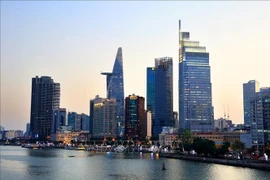
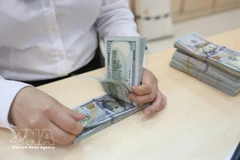
HSBC forecasts Vietnam’s gross domestic product (GDP) to expand by as much as 8% in 2025, potentially the highest growth rate in Asia. (Photo: VietnamPlus)

Hanoi (VNA) – HSBC Global Investment Research believes Vietnam is well positioned to emerge as Asia’s fastest-growing economy, having successfully navigated global tariff headwinds while strengthening its trade, investment and domestic growth foundations.

In its report, Vietnam at a Glance, released on January 13, HSBC forecasts Vietnam’s gross domestic product (GDP) to expand by as much as 8% in 2025, potentially the highest growth rate in Asia. Growth is expected to moderate to 6.7% in 2026, supported by expanding trade market share and sustained investment momentum.

According to HSBC economists, 2025 was a highly volatile year, marked by heightened global trade tensions. When the so-called “Liberation Day” tariff announcements were first made in April, Vietnam was considered among the Asian economies most exposed to tariff risks, second only to China. However, Vietnam since demonstrated notable economic resilience, with GDP growth reaching an estimated 8% for the full year — the second-highest annual expansion in the past 15 years.

Despite repeated tariff-related shocks, Vietnam’s trade continued to grow, reaching a record 928 billion USD in 2025, up 18% year-on-year. While part of this surge reflected front-loading of export orders, HSBC noted that this factor alone does not fully explain Vietnam’s strong performance.

Although the impact of order front-loading to the US market has gradually faded, Vietnam’s exports have continued to outperform regional peers, rising about 30% year-on-year on a three-month moving average basis. HSBC attributed this not only to timing, but also to Vietnam’s increasingly appropriate export mix.

HSBC analysts pointed to the global artificial intelligence boom as a key driver of trade resilience. Escalating US–China competition in semiconductors has reshaped global supply chains, boosting demand for AI-related chips and electronics. This has created favorable conditions for electronics exports as a way to mitigate tariff pressures.

Vietnam is well positioned to benefit from this trend. Electronics now account for around 35% of the country’s total exports, up sharply from just 5% in 2010. Meanwhile, the share of traditional exports such as textiles and footwear has fallen from a peak of about 30% in 2005 to just over 10% today, reflecting Vietnam’s gradual move up the global value chain.

Vietnam has also continued to gain market share in the US. In 2025, its exports to the US rose nearly 30% year-on-year, according to Nikkei, despite tariff concerns. Even with a reciprocal tariff rate of 20%, Vietnam expanded its US market share in products such as mobile phones, garments and footwear.

HSBC also challenged simplistic views about rising ASEAN imports from China. The key issue, it argued, is not import volumes alone, but whether countries can convert cheaper imported inputs into higher exports and capture demand in end markets such as the US. Vietnam stands out as a successful “China+1” case, with its trade deficit with China widening to 116 billion USD, while its surplus with the rest of the world rose to 136 billion USD, resulting in a net surplus of about 20 billion USD.
khach-dulich1.jpg
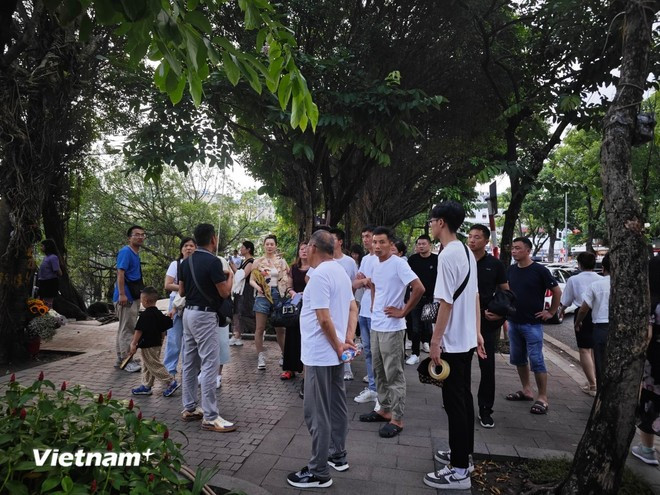
Vietnam welcomes over 21 million international tourists in 2025. (Photo: VietnamPlus)

On investment, HSBC noted that newly registered foreign direct investment (FDI) fell 12% year-on-year in 2025, though levels remained high by historical standards. The decline was largely driven by weaker inflows from South Korea, while investment from China rose sharply, accounting for about 30% of total FDI and overtaking Singapore.

Domestic demand has also remained a key growth pillar. Private consumption rose around 8%, supported by an expanding consumer class, while investment accelerated to nearly 9%, underpinned by continued infrastructure development. Tourism also rebounded strongly, with more than 21 million international arrivals generating about 40 billion USD in revenue, equivalent to 7% of GDP.

Inflation remained under control, averaging 3.3% in 2025. HSBC forecasts inflation at around 3.5% in 2026, alongside GDP growth of 6.7%, while cautioning that tariff-related risks could still weigh on Vietnam’s trade outlook in the period ahead./.
VNA

See more

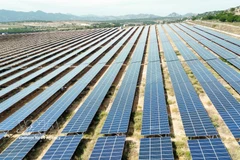
GELEX Ninh Thuan solar farm located in Phuoc Dinh commune, Khanh Hoa province. (Illustrative photo: VNA)

HSBC arranges 200 million USD loan for GELEX Infrastructure JSC

According to Tim Evans, CEO and Head of Banking, Legal Representative at HSBC Vietnam, the deal was completed amid challenging market conditions and a tight execution timeline. The syndicated loan drew strong interest from lenders and was structured to align with GELEX Infrastructure’s medium-term funding requirements.

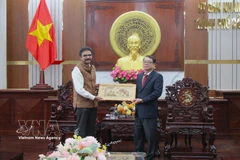
Indian Consul General in Ho Chi Minh City Vipra Pandey (left) presents a gift to Vice Chairman of the People's Committee of Can Tho Nguyen Van Khoi at the meeting on March 30. (Photo: VNA)

Can Tho seeks to expand investment cooperation with Indian partners

In recent months, many Indian enterprises have sought investment opportunities in Vietnam, particularly in technology, food processing, machinery, and the application of artificial intelligence in agriculture, via the Indian Consulate General in Ho Chi Minh City, said Consul General Vipra Pandey.

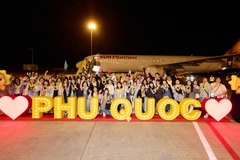
Over 200 passengers from Taiwan (China) arrive in Phu Quoc on Sun PhuQuoc Airways’ inaugural international flight. (Photo: Sun Group)

Sun PhuQuoc Airways launches its first international route to Taipei

On March 29, 2026, Sun PhuQuoc Airways - the airline of Sun Group - officially launched its first international route connecting Phu Quoc and Taipei (Taiwan, China), marking the initial step in its strategy to connect Phu Quoc with the world and gradually position the island as one of Vietnam’s emerging international gateways.

The VIFC-HCMC attracts more than 9 billion USD in committed capital in just over two months of operation. (Photo: VNA)

Deputy PM’s visit to US sparks strong interest in Vietnam int’l financial centre

The Vietnamese Government will continue to accompany and support investors, particularly in emerging financial sectors still in the experimental stage, Deputy Prime Minister Nguyen Hoa Binh stated, showing the hope that US partners will accompany Vietnam throughout the development and operation of the centre, helping position the Southeast Asian country as a vital link in the global financial network.

The “Reunification Express” SE4 arrives in Da Nang on the occasion of the Reunification Day. (Photo: VNA)

Vietnam Railways Corporation to become Vietnam National Railways Group

Under the plan, the operating model of parent–subsidiary companies of the Vietnam Railways Corporation will be transformed into a model of parent–subsidiary companies of the Vietnam National Railways Group. The move is intended to strengthen its capacity to undertake and implement assigned tasks.

Pre-processing fruits for juice production at Wana Beverage JSC, Chau Duc Industrial Park, Ho Chi Minh City. (Photo: VNA)

Vietnam’s food sector urged to move up global value chains

Within Vietnam’s food industry, only a handful of firms, including Vinamilk and Masan Group, have achieved large-scale operations, while most businesses remain small. As a result, the highest value-added gains largely belong to companies that dominate branding and downstream markets.

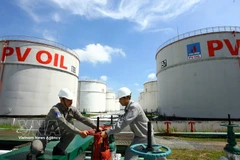
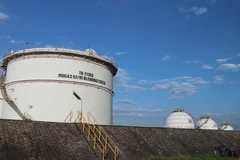
The Dung Quat refinery operates at 123.5% of its capacity, boosting domestic fuel supply. (Photo: VNA)

Dung Quat refinery operates above capacity in first quarter

The refinery produced 2.03 million tonnes of petrol products, achieving 105% of its management plan, while sales volume reached 2.02 million tonnes, equivalent to 113% of the target. As a result, key financial indicators, including revenue, profits and contributions to the state budget, all exceeded planned levels.

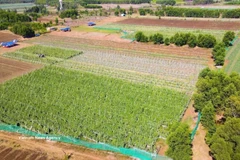
A VietGAP-oriented vegetable farming model adopted by farmers in An Phu commune, Quang Ngai province, has proven effective. (Photo: VNA)

Data, digitalisation key to unlocking sustainable growth in Vietnam’s agriculture

Close coordination among the State, businesses and farmers is also crucial. While the State provides regulatory frameworks, enterprises drive the market, and farmers supply data, effective incentives are needed to encourage farmers’ participation. When tangible benefits are clear, farmers will be more willing to adopt technology and engage in the digital ecosystem

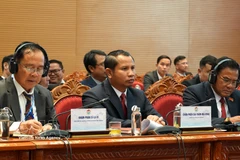
Lao delegates attend the conference. (Photo: VNA)

Gia Lai, Lao provinces sign cooperation agreement

Gia Lai province signed a cooperation agreement for the 2026–2030 period with the four southern Lao provinces of Attapeu, Champasak, Salavan and Sekong at a conference held in the Vietnamese locality on March 29.