Vietnamese language helps bridge cultures between Vietnam, Japan

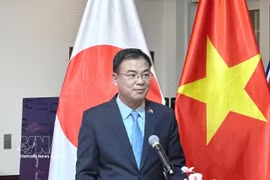
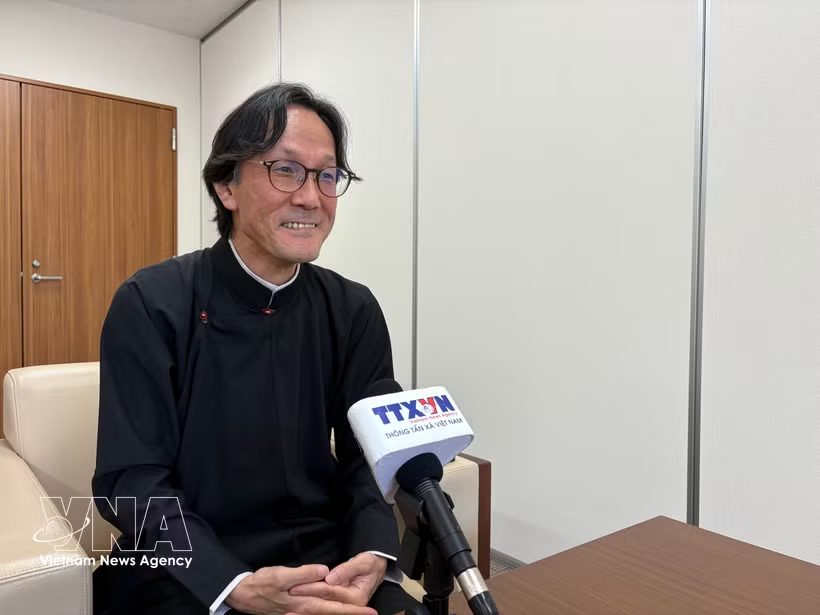
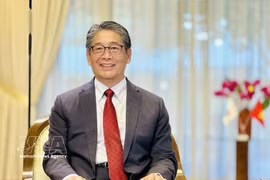
Professor Masaaki Shimizu of Osaka University highlighted how opportunities to use their mother tongue and experience Vietnamese culture in everyday life enable the young people to gain a deeper understanding of their roots and serve as a bridge between the two countries, helping to strengthen bilateral cultural ties.

Professor Masaaki Shimizu of Osaka University (Photo: VNA)

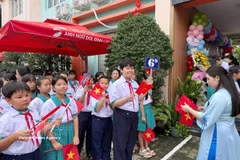
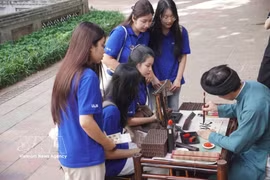
Tokyo (VNA) – For young Vietnamese people born and raised in Japan, the Vietnamese language is more than a means of communicating with family. It is a vital link to their roots and a way to preserve their cultural identity, while helping them build bridges between the Vietnamese community and Japanese society.

Professor Masaaki Shimizu of Osaka University made the remarks in an interview with the Vietnam News Agency (VNA), highlighting how opportunities to use their mother tongue and experience Vietnamese culture in everyday life enable the young people to gain a deeper understanding of their roots and serve as a bridge between the two countries, helping to strengthen bilateral cultural ties.

Shimizu began learning Vietnamese in Osaka in 1985. He was initially attracted by its tonal system and grammatical structures, which differ considerably from Japanese. Through years of study and interactions with Vietnamese people, he gradually discovered similarities in the two cultures, including respect for older generations, strong family ties and concern for others.

These shared values are reflected in the way people address one another and choose words according to their relationships, he said.

According to the professor, the importance both cultures attach to personal relationships and family bonds can help Vietnamese people integrate into Japanese society and build closer connections with local communities. However, each culture expresses these values differently. Understanding one another's ways of thinking and behaviour while respecting cultural differences is therefore essential to building a multilingual and multicultural society.

Drawing on his experience organising cultural exchange activities in Osaka, Shimizu said comparisons of daily life, communication styles and family values could spark participants' curiosity and interest. Such activities offer Japanese people opportunities to learn more about Vietnam while viewing their own cultural values from a fresh perspective.

Food, music, traditional arts and everyday life are among the subjects that appeal to international audiences, he noted. For young people in particular, hands-on activities and direct cultural experiences can leave lasting impressions.

To maintain public interest, he suggested combining cultural introductions with opportunities to learn Vietnamese and interact with Vietnamese people.

Learning a language also means gaining insight into the worldview and ways of thinking of the community that speaks it, helping learners discover connections between Vietnamese culture and their own lives.

He stressed that cultural exchange should be a two-way process, allowing people from both countries to share experiences and learn from each other rather than simply introducing one culture to another.

The diversity of languages, regional identities and life experiences among Vietnamese people should also be reflected, as these differences are an important part of the richness of Vietnamese culture.

With more Vietnamese people living, studying and working in Japan, Shimizu considers education and language development for children of foreign backgrounds an important priority.

He said the Diversity and Community Engagement Research Centre (DERC) is implementing programmes in this field, including activities for children of Vietnamese origin descent.

While helping these children learn Japanese to integrate into schools and local society, it is equally important to preserve and develop their Vietnamese language skills and cultural experiences gained from their families and communities.

With proper support, these children can develop a stronger understanding of their identity and heritage and become future bridges between Vietnam and Japan, he said.

Shimizu expressed confidence that friendship and trust between the two countries' people will grow not only through large-scale cultural events but also through everyday meetings, conversations and exchanges.

Such close personal connections can help people from both countries understand each other better and turn linguistic and cultural differences into a source of strength for their communities./.
VNA

See more

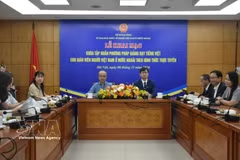
The 2026 online training course on Vietnamese language teaching methods for overseas Vietnamese teachers. (Photo: VNA)

Online course trains overseas Vietnamese teachers

The 2026 course has attracted 770 participants from 40 countries and territories, reflecting both the demand for professional development and the dedication of overseas Vietnamese teachers to preserving and passing on the Vietnamese language within their communities.

An overview of the 10th National Buddhist Congress for the 2026–2031 (Photo: VNA)

Vietnam Buddhist Sangha approves list of 235 members of Executive Council for 2026–2031 term

Upholding Buddhism’s spirit of compassion and relief for those in need, Buddhist monks, nuns and followers nationwide have actively engaged in disaster relief, assistance for disadvantaged people, care for the elderly, orphans and persons with disabilities, and the construction of charity houses, bridges, roads and schools. Social welfare programmes carried out during the 2022–2026 tenure had a total value of more than 7.5 trillion VND (293.1 million USD).

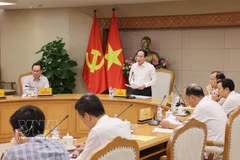
Deputy Prime Minister Le Tien Chau speaks at the nationwide hybrid conference on digital transformation in education and training in Hanoi on November 6, 2026. (Photo: VNA)

Deputy PM requests faster digital transformation in education

Deputy Prime Minister Le Tien Chau pointed out several challenges, including slow verification and use of digitised data, inadequate information security, insufficient infrastructure for nationwide deployment of digital management platforms, limited use of data to replace paper-based procedures, and shortages of funding, infrastructure and personnel.

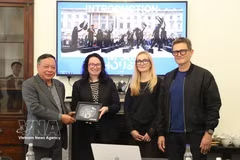
Nguyen Van Phong, Deputy Secretary of the Hanoi Party Committee (left), presents a gift to leaders of Somerset House and design company GreenSpace. (Photo: VNA)

Hanoi explores new opportunities for practical cooperation with UK

The delegation's agenda focused on sectors directly linked to the capital's development, building on existing foundations, including the UK-Vietnam Free Trade Agreement (UKVFTA), the UK's accession to the Comprehensive and Progressive Agreement for Trans-Pacific Partnership (CPTPP), 607 investment projects worth approximately 4.66 billion USD by the UK in Vietnam, and more than 12,000 Vietnamese students studying in the European nation.

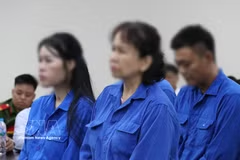
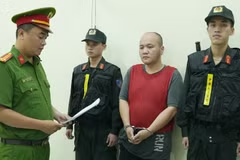
Chu Thi Thanh (front, centre) and other defendants at the court (Photo: VNA)

“Petrol tycoon” Chu Thi Thanh jailed for 18 years

The Hanoi People’s Court handed down the ruling on November 5 after four days of trial and deliberation, sentencing Thanh and 22 co-defendants in a case involving embezzlement, illegal issuance and trading of invoices and documents for state budget payments; and tax evasion at Thien Minh Duc Group JSC and relevant units.

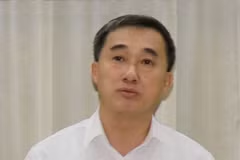
Deputy Health Minister Tran Van Thuan is dismissed from office. (Photo published by VNA)

Deputy Health Minister Tran Van Thuan dismissed from office

Under the decision, Tran Van Thuan, Deputy Minister of Health and Chairman of the Vietnam National Medical Council, is dismissed from office due to violations and shortcomings in the performance of his duties, for which the Party Central Committee’s Secretariat had previously imposed disciplinary action against him.

Phu Quoc special zone steps up green transition ahead of APEC 2027

Phu Quoc special zone steps up green transition ahead of APEC 2027

Phu Quoc special zone in the southern province of An Giang is being positioned as a nationally and internationally recognised centre for eco-tourism and a driving force for the marine economy. It now faces an urgent need to shift towards a green and sustainable growth model.

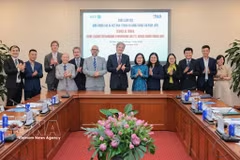
Delegations of the Vietnam News Agency and Agence France-Presse (AFP) pose for a photo at their meeting in Hanoi on November 5. (Photo: VNA)

Vietnam News Agency, AFP seek to strengthen cooperation

Welcoming the AFP delegation, Deputy General Director of the Vietnam News Agency (VNA) Doan Thi Tuyet Nhung described the meeting as an important opportunity for the two agencies to review their cooperation, share development priorities and identify practical areas for closer coordination in the coming time.

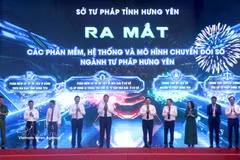
The launch of software, systems, and digital transformation models for the justice sector in Hung Yen province. (Photo: VNA)

Hung Yen marks 2026 Vietnam Law Day

Hung Yen officials launched a set of justice-sector digital systems, including a grassroots mediation database with AI lookup and consultation, a provincial bailiff record database, the provincial justice digital data centre and the digital communications centre of the provincial Department of Justice.

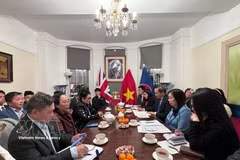
Deputy Foreign Minister Le Thi Thu Hang meets with representatives of Vietnamese associations in the UK. (Photo: VNA)

Vietnamese community in UK preserves cultural identity

In February 2027, Tet culture and the Vietnamese language are expected to feature for the first time as the main focus on the central stage of the annual Lunar New Year event at the National Maritime Museum in the UK, part of the Maritime Greenwich World Heritage Site. The 2027 London Ao Dai Week is also expected to go ahead.

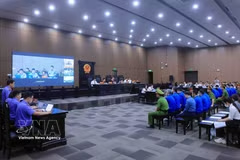
An overview of the first-instance trial for Pho Duc Nam and other 187 defendants (Photo: VNA)

Life imprisonment proposed for Mr Pips, Mr Hunter

Prosecutors on November 4 proposed a life sentence for Pho Duc Nam, also known as Mr Pips, for “fraudulent appropriation of property” and 11-12 years in prison for “money laundering”, with the combined sentence amounting to life imprisonment, at his first-instance trial.

Secondary school students in Ho Chi Minh City (Photo: VNA)

Ho Chi Minh City pushes English as second language in schools

In 2027-2028, Ho Chi Minh City targets 20-30% of managers, teachers and staff in English proficiency training, 30% of establishments providing training in English/STEM/STEAM teaching methods, at least 30% of educational establishments with a complete English-speaking environment, and at least 15% of educational establishments teaching subjects in English.

A section of the Ho Chi Minh Road (Photo: VNA)

Upgrades planned for Ho Chi Minh road section from Pac Po to Cao Bang

Under project plans, the construction will cover a total length of nearly 39km starting from the Ho Chi Minh House in Pac Po, Truong Ha commune and ending at the intersection with the former National Highway 3 (now part of the Ho Chi Minh Road), in Cao Bang province's Bach Dang commune.