ASIAD 20 prompts Vietnam to sharpen focus on key sports

Vietnam’s gold medals came from karate and sepak takraw, reaffirming its strengths in sports with established traditions and focused investment. Meanwhile, bronze medals in canoeing and teqball showed potential in events where Vietnamese athletes are gaining international experience.

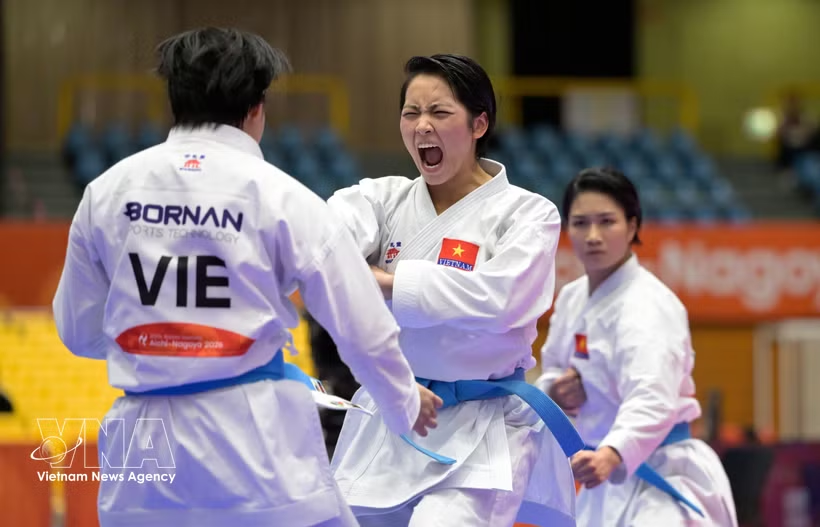
Vietnamese athletes compete against Iran in the women’s team kata final in karate at ASIAD 2026 on September 22. (Photo: Xinhua/VNA)

Hanoi (VNA) – The results at the 20th Asian Games (ASIAD 20) in 2026 spotlight the need for Vietnam to focus resources on key sports, improve training quality and develop a stronger next generation of athletes.

At ASIAD 20 in Aichi-Nagoya, Japan, Vietnam finished 20th overall with 25 medals, including three gold, three silver and 19 bronze. The result met the delegation’s target for overall ranking but fell short of its goal of winning at least four gold medals.

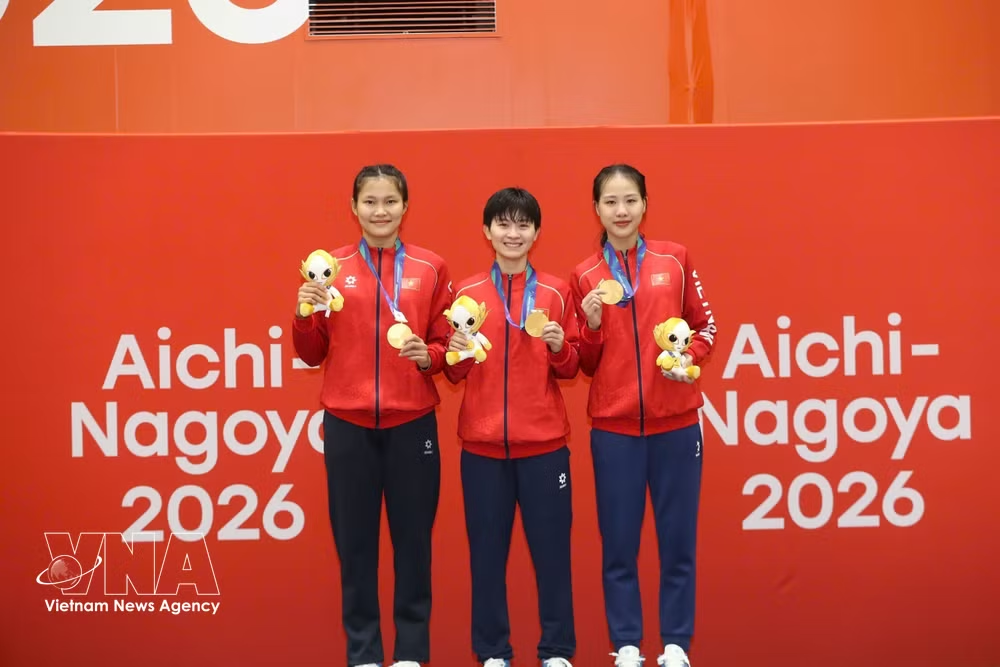
Vietnam’s gold medals came from karate and sepak takraw, reaffirming its strengths in sports with established traditions and focused investment. Meanwhile, bronze medals in canoeing and teqball showed potential in events where Vietnamese athletes are gaining international experience.

The results also highlight the need to assess competitiveness beyond medal counts, including the quality of coaching, nutrition, sports medicine, equipment, international competition experience and the ability to develop successors.

Decision No. 816/QD-TTg, issued by the Prime Minister on May 7, 2026, on developing key sports for ASIAD and Olympic Games for 2026-2045, focuses on developing athletes, improving training conditions and applying science and technology to enhance performance.
vnanet-vn3.jpg
The Vietnamese women’s sepak takraw team win the second gold medal for the Vietnamese sports delegation at ASIAD 20 (Photo: VNA)

Nine key sports have been identified, including shooting, archery, weightlifting, cycling, rowing, athletics, swimming, karate and sepak takraw. Selecting sports with strong medal prospects provides a basis for concentrating resources amid limited funding and training conditions. However, the effectiveness of this orientation depends on identifying the right areas for investment, developing cyclical plans, and evaluating results against specific indicators.

The programme also calls for the selection and development of around 35-40 additional athletes and events with potential to compete for medals at the ASIAD and Olympics.

The Strategy for Development of Vietnam’s Physical Training and Sports through 2030, with a vision to 2045, aims to keep Vietnam among the top three at the Southeast Asian Games and the top 20 at the ASIAD by 2030. It targets five to seven gold medals at each ASIAD edition, as well as medals at the Olympic and Paralympic Games. By 2045, Vietnam aims to rank among the top 15 at the ASIAD and top 50 at the Olympics.

Maintaining achievements across multiple cycles requires a continuous system to identify and develop young athletes, from grassroots talent detection to specialised training, international competition and advancement to national teams. Athlete welfare, including nutrition, medical care and training conditions, also needs attention.

Science and technology should be further applied through performance data analysis, workload monitoring, fitness assessment and tailored nutrition, alongside qualified experts and coordination between training centres and research institutions.

After ASIAD 20, the sports sector needs to translate strategic goals into specific plans for each sport, event and athlete group, assessing not only medals but also performance at Asian and world championships, the development of young athletes and the strength of the next generation.

The Aichi-Nagoya results show that Vietnam has established strengths but still faces challenges in turning potential into continental-level achievements. To pursue higher goals at future ASIAD and Olympic Games, the country needs to focus resources on key areas, improve training quality and build a sustainable athlete development system./.
VNA

See more

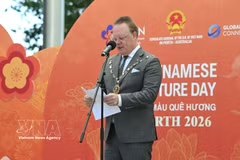
Lord Mayor of Perth Bruce Reynolds speaks at the event (Photo: VNA)

Vietnamese culture shines at festival in Australia

Vietnamese Consul General in Perth Pham Hai Anh called on the Vietnamese community there to preserve the language, family traditions and national values, actively promote Vietnamese culture internationally and encourage creativity to bring national culture closer to the world while harmonising tradition with modernity.

Lidia Brito, UNESCO Assistant Director-General for Priority Africa and External Relations (Photo courtesy of UNESCO)

UNESCO expects Vietnam to lead cultural cooperation initiatives

Lidia Brito, UNESCO Assistant Director-General for Priority Africa and External Relations, praised Vietnam’s contributions to education, science, culture and information, describing the 50-year partnership between Vietnam and UNESCO as a sustained and increasingly substantive journey.

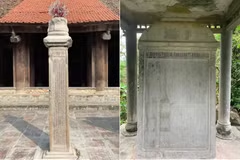
Pho Hien Stone Steles in Hung Yen province (Photo: Department of Cultural Heritage)

Two new UNESCO heritage listings bring preservation challenges to Vietnam

Dr Vu Thi Minh Huong, Vice Chair of the UNESCO Memory of the World Committee for Asia and the Pacific, said with the “Pho Hien Stone Steles” and the “Cliff-based inscriptions on Non Nuoc Mountain” recognised, Hung Yen and Ninh Binh provinces must continue studies and roll out conservation and restoration plans in line with cultural heritage law and UNESCO guidance.

Visitors experience the lacquer-making process firsthand. (Illustrative photo: VNA)

Craft villages need mentors to keep traditions alive

Trinh Quoc Dat, Chairman of the Vietnam Craft Village Association, said craft hubs with strong production, market access and decent incomes tend to attract young workers. Bat Trang commune draws labour from nearby areas, and some families send children to study ceramics before they return to develop the craft and study new designs and glaze lines.

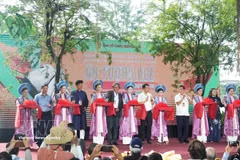
The opening ceremony of the Hue International Sculpture Camp 2026 on November 5 (Photo: VNA)

Hue International Sculpture Camp opens

Running until November 15, the event is a meaningful cultural and artistic activity celebrating Vietnam Culture Day (November 24), contributing to the promotion of national cultural values and inspiring creativity in contemporary art.

Tea-making performance at the tea appreciation night in Thai Nguyen province on November 4, 2026.(Photo: VNA)

Vietnamese, international tea cultures shine at cultural night

The programme was elaborately staged, combining music, dance, traditional art performances and modern stage technology to offer participants an insight into the cultural values of Vietnamese tea and the tea appreciation traditions of several East Asian countries.

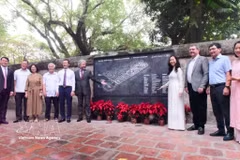
Delegates at the launch of the new visitor map and guide leaflet at the Van Mieu – Quoc Tu Giam Special National Relic Site (Photo: VNA)

950th anniversary of Quoc Tu Giam marked with new visitor guides

The new overall map presents the Van Mieu-Quoc Tu Giam Special National Relic Site's spatial layout, the locations of its structures and key attractions, enabling visitors to plan their own routes. The leaflet provides an overview of the site's history, architecture, historical figures and outstanding cultural and educational values.

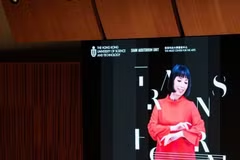
Pianist Bich Tra performs at a concert in Hong Kong, China. (Photo published by VNA)

Pianist Bich Tra brings Vietnamese music to the world

Ahead of Great National Unity Day (November 18) and Vietnam Cultural Day (November 24), pianist Bich Tra, who is now living in Hong Kong (China), shared her artistic journey and aspirations for Vietnam's cultural development.