Bac Ninh (VNA) – The northern city of Bac Ninh recorded 177.8 billion USD in total imports and exports in the first nine months of 2026, keeping its position as the country's largest trade hub.
Exports totaled almost 87.5 billion USD while imports hit 90.3 billion USD. The figures show output at the electronics manufacturing hub is still expanding. They also underscore the need for local companies to build capacity and capture more value in supply chains.
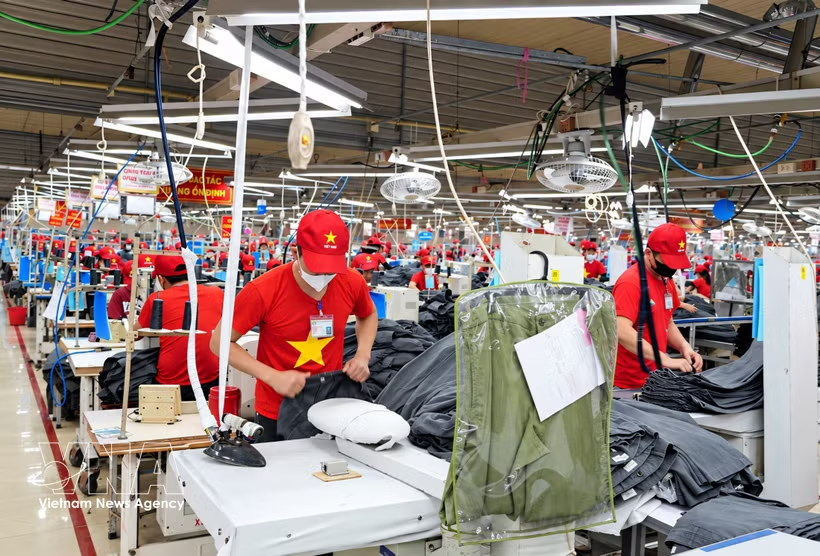
The major export markets included the Republic of Korea (RoK), the US, China, Hong Kong (China) and Japan. Shipments remain concentrated in high-tech industrial goods. Phones and components brought in some 55.52 billion USD, while computers, electronic products and components hit 26.51 billion USD. Apparel, leather and footwear earned almost 1.17 billion USD.
For imports, the main sources were the RoK, China, Taiwan (China), and Hong Kong (China). Phones and components were worth 56.86 billion USD, computers, electronics, and components were valued at 26.45 billion USD, and machinery and equipment were worth 3.78 billion USD.
Imports have grown faster than exports, leaving a trade deficit of about 2.8 billion USD. Authorities attribute the gap to expansion needs at electronics, high-tech and foreign-invested firms, which brought in machinery, equipment, components and raw materials for production, processing and export.
Nguyen Minh Hieu, Director of the city Department of Industry and Trade, said trade should keep growing in the final months of the year because orders from local electronics, high-tech and foreign-invested companies remain largely stable. Trade still faces pressure from global economic swings, rising protectionism and tariffs imposed by some major markets.
To sustain growth amid volatile global markets, the department is working with other agencies to settle problems facing companies and help them use free trade agreements and meet rules of origin. It is also working to diversify markets and supply chains, step up trade promotion, and cement links to help sell products.
The department processed 9,564 applications from local businesses for certificates of origin in the nine months. It also gave guidance on obtaining the certificates, self-certifying origin and using trade deal preferences, and reviewed companies' compliance with origin rules./.