Great actions to conserve Hanoi’s heritages amid urbanisation

In the face of strong urbanisation, the preservation of unique cultural and architectural heritages in Hanoi is more urgent than ever.
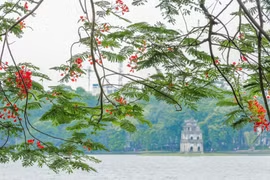
Great actions to conserve Hanoi’s heritages amid urbanisation ảnh 1In the face of strong urbanisation, the preservation of unique cultural and architectural heritages in Hanoi is more urgent than ever (Source: VNA)

Hanoi (VNA) -Hanoi is an attractive destination for domestic and foreign visitors thanks toits unique cultural and architectural heritages. In the face of strongurbanisation, the preservation of those distinctiveheritages is more urgent than ever.

Hanoi boasts a huge variety of architectural heritages which reflect the uniquecultural identities of the local community and serve certain functions in thecity’s spatial organisation.

In the context of rapid socio-economic development, the municipal authoritieshave endeavoured to manage and preserve valuable tangible and intangibleheritages which are in danger of being affected by the urbanisation andmodernisation process.

Hanoi is home to about 6,000 historical,cultural-artistic, architectural and archaeological relic sites, some of which have been recognised byUNESCO.

According to the municipal Department of Culture and Sports, around 2,000 localrelics have been damaged, with more than 200 in need of immediate conservation.

Preservationefforts for Hanoi’s eternal soul

Amongthe heritages in Hanoi, the Old Quarter is a prime example reflecting the authorities’decades-long preservation efforts.

Known as an ancient urban heritage, themillennium-old area represents the eternal soul of Hanoi as it is associated with the formation and development ofthe capital city, as well as traditional handicraft and trade guilds.

Great actions to conserve Hanoi’s heritages amid urbanisation ảnh 2A store on Hang Thiec street (Source: VNA)

The Old Quarter was designated as a national historical relic site in2004. It also has the highest density of monuments in the country, with 79 streets and almost 4,300 houses on an area of81ha.

Although the area has experienced socio-economic changes, it retains aunique atmosphere with vibrant commercial streets as well as some traditionalhandicrafts and socio-cultural activities.

TheOld Quarter is characterised by rows of narrow shophouses, about 3m in widthand 60-100m in depth. Due to their shape, these houses are called tubehouses.

Development pressure has prompted the destruction of traditional tubehouses,requiring urgent actions to preserve and restore the distinctive architectural and cultural value of the Old Quarter.

According to Vice Chairman of the HoanKiem district People's Committee Pham Tuan Long, the first preservationproposal was made by the Vietnam Institute for Urban and Rural Planning underthe Ministry of Construction and the Australian Agency for International Development (AusAID)in 1990.

During the early 1990s, domestic and international experts, along with aid organisations,were engaged in surveys and studies, proposing suggestions to give a faceliftto streets in this historical quarter.

In 1995, the Hanoi authorities established aproject management board tasked with preserving and restoring valuable culturalheritages in the Old Quarter.
Long said conservation work has been divided into differentperiods with specific programmes and projects involving relevant sectors andagencies of the city and funded by foreign countries and organisations,including the Swedish InternationalDevelopment Cooperation Agency (SIDA),Toulouse of France, Brussels of Belgium, the European Union, and the Japan International Cooperation Agency (JICA), among others.

Preservation initiatives have focused on improving housing conditions,upgrading tubehouses, restoringstreet architecture, and proposing architectural solutions, Long noted, addingthat the municipal authorities have also carried out studies and looked forinnovative and feasible ideas to apply in practice.

A pilot programme to renovate part of Ta Hien street was carried out in2010 with a view to restoring the street in the historic centre. The street,often referred to as pho Tay (Westerners' street), is a mix of French-styleterraced architecture and century-old traditional Vietnamese architecture.

The original facades of the houseswere restored while balconies and windows were redecorated with a uniformdesign for front doors, plus air conditioning units and advertising boards.

The15-billion-VND (648,540 USD) project was a cooperation programme between Hanoi,the French city of Toulouse, and the Vietnam Institute for Urban and RuralArchitecture and Planning.

Great actions to conserve Hanoi’s heritages amid urbanisation ảnh 3A house on Dao Duy Tu street after renovation (Photo: VNA)

In 2015, a project to construct a resettlementarea kicked off to move some 26,000 residents from the overcrowded Old Quarter,thus helping reduce the population density from 823 people per ha in 2010 to500 in 2020. The idea is to improve people’s living conditions and promoteheritage preservation.

Dao Ngoc Nghiem, former Director of the Hanoi Department of Planning andArchitecture, said the relocation of local residents is necessary to easepressure on the Old Quarter.

According to the Hoan Kiem district People’sCommittee, the project will resettle 6,500 households by the end of 2020.

Following the successes of Ta Hien and Lan Ong streets to createdestinations for food and shopping lovers, Hoan Kiem district’s administration hasmobilised resources to refurbish the remaining 77 streets in the Old Quarter, hopingto make the area more attractive to tourists.

Starting in 2016, the work has been completed on 30 streets, and the rest are scheduledfor completion in 2020.

Along with efforts to restore old architectural works in the Old Quarter, attention has also been paid to managing architecturalplanning, as well as surveying, evaluating and classifying tangible heritagesand relic sites.

Communication campaigns have been held to spread awareness of the local culture,history and architecture in the community to help with preservation efforts.

Community joinshands in preservation

People in Hanoihave always played their part in heritage preservation, especially regarding valuablearchitectural works that are part of their spiritual lives.

Nghiem stressed that residents livingin the Old Quarter play a key role in preservation efforts because they knowwhat they need to do and how to do it.

It is very important to engage the local community in these efforts, as well asensure their interests in this work, he added.

The Urban Sketchers Hanoi (USK Hanoi), a group of all ages who undertake differentroles to maintain the beauty of the city and spread the love for it throughtheir sketches, is making great contributions to raising public awareness oflocal heritage, historical and cultural values, as well as the space they areliving in.

Architect Tran Thi Thanh Thuy, head of USK Hanoi, which was establishedin 2016, said the group gathers architects, painters, office workers, retireesand even small children, from professional painters to those who have neverused a paint brush before.

After nearly three years, the group has had more than 4,000 members, she said,adding that also thanks to regular exhibitions of their sketches, more and morepeople have joined USK Hanoi.

Talking about “Tap the cu Ha Noi – Ky hoa va hoi uc” (Hanoi’s Old LivingQuarters – Sketches and Memories) – the first book released by USK Hanoi thatmade its debut in late 2018, Thuy said Hanoi is changing very fast amidst rapidurbanisation, but there remain “hidden precious gems” that have given the cityunique features that cannot be found anywhere else.

Great actions to conserve Hanoi’s heritages amid urbanisation ảnh 4A sketch of a building in the Thanh Cong old living quarter area by Tran Thi Thanh Thuy in the book.

Old living quarters are an example. They reflect Hanoi of the past full ofhardships as well as sentiments, and they are also where generations ofHanoians have been born and grown up. However, they are gradually beingdemolished and replaced by other structures.

Following the success of their first book, USK Hanoi released “Pho co Ha Noi –Ky hoa va hoi uc” (Hanoi’s Old Quarter – Sketches and Memories) in October2019. The Vietnamese-English book features more than 200 sketches of streets inthe city’s famous Old Quarter, along with emotional essays.

Thuy noted that the group is planning to publish a sketch book about oldFrench-style houses in Hanoi next year, and maybe another on the capital city’sdelicacies the following year.

In August, the group was recognised for their activities in the category ofActions for Hanoi at the Bui Xuan Phai – For the Love of Hanoi Awards hosted byThe thao & Van hoa (Sports & Culture) newspaper of the Vietnam NewsAgency.

Thuy said she believes that with the globalpopularity of social networks today, feelings and love for Hanoi expressed throughsketches of the city, its people and culture will be shared not only in Asiabut also throughout the world.

Foreigners who see the sketches will be captivated by the ancientand modern beauty of Hanoi, thus inspiring them to pick up their backpacks fora trip to the city, she said./.
VNA

See more

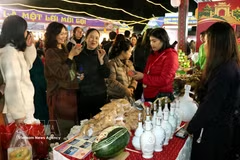
Visitors and locals explore, shop for and discover the culinary specialities of various provinces and cities at the festival. (Photo: VNA)

Festival celebrates culinary quintessence of northern region

The "Quintessence of Northern Cuisine" Festival 2026 is not only a culinary celebration but also a venue for cultural exchange, connectivity, the promotion of traditional values and the introduction of Vietnam’s land and people to domestic and international visitors, according to the organisers.

Vietnamese Ambassador to Greece Pham Thi Thu Huong speaks at the "MEET VIETNAM" programme on the occasion of Great National Unity Festival and Vietnam Culture Day (Photo: Vietnamese Embassy in Greece)

Vibrant “MEET VIETNAM” programme held in Greece

The Vietnamese Embassy in Greece has held a “MEET VIETNAM” programme in Athens to mark the Great National Unity Festival and Vietnam Culture Day part of a series of more than 400 activities and events organised on this occasion to honour national cultural identity, spread great national unity, promote the development of cultural industries, and create opportunities for people to directly participate in, contribute to and enjoy cultural activities.

Vietnam's first rally event, Petrolimex XCR Sprint Cup Vietnam 2026, will be held on December 2-6 in Quang Tri province. (Photo courtesy of organisers)

XCR Sprint Cup Vietnam 2026 to debut in December

This marks the first time a global rally sprint will be held in Vietnam. The event is part of the Cross Country Rally (XCR) competition system, a Japanese-founded off-road rally format established in 2022.

Aoki Kazunori, Head of Programming at the Asia-Pacific Broadcasting Union (ABU), speaks at the second ABU CARE 13 Documentary Exchange Conference. (Photo: VNA)

International cooperation promoted in documentary production on heritage, culture

Participation in ABU CARE 13 provides an opportunity for television professionals in the Central and Central Highlands region to exchange experience and learn modern storytelling approaches from international experts, while expanding co-production, copyright exchange and support for foreign film crews seeking access to filming locations in Vietnam

An art performance at Tam Thang Tower Square in Vung Tau ward draws large crowds of residents and visitors. (Photo: VNA)

Artistic events help connect heritage, culture, tourism

In Ho Chi Minh City, thousands of people attended a special programme entitled “Proud of Vietnamese Identity” to mark Vietnam Culture Day. Connecting three venues in Sai Gon, Thu Dau Mot and Vung Tau, the event combined traditional performances with 3D mapping technology to tell stories of southern Vietnam’s heritage and cultural traditions.

The special art programme brings together music, traditional and contemporary performances, spreading love for Vietnamese culture and national pride. (Photo: VNA)

Special art programme showcases flow of Vietnamese culture

The large-scale event, entitled "Colours of Vietnam: Culture Lights the Way – The Nation in Harmony," brought together music, traditional and contemporary performances, spreading love for Vietnamese culture and national pride.

Culture fosters Vietnam-Canada friendship

Culture fosters Vietnam-Canada friendship

Through stories shared in poetry, music and conversations over Vietnamese food, members of the Vietnamese community had an opportunity to introduce their homeland’s culture to Canadian friends and help younger generations of Vietnamese origin learn more about their roots.

Vietnamese Ambassador to Mozambique Tran Thi Thu Thin, embassy officials and members of the Vietnamese community pose for a group photo at the National Great Unity Day and Vietnam Culture Day celebrations in Maputo on November 22.( Photo: VNA)

Vietnamese cultural identity promoted in Mozambique

National unity is a precious tradition and a tremendous source of strength that has enabled the Vietnamese people to overcome challenges and build and defend the country, while culture serves as the root, spiritual foundation and identity underpinning the nation's enduring vitality, said Vietnamese Ambassador to Mozambique Tran Thi Thu Thin.

The Vietnam Cultural Digital Map (CMAP) is launched at https://cmap.vn. (Photo: VNA)

Technology helps spread cultural values, connect heritage

In many localities, digital platforms and databases are gradually changing the way heritage is preserved and presented. Artefacts once accessible only in exhibition spaces, as well as historical stories associated with particular places, can now be brought to life through 2D and 3D images, virtual reality, artificial intelligence (AI) and other interactive digital formats.

General Secretary of the Communist Party of Vietnam (CPV) Central Committee and President To Lam addresses the Hanoi ceremony marking the 80th anniversary of the first National Cultural Conference on November 24. Photo: VNA

Top leader calls for nurturing culture with responsibility, compassion and spirit of dedication

Cultural development must help individuals lead better lives and take control of their own futures. Everyone should be encouraged to learn, cooperate and innovate, value labour, and take responsibility for themselves, their families and society. National values, cultural values, family values and standards of Vietnamese people must be reflected in education and everyday conduct, said top leader To Lam.

New Vietnam Culture Day celebrates national cultural values

New Vietnam Culture Day celebrates national cultural values

Vietnam Culture Day on November 24 provides an opportunity to honour and promote the nation’s traditional cultural values. To turn culture into a resource for sustainable tourism, however, celebrations should go beyond commemorative events, creating opportunities for people and visitors to experience and practise cultural traditions, and strengthen their responsibility for preserving and promoting heritage.

Vietnamese Consul General Le Duc Hanh (centre, in red traditional ao dai) joins Consulate General staff and representatives of the Vietnamese student community in Hong Kong at the Vietnamese booth during the festival. (Photo: VNA)

Vietnamese arts and cuisine shine at Hong Kong cultural festival

The annual Asia+ Festival, organised by Hong Kong's cultural authorities, featured a wide range of performances, from classical arts to popular entertainment and from indoor venues to outdoor spaces. Vietnam's contributions this year included Teh Dar, a contemporary bamboo circus performance by Lune Production, and dance and music performances prepared by members of the Vietnamese community in Hong Kong.

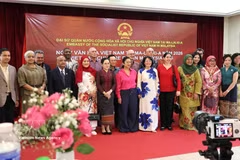
Vietnamese Ambassador to Malaysia Pham Thi Thuy Nga (centre, wearing ao dai) and guests at the event. (Photo: VNA)

Vietnam Culture Day impresses guests in Malaysia

Opening the event, Ambassador Pham Thi Thuy Nga emphasised that the occasion is a tribute to Vietnam's rich cultural heritage and the role of culture in shaping national identity. Forged over thousands of years of history, Vietnamese identity is reflected in the distinctive traditions, arts, cuisine and lifestyles of the country's 54 ethnic groups.

Vietnamese people in Israel gather to make banh chung (traditional sticky rice cake) for the Lunar New Year, preserving their customs and the flavours of home far from the homeland. (Photo: VNA)

Vietnam Culture Day 2026: Vietnamese in Israel keep their roots alive

Beyond Lunar New Year celebrations and major festivals, Vietnamese identity lives on in the language spoken at home, traditional meals, family ties and enduring affection for the homeland. Through these everyday practices, Vietnamese people abroad maintain a strong connection with their roots as they integrate into their host society.