Khen (panpine) – soul of Mong ethnic people

Although modern culture has been present in every corner of mountainous hamlets, the passion for melodies of Khen (panpine) has never ceased among men of the Mong ethnic group.
Khen (panpine) – soul of Mong ethnic people ảnh 1It takes artisans about three days to complete a panpine. (Photo: VNA)

Hanoi (VNA) - Although modern culture has been present in every corner of mountainous hamlets, the passion for melodies of Khen (panpine) has never ceased among men of the Mong ethnic group.

Khen (panpine) has played an important role in the cultural and spiritual life of the Mong people in the northernmost province of Ha Giang.

Meticulously made

The Mong people make up the majority of the population on Dong Van Karst Plateau in Ha Giang province. Khen, a traditional musical instrument indispensable in their daily life, has created a unique feature of the local culture.

Its shape, structure and sound function have made the panpine unique. Notably, its sounds come through both exhalation and inhalation.

Each panpine has six bamboo tubes of different lengths and widths, arranged closely together with one end connected to a gourd. The brass bar (the reed) is the only part made of metal.

Panpine gourds are usually made of pine wood, kimgiao (Nageiafleuryi) and po mu (Chamaecyparishodginsii).

Khen (panpine) – soul of Mong ethnic people ảnh 2The brass bar (the reed) is the only part made of metal. (Photo: VNA)

There are no common standards for panpine making which, however, requires ingenuity, patience and experience.

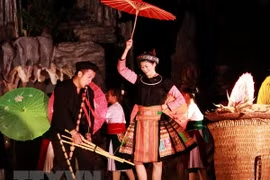
Khen is often played at Mong festivals and New Year celebrations by young Mong men who dance at the same time to show off their strength, sensibility and skills. They learn to play the musical instrument when they are small. Boys often carry a Khen to terraced fields or market fairs.

At festivals, the melodies of Khen echo over mountains and forests, expressing wishes of the Mong people. Mong men who play the Khen and dance exceptionally well are admired by villagers. At funeral ceremonies, the panpine, on behalf of the living, talks to the soul of the dead. Meanwhile, at wedding parties, it conveys parents’ wishes to their children.

Preserving the craft

Although local residents have seen their living standards improved significantly, they still preserved the art of panpine making. Local artisans in hamlets have continued to make the traditional musical instrument.

Sung Trai is one of the communes in the Dong Van Karst Plateau where panpine making has been preserved.

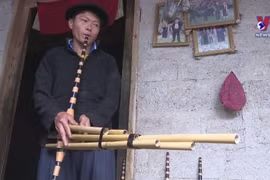
Born in 1985, MuaMiTua started playing the panpine when he was 14, and is currently the youngest in Sung Trai commune who knows how to play the instrument.

The man said his passion for the panpine was nurtured when he was small, and he can make panpines himself.

"Once you know how to play the panpine and understand its melodies, you can make a good panpine," Tua said.

Khen (panpine) – soul of Mong ethnic people ảnh 3Mua Mi Tua, an artisan in Tia Sung hamlet, Sung Trai commune, Ha Giang province’s Dong Van district (Photo: VNA)

Over the past years, with support of local authorities, many panpaine making groups have been established, and training classes opened, aiming to preserve the traditional craft and promoting local tourism.

Pham Quoc Lap, head of Dong Van district’s Culture and Information Bureau, said in an effort to preserve and promote traditional cultural values of ethnic minorities in the district in general, and the Mong people in particular, Dong Van district has restored traditional festivals and craft villages associated with tourism development and poverty alleviation.

Legend has it that long ago, an old couple gave birth to six children. When they passed away, the children cried their eyes out and blew through small bamboo tubes to tell of their sorrows for the death of their parents and the loss of their love. Thereafter, the Mong people started to compose touching melodies to show their sentiments toward their ancestors.

Despite changes in society, the Mong have preserved the Khen as the soul of their culture. Many men continue to make the instrument and pass on the techniques to younger people.

The panpine gained the national intangible heritage status from the Ministry of Culture, Sports and Tourism in 2015./.
VNA

See more

Visitors and locals explore, shop for and discover the culinary specialities of various provinces and cities at the festival. (Photo: VNA)

Festival celebrates culinary quintessence of northern region

The "Quintessence of Northern Cuisine" Festival 2026 is not only a culinary celebration but also a venue for cultural exchange, connectivity, the promotion of traditional values and the introduction of Vietnam’s land and people to domestic and international visitors, according to the organisers.

Vietnamese Ambassador to Greece Pham Thi Thu Huong speaks at the "MEET VIETNAM" programme on the occasion of Great National Unity Festival and Vietnam Culture Day (Photo: Vietnamese Embassy in Greece)

Vibrant “MEET VIETNAM” programme held in Greece

The Vietnamese Embassy in Greece has held a “MEET VIETNAM” programme in Athens to mark the Great National Unity Festival and Vietnam Culture Day part of a series of more than 400 activities and events organised on this occasion to honour national cultural identity, spread great national unity, promote the development of cultural industries, and create opportunities for people to directly participate in, contribute to and enjoy cultural activities.

Vietnam's first rally event, Petrolimex XCR Sprint Cup Vietnam 2026, will be held on December 2-6 in Quang Tri province. (Photo courtesy of organisers)

XCR Sprint Cup Vietnam 2026 to debut in December

This marks the first time a global rally sprint will be held in Vietnam. The event is part of the Cross Country Rally (XCR) competition system, a Japanese-founded off-road rally format established in 2022.

Aoki Kazunori, Head of Programming at the Asia-Pacific Broadcasting Union (ABU), speaks at the second ABU CARE 13 Documentary Exchange Conference. (Photo: VNA)

International cooperation promoted in documentary production on heritage, culture

Participation in ABU CARE 13 provides an opportunity for television professionals in the Central and Central Highlands region to exchange experience and learn modern storytelling approaches from international experts, while expanding co-production, copyright exchange and support for foreign film crews seeking access to filming locations in Vietnam

An art performance at Tam Thang Tower Square in Vung Tau ward draws large crowds of residents and visitors. (Photo: VNA)

Artistic events help connect heritage, culture, tourism

In Ho Chi Minh City, thousands of people attended a special programme entitled “Proud of Vietnamese Identity” to mark Vietnam Culture Day. Connecting three venues in Sai Gon, Thu Dau Mot and Vung Tau, the event combined traditional performances with 3D mapping technology to tell stories of southern Vietnam’s heritage and cultural traditions.

The special art programme brings together music, traditional and contemporary performances, spreading love for Vietnamese culture and national pride. (Photo: VNA)

Special art programme showcases flow of Vietnamese culture

The large-scale event, entitled "Colours of Vietnam: Culture Lights the Way – The Nation in Harmony," brought together music, traditional and contemporary performances, spreading love for Vietnamese culture and national pride.

Culture fosters Vietnam-Canada friendship

Culture fosters Vietnam-Canada friendship

Through stories shared in poetry, music and conversations over Vietnamese food, members of the Vietnamese community had an opportunity to introduce their homeland’s culture to Canadian friends and help younger generations of Vietnamese origin learn more about their roots.

Vietnamese Ambassador to Mozambique Tran Thi Thu Thin, embassy officials and members of the Vietnamese community pose for a group photo at the National Great Unity Day and Vietnam Culture Day celebrations in Maputo on November 22.( Photo: VNA)

Vietnamese cultural identity promoted in Mozambique

National unity is a precious tradition and a tremendous source of strength that has enabled the Vietnamese people to overcome challenges and build and defend the country, while culture serves as the root, spiritual foundation and identity underpinning the nation's enduring vitality, said Vietnamese Ambassador to Mozambique Tran Thi Thu Thin.

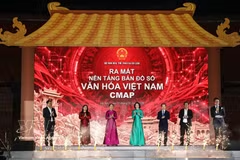
The Vietnam Cultural Digital Map (CMAP) is launched at https://cmap.vn. (Photo: VNA)

Technology helps spread cultural values, connect heritage

In many localities, digital platforms and databases are gradually changing the way heritage is preserved and presented. Artefacts once accessible only in exhibition spaces, as well as historical stories associated with particular places, can now be brought to life through 2D and 3D images, virtual reality, artificial intelligence (AI) and other interactive digital formats.

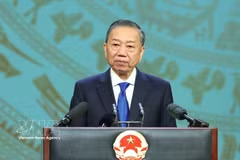
General Secretary of the Communist Party of Vietnam (CPV) Central Committee and President To Lam addresses the Hanoi ceremony marking the 80th anniversary of the first National Cultural Conference on November 24. Photo: VNA

Top leader calls for nurturing culture with responsibility, compassion and spirit of dedication

Cultural development must help individuals lead better lives and take control of their own futures. Everyone should be encouraged to learn, cooperate and innovate, value labour, and take responsibility for themselves, their families and society. National values, cultural values, family values and standards of Vietnamese people must be reflected in education and everyday conduct, said top leader To Lam.