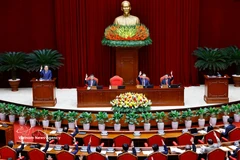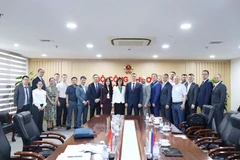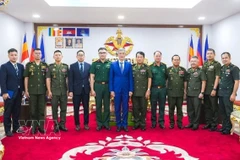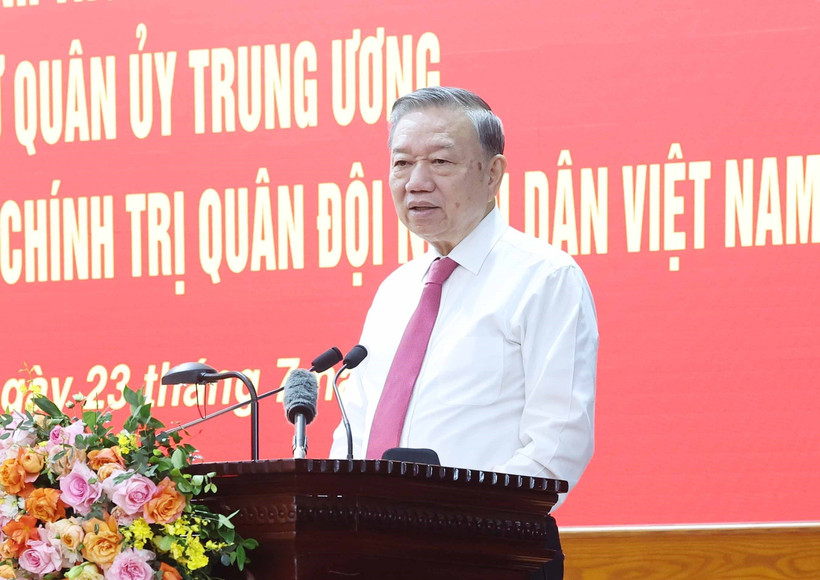
Hanoi (VNA) - Party General Secretary To Lam, who is also Secretary of the Central Military Commission, had a working session with the General Department of Politics of the Vietnam People's Army (VPA) in Hanoi on July 23, during which he highlighted the importance of promoting efforts and measures to build a politically strong military deeply rooted in its bonds with the people.
The Party leader acknowledged and commended the achievements made by the General Department of Politics in recent years and the first half of 2025.
In the new context and conditions, he urged the agency to actively conduct research and provide strategic advice to further improve the Party’s leadership mechanisms, towards firmly upholding and strengthening the Party’s absolute and direct leadership over the military and the national defence and protection cause. He stressed that this is not only a core task but also a fundamental principle in building the people’s army.
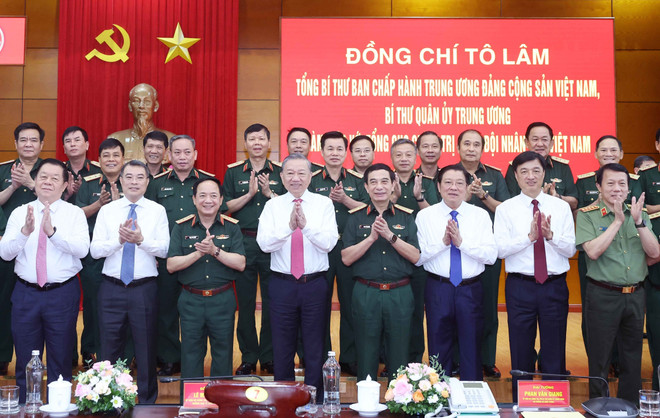
The General Department of Politics should work closely with the Central Military Commission to recommend the Politburo and the Secretariat of the Party Central Committee to adopt policies to enhance the commission’s role, responsibilities, and authority in directing the implementation of military and defence tasks across the political system and nationwide, ensuring that specialised tasks are carried out in a unified, swift, and timely manner, enabling prompt and successful responses to any arising situations.
The General Department of Politics must thoroughly grasp and effectively implement the Party’s military and defence guidelines, particularly resolutions, directives, conclusions, and regulations issued by the Party Central Committee, the Politburo, the Secretariat, and the Central Military Commission, on military affairs, national defence, and the building of the VPA, General Secretary Lam said.
The Party leader requested the General Department of Politics to direct the entire military to intensify solutions for building a politically strong army that remains closely connected to the people. He emphasised the importance of strengthening political and spiritual factors as a foundation for improving the overall quality and combat strength of the army.
In the face of emerging forms of warfare, new operational environments and strategic spaces, especially hi-tech warfare, building strong political and spiritual foundations for the armed forces is more crucial than ever, he said, noting that this ensures that officers and soldiers have the courage to confront hardships, endure the harsh realities of war, and place their trust in Vietnam’s military strategy so they are willing, capable, and determined to fight and defeat any invading enemy.
He demanded the General Department of Politics to continuously take the frontline role in defending the Party’s ideological foundation and countering false, hostile, and politically opportunistic viewpoints, contributing to safeguarding the Party’s ideological stronghold within the army and protecting the Party, the State, the people, and the regime against all enemy plots, tactics, and acts of sabotage.
The agency must provide guidance and strategic advice on building a strong and efficient Party organisation system, closely linked to developing a competent and dedicated team of cadres and Party members to meet the increasing requirements of national defence, the Party leader said, noting that personnel appointments and placements must be conducted carefully, objectively, and accurately, strictly adhering to the principle of democratic centralism.
He underlined the importance to direct Party committees, agencies, and units across the army to effectively carry out internal political protection, staying vigilant at all times to prevent hostile forces and malicious elements from infiltrating and undermining the Party, the State, and the army.
Attention should also paid to training personnel so that those selected for planning and rotation not only possess knowledge of military and defence affairs but also have a deep understanding of, and the capacity to manage matters related to the economy, culture, society, security, and foreign affairs, the Party chief said.
The General Department of Politics must closely coordinate with the General Staff of the VPA in providing strategic military and defence advice, and in proposing solutions to build a modern army in the coming years, first and foremost by developing modern personnel, high-quality human resources within the army; and effectively implementing existing projects and policies on attracting talents for the VPA to 2030 with a vision toward 2050, he said.
The Party leader expressed his belief that under the absolute leadership of the Party Central Committee, the Politburo, the Secretariat, and the direct and regular guidance of the Central Military Commission, and building on over 80 years of the proud tradition of formation and development, the General Department of Politics will continue to fulfill its role as the core agency for the Party and political work in the military, and successfully implement all assigned tasks, contributing to the building of a revolutionary, regular, elite, and modern people’s army, contributing to firmly safeguarding the nation in the new era.
At the working session, delegates unanimously acknowledged the crucial role of the Party and political work in the development and strength of the VPA over the years. They also proposed measures to further strengthen coordination between the General Department of Politics and central-level agencies in the time to come./.