Petrovietnam at the forefront of evolving Vietnam–US energy ties

Petrovietnam’s US push is an attempt to connect resources that sit in different places: domestic resources with international markets, energy demand with supply, projects with technology, investment plans with capital, and Vietnamese companies with global energy groups.

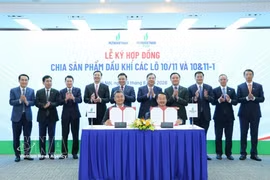
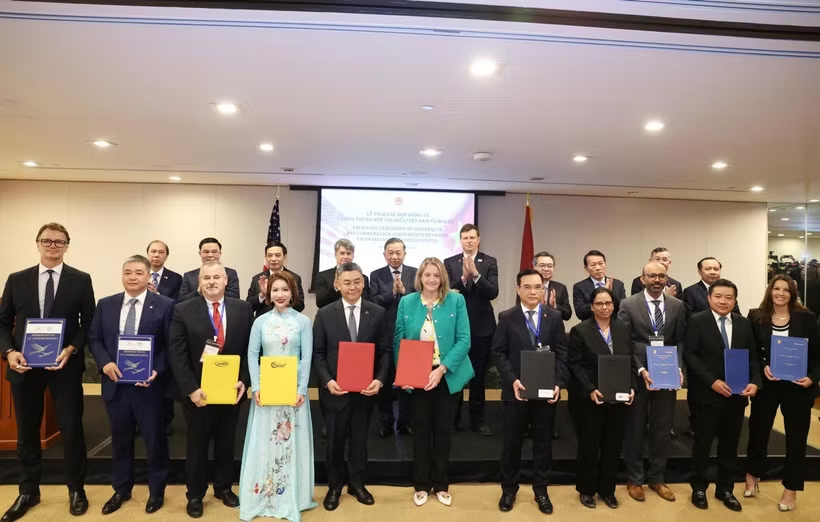
The exchange of cooperation deals between Vietnamese and US firms (Photo: Petrotimes)

Hanoi (VNA) – The Vietnam National Industry - Energy Group (Petrovietnam)’s activities in the US during Party General Secretary and President To Lam’s working trip came as the energy sector faces rising domestic demand, volatile international markets, tougher supply security requirements and an energy transition that demands more capital and technology.

From single deals to chain resilience

On paper, Petrovietnam’s US meetings covered disparate ground: GE Vernova on power and technology, Murphy on oil and gas projects; Chevron on crude, liquefied natural gas (LNG), liquefied petroleum gas (LPG) and energy supply chains; ExxonMobil on crude for Dung Quat Refinery. The common thread: cooperation is shifting from one-off transactions and projects to linked nodes across the energy chain.

That shift matters. In stable markets, companies can optimise individual stages. When oil and gas prices, freight costs and international supply chains are repeatedly hit by external shocks, an energy company’s resilience depends more on how many options it has across supply, technology, markets and partners.

Chevron is therefore more than a framework deal. Tying up with an integrated energy group that has sourcing, trading, transport and international operations gives Petrovietnam more routes to crude, LNG, LPG and refining petrochemical feedstock, plus scope to study import infrastructure, energy storage, finance – trade, technology and emissions cuts.

More concretely, the crude supply agreement between Petrovietnam's Binh Son Refining and Petrochemical Joint Stock Company (BSR) and ExxonMobil Asia-Pacific shows the value of stable supply relationships. The disclosed minimum is 2 million barrels a year. For a refinery, feedstock determines not just whether production continues but product mix and the economics of the whole plant.

Meanwhile, Petrovietnam and Murphy are pushing Lac Da Vang oil field, preparing development steps for Hai Su Vang and studying links between potential structures in the Cuu Long Basin and existing infrastructure, a sign showing the approach is to optimise the whole chain, not just individual fields.

Resources are only half the battle

If supply is one side of energy security, technology and capital are what turn resources into production capacity.

Petrovietnam and GE Vernova are a case in point. Building on GE Vernova’s gas turbines for Nhon Trach power plants No. 3 & 4, the two sides discussed technical solutions, equipment progress and support, with the study scope widened to long-term maintenance, digital operations, offshore wind power, training and technology transfer.

The requirement is sharper for Petrovietnam as it moves beyond traditional oil and gas into gas-fired power, LNG, offshore wind power, renewables and new industrial-energy fields. Each has different technology, standards and investment structures, making the ability to absorb and master technology part of competitiveness.

At a roundtable with US financial institutions and investment funds, Petrovietnam CEO Le Manh Cuong put investment demand for 2026–2030 at about 29.2 billion USD across 99 projects in core fields, roughly 4.8 times the 2021–2025 level.

What comes after the signatures

The role of a large energy company is no longer measured only by oil and gas output or budget payments. As the economy targets faster growth, the ability to secure energy supply, build related industrial chains, absorb technology, raise international capital and run large projects is becoming just as important.

From that angle, Petrovietnam’s US push is an attempt to connect resources that sit in different places: domestic resources with international markets, energy demand with supply, projects with technology, investment plans with capital, and Vietnamese companies with global energy groups.

If those links become on-schedule, effective projects, the value will spill beyond individual companies, adding supply, production capacity, technology and headroom for the industrial chains that sit behind energy.

So the real test after the US trip isn’t how many more documents get signed. It’s how far the ones already exchanged travel from commitment to project, from project to product, and from product to actual value./.
VNA

See more

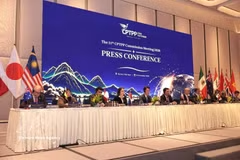
Representatives of CPTPP member delegations attend the press conference (Photo: VNA)

CPTPP charts new course for development following 11th Commission Meeting

Vietnam, as the chairmanship of the CPTPP in 2026, successfully hosted the 11th CPTPP Commission Meeting and a series of related events, including CPTPP-EU and CPTPP-ASEAN trade and investment dialogues and the CPTPP-ASEAN-EU Business Forum 2026, on November 26 – 27, Deputy Minister of Industry and Trade Luong Hoang Thai said.

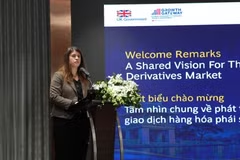
lexandra Smith, Consul General of the UK in Ho Chi Minh City speaks at the forum (Photo: https://thoibaonganhang.vn/)

Vietnam seeks UK expertise in developing commodity derivatives market

Addressing the opening ceremony, Tran Huu Linh, Director of the Agency for Domestic Market Surveillance and Development under the Ministry of Industry and Trade (MOIT), stressed that the market will help businesses and producers hedge against price fluctuations and improve competitiveness.

An overview of the Vietnam-China trade connection conference. (Photo: VIETRADE)

Shandong brings 65 firms to Vietnam as trade push deepens

Dao Viet Anh, head of the VIETRADE’s International Relations Division, said Shandong’s council has worked actively with VIETRADE on investment and trade promotion. That has helped Vietnamese and Chinese companies deepen cooperation and deliver tangible economic gains.

Jens Ruebbert, Asia-Pacific Regional Head of Landesbank Baden-Württemberg (LBBW) and Chairman of the EU–ASEAN Business Council (Photo published VNA)

German executive recommends Vietnam shift to innovation-driven growth

To maintain its edge, Vietnam must accelerate regulatory and governance reforms, increase investment in research and development, strengthen its capacity to manage risks, and ensure more efficient cross-border financial connectivity, said German banking executive Jens Ruebbert.

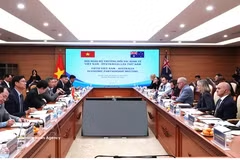
At the fifth Vietnam-Australia Economic Partnership Meeting (Photo: mof.gov.vn)

Vietnam, Australia convene fifth Economic Partnership Meeting

Australia sees Vietnam as one of Southeast Asia’s most promising economic partners. Australia is ready to send technical experts to help Vietnam meet strict biosecurity standards, opening the way for more quality Vietnamese farm produce into Australia.

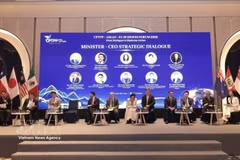
Speakers at the 2026 CPTPP–ASEAN–EU Business Forum in Hanoi on November 26 (Photo: VNA)

Vietnam advances business connectivity among CPTPP, ASEAN and EU

As 2026 CPTPP Chair, Vietnam is promoting closer links between the CPTPP, ASEAN and the EU. While the CPTPP offers high-standard trade commitments, ASEAN brings dynamic growth and manufacturing capacity, and the EU owns market potential, capital, technology and innovation.

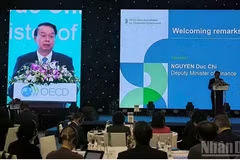
Deputy Minister of Finance Nguyen Duc Chi speaks at the event. (Photo: nhandan.vn)

OECD report outlines priorities for Vietnam’s capital market development

The OECD identifies five policy priorities to deepen the country's capital market: strengthening market confidence, facilitating companies' access to equity financing, expanding long-term funding through corporate bonds, developing the investor base, and enhancing international integration.

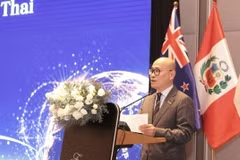
Deputy Minister of Industry and Trade Luong Hoang Thai (Photo: VNA)

Vietnam to continue trade talks with US over proposed additional tariffs

Thai stressed that the findings are preliminary and that the US investigation process still includes opportunities for consultation, clarification and public feedback before a final decision is made. Relevant countries, US businesses and other stakeholders can submit their views during this process.

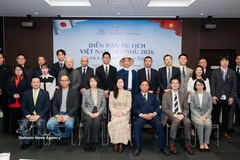
Participants pose for a group photo at the Vietnam–Kyushu Tourism Forum 2026. (Photo: VNA)

Vietnam–Kyushu Tourism Forum looks to widen markets

The forum aimed to link Vietnamese and Japanese regulators, tourism promoters, local authorities and companies, and push market data exchange, product development and tourism cooperation between Vietnam and Kyushu.

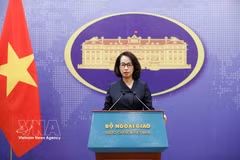
Spokeswoman of the Ministry of Foreign Affairs Pham Thu Hang (Photo: VNA)

Vietnam urges US to objectively assess its trade-related efforts, achievements

In recent times, Vietnam has made various commitments during negotiations on a reciprocal, fair and balanced trade agreement with the US. It has also proactively implemented important reforms to address the US's concerns, including issues related to investigations under Section 301 of the US Trade Act of 1974.