“Pia” cake – Soc Trang’s traditional sweet snack

The confluence of three ethnicities in the Mekong Delta province of Soc Trang, that of the Kinh, the Hoa and the Khmer, makes it a great place to discover the beauty of different cultures and observe distinct customs.
 “Pia” cake – Soc Trang’s traditional sweet snack ảnh 1Pia cake (a cake filled with durian, shredded lard, salted egg yolk and mung bean paste), a nese), an unique culinary specialty of  the Mekong Delta province of Soc Trang  (Photo:VNA)

Hanoi (VNA) – The confluence of three ethnicities in the Mekong Delta province of Soc Trang, that of the Kinh, the Hoa and the Khmer, makes it a great place to discover the beauty of different cultures and observe distinct customs.

The distinctive festivals, landmarks and other features also open a door to the Mekong Delta province’s unique culinary specialties influenced by its cultural diversity.

For hundreds of years, the Pia cake (a cake filled with durian, shredded lard, salted egg yolk and mung bean paste), originally of the Hoa (Chinese) ethnic minority people, has been served and given as gifts by Soc Trang residents. The cake has a tender and soft crust outside and juicy and flavourful cream inside.

The Pia cake is served on special occasions during the year, including weddings and the Full Moon Festival. This round cake is seen as a symbol of fullness and family reunion.

The cake has a thin multi-layered crust made of flour and filling of durian, mung beans and taro with or without salted duck egg. The outer part can be uncovered layer by layer. As the cake is cut, the aroma of the filling is appetising.

It’s said that Hoa people brought a similar cake to Pia from China to Vung Thom, Soc Trang when they migrated to the south of Vietnam in the 17th century. Over time, the cake’s recipe was adjusted to match the taste buds of local people and it developed into a provincial specialty.

Traditionally, the Pia cake was made only for the Full Moon Festival and Tet (Lunar New Year). As with other such food items, the cake is now made and sold all year round. It has a shelf life of up to two months, instead of a fortnight.

In order to make an attractive, tasty Pia cake, bakers have to exercise sophisticated skills at several stages.

To make the crust, they mix the flour with sugar and finely mill the mixture into very thin layers.

The filling of durian, mung bean, taro and salted duck egg, or durian, steamed mung bean, taro and sugar is grounded into fine paste and added with a bit of pork fat before being used to cover salted duck egg.

The baker then applies a layer of oil and egg yolk to the cake before putting it in a traditionally-made earth oven for baking at an average of about 270 degrees Celsius. After 7 – 10 minutes, it is turned over and applied with more layers of oil and egg yolk, and baked for another 10 – 15 minutes until it turns yellowish brown. Today, gas-fired and electric stoves are more popularly used by Pia bakeries for the convenience they provide.

The Soc Trang Pia cake is special because the aroma of fresh durian is irreplaceable.

Soc Trang now has more than 50 Pia bakeries, most of which are located in the communes of Phu Tam, Thuan Hoa and An Hiep in Chau Thanh District. Though the process of making a pia cake is similar, each bakery has its own secret to create a distinctive taste and flavour.

Currently, with improved quality and promotion, many enterprises have started selling their product not only in other areas of Vietnam, but also in foreign countries like the US and Cambodia.

Today’s Pia cake varies a lot from the traditional version. Its fillings now include not only mung bean, taro, durian, salted egg, but also lotus seeds and pineapple./.
VNA

See more

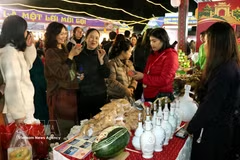
Visitors and locals explore, shop for and discover the culinary specialities of various provinces and cities at the festival. (Photo: VNA)

Festival celebrates culinary quintessence of northern region

The "Quintessence of Northern Cuisine" Festival 2026 is not only a culinary celebration but also a venue for cultural exchange, connectivity, the promotion of traditional values and the introduction of Vietnam’s land and people to domestic and international visitors, according to the organisers.

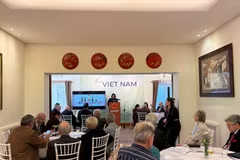
Vietnamese Ambassador to Greece Pham Thi Thu Huong speaks at the "MEET VIETNAM" programme on the occasion of Great National Unity Festival and Vietnam Culture Day (Photo: Vietnamese Embassy in Greece)

Vibrant “MEET VIETNAM” programme held in Greece

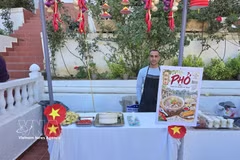
The Vietnamese Embassy in Greece has held a “MEET VIETNAM” programme in Athens to mark the Great National Unity Festival and Vietnam Culture Day part of a series of more than 400 activities and events organised on this occasion to honour national cultural identity, spread great national unity, promote the development of cultural industries, and create opportunities for people to directly participate in, contribute to and enjoy cultural activities.

Vietnam's first rally event, Petrolimex XCR Sprint Cup Vietnam 2026, will be held on December 2-6 in Quang Tri province. (Photo courtesy of organisers)

XCR Sprint Cup Vietnam 2026 to debut in December

This marks the first time a global rally sprint will be held in Vietnam. The event is part of the Cross Country Rally (XCR) competition system, a Japanese-founded off-road rally format established in 2022.

Aoki Kazunori, Head of Programming at the Asia-Pacific Broadcasting Union (ABU), speaks at the second ABU CARE 13 Documentary Exchange Conference. (Photo: VNA)

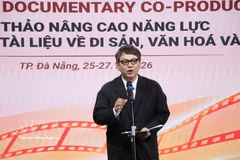
International cooperation promoted in documentary production on heritage, culture

Participation in ABU CARE 13 provides an opportunity for television professionals in the Central and Central Highlands region to exchange experience and learn modern storytelling approaches from international experts, while expanding co-production, copyright exchange and support for foreign film crews seeking access to filming locations in Vietnam

An art performance at Tam Thang Tower Square in Vung Tau ward draws large crowds of residents and visitors. (Photo: VNA)

Artistic events help connect heritage, culture, tourism

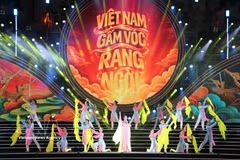
In Ho Chi Minh City, thousands of people attended a special programme entitled “Proud of Vietnamese Identity” to mark Vietnam Culture Day. Connecting three venues in Sai Gon, Thu Dau Mot and Vung Tau, the event combined traditional performances with 3D mapping technology to tell stories of southern Vietnam’s heritage and cultural traditions.

The special art programme brings together music, traditional and contemporary performances, spreading love for Vietnamese culture and national pride. (Photo: VNA)

Special art programme showcases flow of Vietnamese culture

The large-scale event, entitled "Colours of Vietnam: Culture Lights the Way – The Nation in Harmony," brought together music, traditional and contemporary performances, spreading love for Vietnamese culture and national pride.

Culture fosters Vietnam-Canada friendship

Culture fosters Vietnam-Canada friendship

Through stories shared in poetry, music and conversations over Vietnamese food, members of the Vietnamese community had an opportunity to introduce their homeland’s culture to Canadian friends and help younger generations of Vietnamese origin learn more about their roots.

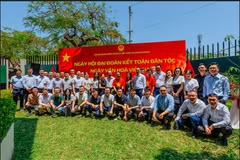
Vietnamese Ambassador to Mozambique Tran Thi Thu Thin, embassy officials and members of the Vietnamese community pose for a group photo at the National Great Unity Day and Vietnam Culture Day celebrations in Maputo on November 22.( Photo: VNA)

Vietnamese cultural identity promoted in Mozambique

National unity is a precious tradition and a tremendous source of strength that has enabled the Vietnamese people to overcome challenges and build and defend the country, while culture serves as the root, spiritual foundation and identity underpinning the nation's enduring vitality, said Vietnamese Ambassador to Mozambique Tran Thi Thu Thin.

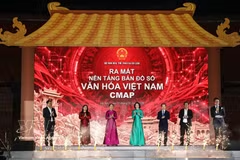
The Vietnam Cultural Digital Map (CMAP) is launched at https://cmap.vn. (Photo: VNA)

Technology helps spread cultural values, connect heritage

In many localities, digital platforms and databases are gradually changing the way heritage is preserved and presented. Artefacts once accessible only in exhibition spaces, as well as historical stories associated with particular places, can now be brought to life through 2D and 3D images, virtual reality, artificial intelligence (AI) and other interactive digital formats.

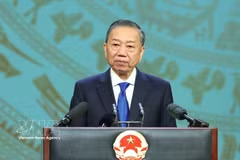
General Secretary of the Communist Party of Vietnam (CPV) Central Committee and President To Lam addresses the Hanoi ceremony marking the 80th anniversary of the first National Cultural Conference on November 24. Photo: VNA

Top leader calls for nurturing culture with responsibility, compassion and spirit of dedication

Cultural development must help individuals lead better lives and take control of their own futures. Everyone should be encouraged to learn, cooperate and innovate, value labour, and take responsibility for themselves, their families and society. National values, cultural values, family values and standards of Vietnamese people must be reflected in education and everyday conduct, said top leader To Lam.

New Vietnam Culture Day celebrates national cultural values

New Vietnam Culture Day celebrates national cultural values

Vietnam Culture Day on November 24 provides an opportunity to honour and promote the nation’s traditional cultural values. To turn culture into a resource for sustainable tourism, however, celebrations should go beyond commemorative events, creating opportunities for people and visitors to experience and practise cultural traditions, and strengthen their responsibility for preserving and promoting heritage.

Vietnamese Consul General Le Duc Hanh (centre, in red traditional ao dai) joins Consulate General staff and representatives of the Vietnamese student community in Hong Kong at the Vietnamese booth during the festival. (Photo: VNA)

Vietnamese arts and cuisine shine at Hong Kong cultural festival

The annual Asia+ Festival, organised by Hong Kong's cultural authorities, featured a wide range of performances, from classical arts to popular entertainment and from indoor venues to outdoor spaces. Vietnam's contributions this year included Teh Dar, a contemporary bamboo circus performance by Lune Production, and dance and music performances prepared by members of the Vietnamese community in Hong Kong.

Vietnamese Ambassador to Malaysia Pham Thi Thuy Nga (centre, wearing ao dai) and guests at the event. (Photo: VNA)

Vietnam Culture Day impresses guests in Malaysia

Opening the event, Ambassador Pham Thi Thuy Nga emphasised that the occasion is a tribute to Vietnam's rich cultural heritage and the role of culture in shaping national identity. Forged over thousands of years of history, Vietnamese identity is reflected in the distinctive traditions, arts, cuisine and lifestyles of the country's 54 ethnic groups.