Quang Tri releases 13 wild animals back into nature

The animals included two masked palm civets, four stump-tailed macaques, and seven rhesus macaques. All belong to Group IIB under Circular No. 85/2025/TT-BNNMT issued by the Ministry of Agriculture and Environment on the management of endangered, precious and rare species, as well as the implementation of the Convention on International Trade in Endangered Species of Wild Fauna and Flora (CITES).

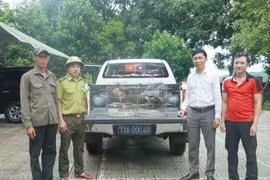
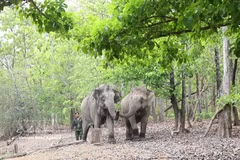
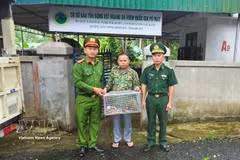
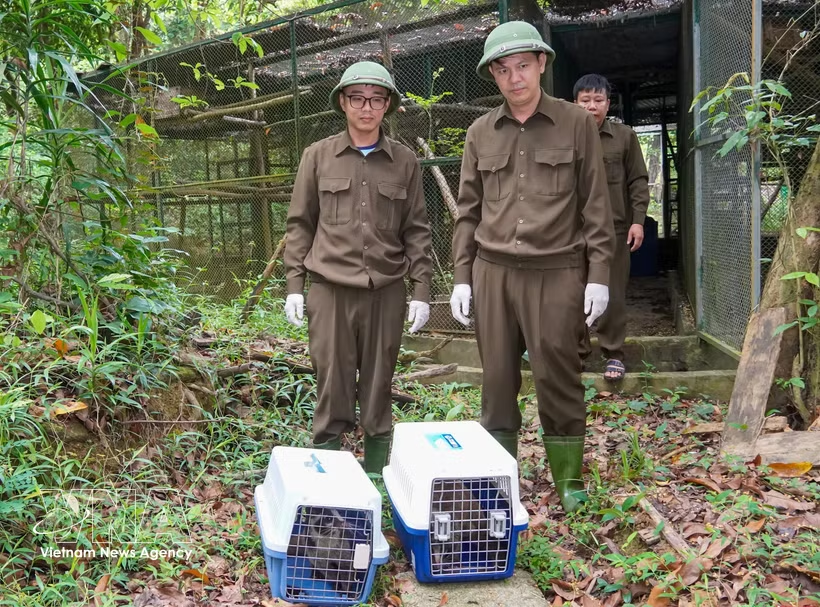
All the animals underwent health checks and assessments of their ability to adapt to the natural environment before being safely released. (Photo: VNA)

Quang Tri (VNA) - Authorities at Phong Nha–Ke Bang National Park on May 21 released 13 rescued wild animals back into their natural habitat following a period of rescue, rehabilitation, and behavioural recovery.

According to the park’s management board, the release was carried out by the Centre for Creature Rescue, Conservation and Development in coordination with relevant agencies under the supervision of the Phong Nha Forest Protection Division.

The animals included two masked palm civets, four stump-tailed macaques, and seven rhesus macaques. All belong to Group IIB under Circular No. 85/2025/TT-BNNMT issued by the Ministry of Agriculture and Environment on the management of endangered, precious and rare species, as well as the implementation of the Convention on International Trade in Endangered Species of Wild Fauna and Flora (CITES).

Representatives of the rescue centre said the animals had been received from various sources over recent months. After being rescued, they underwent health monitoring, rehabilitation, and recovery of survival instincts before being deemed fit for release.

Prior to the release, all the animals underwent health checks and assessments to ensure they could safely adapt to the wild. The release site was also carefully selected to match each species’ ecological characteristics, with adequate food sources, shelter, and minimal human disturbance.

According to the centre, the release not only allows rescued animals to return to their natural environment but also contributes to restoring wild populations, maintaining ecosystem balance, and raising public awareness about biodiversity conservation.

The activity also reflects ongoing efforts by authorities to combat illegal hunting, captivity, and trafficking of endangered wildlife species./.
VNA

See more

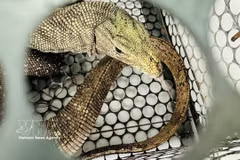
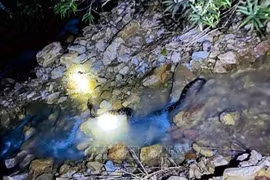
The clouded monitor (Varanus nebulosus) weighs approximately two kilograms and measures around 70 centimetres in length. (Photo: VNA)

Quang Tri hands over rare clouded monitor to rescue centre

The animal was identified as a clouded monitor (Varanus nebulosus), weighing approximately two kilograms and measuring around 70 centimetres in length. The species belongs to Group IB — a category of endangered and rare forest wildlife species given the highest level of protection in Vietnam, with all forms of commercial exploitation and use strictly prohibited.

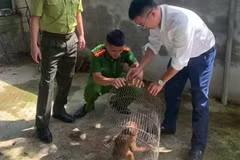
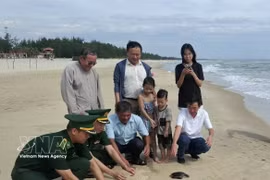
The female stump-tailed macaque undergoes a health check by authorities before being released back into the wild. (Photo published VNA)

Rare stump-tailed macaque released into the wild

The stump-tailed macaque, scientifically known as Macaca arctoides, is classified as a rare and endangered species under Group IIB in Vietnam’s regulations on endangered wildlife management.

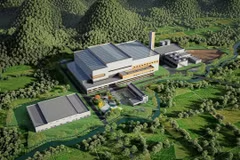
A graphic image of the Nui Thoong high-tech waste treatment and waste-to-energy plant project. (Photo: hanoimoi.vn)

Hanoi breaks ground on 200-million-USD waste-to-energy plant

Designed to process 2,000 tonnes of waste per day and generate 45MW of electricity for the national grid, the project is the first high-tech waste-to-energy plant in southwestern Hanoi, where large-scale solid waste treatment facilities have long been lacking.

A rare turtle is transported to Cuc Phuong National Park for care and rehabilitation ahead of its eventual release back into the wild. (Photo published by VNA)

Rare turtles returned to Vietnam under CITES

The shipment includes several endangered Vietnamese species such as the Indochinese box turtle (Cuora galbinifrons), Bourret’s box turtle (Cuora bourreti), keeled box turtle (Cuora mouhotii), and black-breasted leaf turtle (Geoemyda spengleri), all considered highly endangered and increasingly threatened in the wild by habitat destruction, poaching, and illegal trade.

Representatives of the Ngoc Lam Border Guard Station under the Nghe An Border Guard Command and Son Lam commune's police hand over a pangolin voluntarily surrendered by a local resident to the wildlife conservation centre at Pu Mat National Park. (Photo: VNA)

Nghe An residents voluntarily hand over rare pangolins for conservation

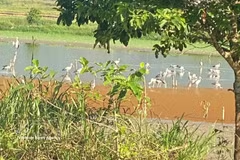
On May 11, the Quy Chau Forest Protection Department, along with local police and authorities, took in a critically endangered pangolin, handed over by a resident. The animal was discovered a day earlier by Thai Doan Tuan, from Viet Huong village in Quy Chau commune, after it wandered into his garden. Recognising it as a protected Sunda pangolin, he contacted authorities for assistance.

A 2kg pangolin is released back into the wild at the Pu Huong Nature Reserve on May 6, 2026. (Photo published by VNA)

Nghe An releases rare pangolin back to the wild

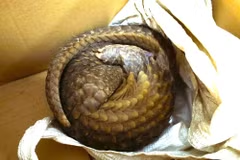
Pangolins, scaly mammals capable of curling into a ball for self-defence, are classified as critically endangered and are strictly protected under both Vietnamese and international law.

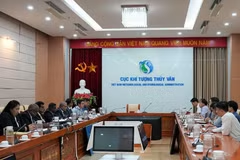
At the working session (Photo: Vietnam Meteorological and Hydrological Administration)

Vietnam, Sri Lanka share experience in hydrometeorology

Both sides expressed confidence that continued dialogue and knowledge-sharing will deepen cooperation in hydrometeorology, helping enhance disaster response capacity and climate change adaptation in the years ahead.