Thai Xoe art: From heritage practice to sustainable tourism development

Heritage truly comes alive only when communities continue to practise it and pass it on to future generations. Thai Xoe art shows how heritage preservation can go hand in hand with sustainable tourism development.

1612xoethai1.jpg
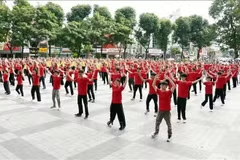
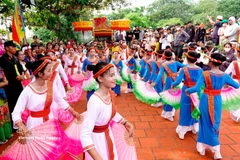
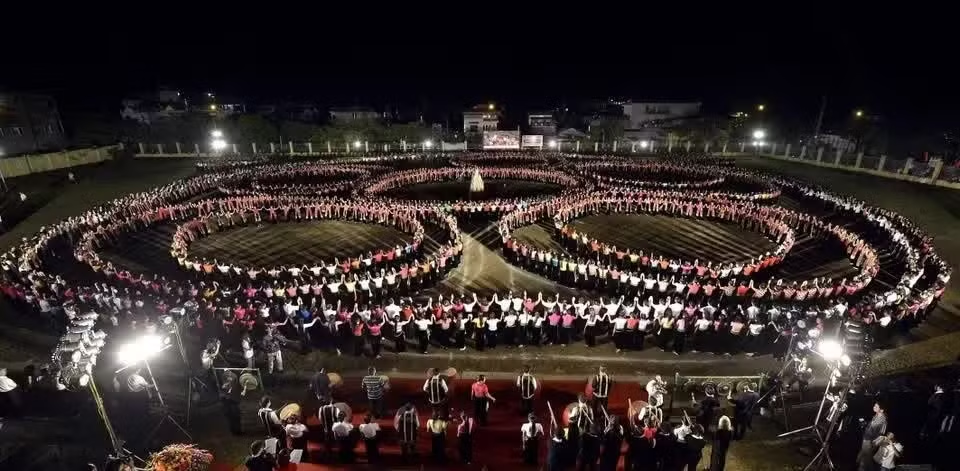
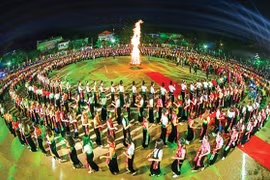
Some 2,013 amateur performers take part in Vietnam’s largest ancient Xoe dance performance. (Photo: VNA)

Hanoi (VNA) - Five years after being inscribed by UNESCO on the Representative List of the Intangible Cultural Heritage of Humanity, Thai Xoe art continues not only to be preserved and promoted but also to thrive in the communities where it originated.

Rather than simply preserving the art form or presenting it on stage, many localities are bringing it back into village cultural life and incorporating it into sustainable tourism models that generate livelihoods and raise awareness of heritage values.

This approach is also in line with Resolution No. 19-NQ/TW, which emphasises the promotion of national cultural values, heritage preservation, the central role of communities and sustainable development. Heritage should not simply be a resource for attracting tourists; first and foremost, it must continue to be preserved, practised and passed down within communities.

Preserving culture by keeping heritage alive

For intangible cultural heritage, vitality lies not in titles or the number of performances but in its continued presence in everyday community life. Xoe remains a living heritage when local people continue to practise it, teach it to younger generations and perform it at festivals and community gatherings.

Such continuous practice sustains the heritage over time and is also central to UNESCO’s approach to safeguarding intangible cultural heritage.

The settings in which heritage is practised also allow it to adapt to contemporary life. When cultural traditions remain part of festivals, everyday activities, work and community-based tourism, heritage does not become “frozen” like a museum exhibit. Instead, it continues to evolve and be enriched by the creativity of successive generations.

In recent years, many localities have gradually shifted from an approach of “preserving for safekeeping” to “preserving through promotion.”
1612xoethai22.jpg
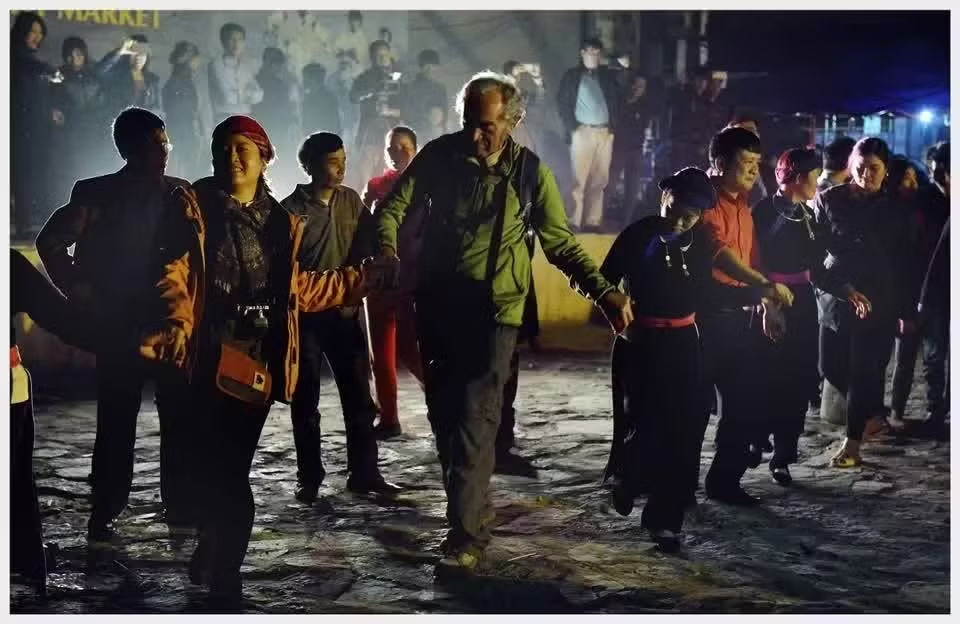
Foreign visitors join a Xoe dance held every Saturday night at a night market in Lao Cai. (Photo: VNA)

As tourism increasingly taps into the “soft power” of heritage, visitors can do more than simply watch staged performances. They can experience local cultural life firsthand, take part in community activities, and gain a deeper understanding of traditional customs, rituals and folk arts. Tourism can therefore serve as a bridge for bringing heritage to a wider audience.

A driver of sustainable tourism

The 2026 Muong Lo Culture and Tourism Festival, marking five years since Thai Xoe art was inscribed by UNESCO, is an example of this approach.

Under the theme “Essence of Thai Xoe – Colours of the Northwest,” the festival will take place in Lao Cai from September 25 to October 2, 2026, featuring a wide range of cultural, tourism and community experiences.

Many activities go beyond staged performances to create opportunities for visitors to experience heritage firsthand. The “A Day Living in a Thai Village” programme allows visitors to take part in local cultural life, while a cultural space showcasing ethnic groups of the northwestern region recreates traditional lifestyles, customs and crafts. The Northwest Tourism Fair also combines tourism promotion with the showcasing of OCOP products.

Folk cultural activities, traditional sports, agricultural experiences, paragliding and the Mu Cang Chai Ultra Trail marathon further diversify tourism offerings, encouraging visitors to stay longer and gain a deeper understanding of local culture.
1612xoethai5.jpg
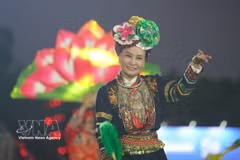
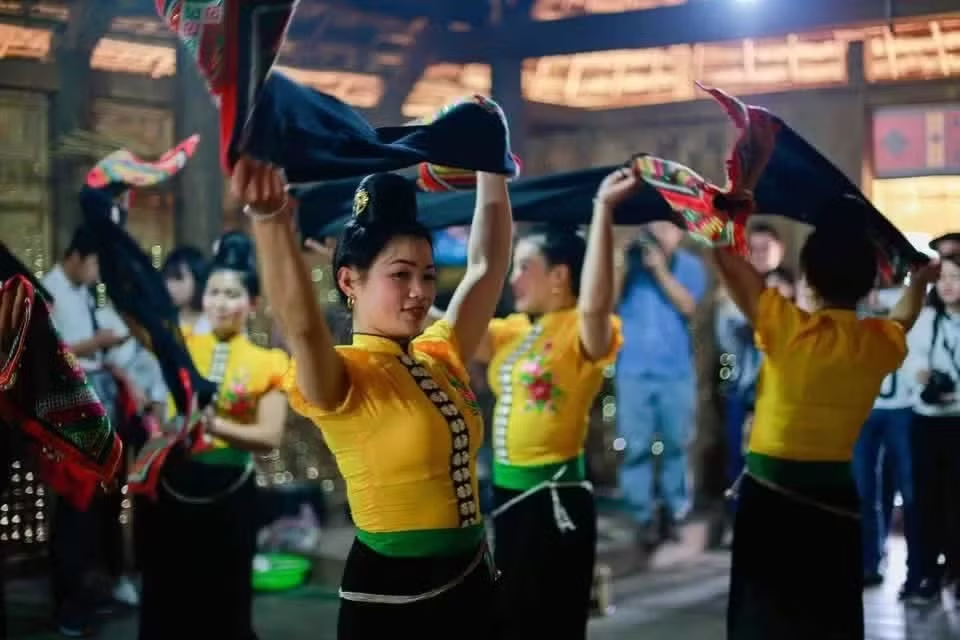
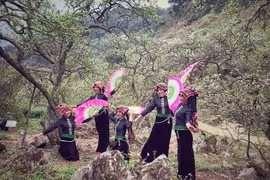
Thai girls perform a graceful Xoe dance. (Photo: VNA)

In this setting, Thai Xoe is not simply a standalone performance but a thread connecting people, cultural spaces and tourism experiences.

Its value lies not only in its dance movements and Xoe circles, but also in the folk knowledge, social customs, community bonds and cultural environment that have sustained it for generations. Safeguarding the heritage therefore means creating conditions for communities to continue practising it in their daily lives.

Communities are not merely beneficiaries of tourism but also creators, custodians and transmitters of cultural values. By taking part in tourism activities and sharing their customs, traditional crafts, cuisine and folk arts, local people help keep heritage alive in its original cultural setting.

Today, the value of Thai Xoe art is reflected not only in its UNESCO recognition but also in its continued presence in community life and its ability to adapt to contemporary society.

As communities continue to join hands in Xoe circles, pass their cultural traditions on to younger generations and share their way of life with visitors, the heritage will do more than survive. It will continue to thrive, reach wider audiences and add to the lasting appeal of Vietnam’s tourism./.
​

​

See more

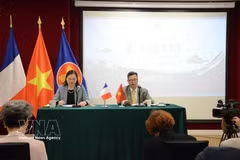
Vietnamese Ambassador to France Trinh Duc Hai (right) speaks at a press conference introducing the Vietnamese Theatre Week in France. (Photo: VNA)

Vietnamese theatre arts to take centre stage in France

Vietnamese Ambassador to France Trinh Duc Hai noted that Paris is chosen for its status as a major global cultural and artistic centre and the headquarters of UNESCO. The year 2026 also marks 50 years since Vietnam joined UNESCO.

An overview of the press conference (Photo: VNA)

Over 2,000 people to perform Thai Xoe dance in Lao Cai in October

The festival will provide an opportunity to review achievements in preserving and promoting the values of Thai Xoe, honour the cultural identities of ethnic groups in the Northwestern region, and promote the land and people of Lao Cai. It will also showcase local tourism products and destinations and strengthen linkages for tourism development.

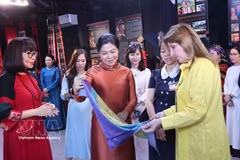
The Vietnamese and Panamanian first ladies experience cultures of Vietnam's ethnic groups. (Photo: VNA)

Vietnamese, Panamanian first ladies bond over ethnic textiles at Hanoi cultural event

The two ladies were briefed on the cultural diversity of Vietnam's ethnic groups and shown traditional costumes, along with weaving, embroidery and pattern-making techniques preserved and handed down through generations. The materials, colours and patterns of the costumes reflect aesthetic values as well as stories of history, customs, traditions and the distinct identity of each community.

Historical cinema helps foster patriotism, strengthen Vietnam’s soft power

Historical cinema helps foster patriotism, strengthen Vietnam’s soft power

When history is told through human stories, using modern cinematic language and backed by adequate investment, films can both nurture patriotism and national pride and become competitive cultural industry products. This is also a way for cinema to help turn the spirit of Politburo Resolution No. 80-NQ/TW into reality by transforming Vietnamese values into an internal resource and a source of national soft power.

Vietnamese athletes compete against Iran in the women’s team kata final in karate at ASIAD 2026 on September 22. (Photo: Xinhua/VNA)

ASIAD 20 prompts Vietnam to sharpen focus on key sports

Vietnam’s gold medals came from karate and sepak takraw, reaffirming its strengths in sports with established traditions and focused investment. Meanwhile, bronze medals in canoeing and teqball showed potential in events where Vietnamese athletes are gaining international experience.

Lieutenant General Phan Xuan Tuy, Director of the Political Academy of the People's Public Security under the Ministry of Public Security, provides information about the conference. (Photo: quochoi.vn)

National conference to promote Vietnamese cultural values

More than 200 delegates are expected to attend a national scientific conference in Hanoi on October 10 to discuss ways to promote Vietnamese cultural values as an important driving force for national development in the new era

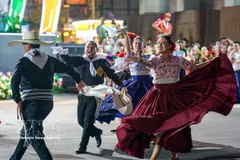
Young girls perform a Cham dance throughout the ritual of carrying the attire of the goddess Po Sah Inu. (Photo: baolamdong.vn)

VFF leader extends Kate wishes to Brahmanist Cham community

In her letter, Hoai She praised the dignitaries and the Brahmanist Cham community for their contributions to upholding patriotic traditions, preserving cultural identity, promoting socio-economic development and strengthening great national unity.

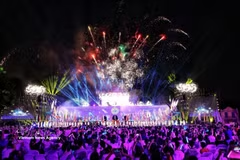
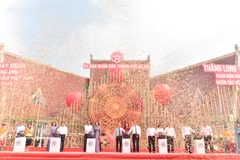
Fireworks display at the closing ceremony of the second Cultures of the World Festival. (Photo: VNA)

Cultures of the World Festival closes, leaving impressions on visitors

The 2026 festival was particularly significant as it coincided with the 50th anniversary of Vietnam’s membership in UNESCO, marking five decades during which Vietnam has evolved from a country emerging from war into an active and responsible member, increasingly contributing initiatives to UNESCO and the international community.

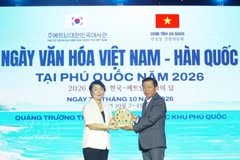
An An Giang leader presents gift to Park Chan A, First Secretary at the Republic of Korea Embassy in Vietnam and Director of the Korean Cultural Centre. (Photo: VNA)

Vietnamese, Korean cultures showcased on Phu Quoc island

Addressing the opening ceremony, Vice Chairwoman of the Phu Quoc Special Zone People’s Committee Nguyen Thi Kim Loan emphasised that the event is a chance for people from Vietnam and the RoK to meet, experience and appreciate each other’s cultural values, thereby fostering mutual understanding, respect and friendship.

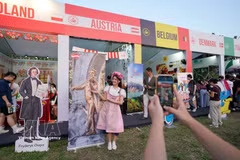
Traditional costumes from around the world come together, creating a vibrant multicultural space in the heart of Hanoi. (Photo: VNA)

“Colours of Five Continents” bring cultural vibrancy to Hanoi’s Hoan Kiem Lake

Themed “Heritage Convergence – Future Creation,” the festival provided a vibrant and open platform for cultural exchange, showcasing distinctive Vietnamese cultural values through ao dai, performing arts and street activities, while giving participating countries an opportunity to share and celebrate their cultural identities.

Hanoi festival celebrates Vietnamese and global cultures (Photo: VNA)

Hanoi festival showcases Vietnamese and world cultures

Through diverse cultural experiences, the second Cultures of the World Festival in Hanoi 2026 highlights culture as a bridge connecting people, promoting mutual understanding and supporting international cooperation and sustainable development.