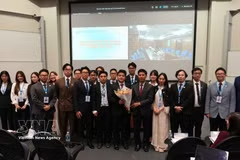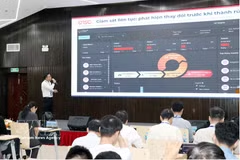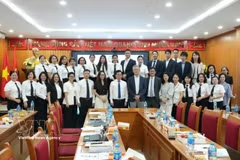
Hanoi (VNA) – Vice President Vo Thi Anh Xuan has called for stronger promotion of learning, talent development and the building of a learning society in the new period, stressing the need to foster self-learning and create opportunities for everyone to acquire knowledge and develop their capabilities.
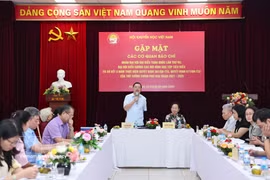
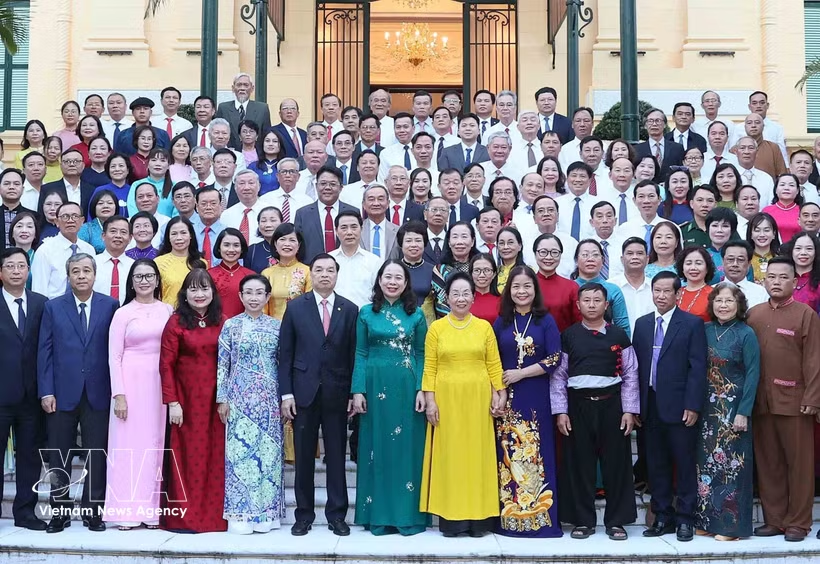
She made the call at a meeting on October 6 with delegates attending the national congress honouring outstanding learning models and a conference reviewing five years of implementing Prime Minister’s Decisions No. 387/QD-TTg and No. 677/QD-TTg for 2021-2025.
Xuan said a fondness for learning, respect for knowledge and appreciation of talented people are valuable traditions nurtured throughout Vietnam’s history. President Ho Chi Minh placed particular importance on learning, self-learning and lifelong learning.
Over more than 40 years of reform, education and training, learning promotion, talent development and the building of a learning society have recorded significant achievements, with important contributions from the Vietnam Association for Promoting Education (VAPE) over its 30-year development.
On behalf of Party and State leaders, Xuan hailed the association’s contributions and praised its officials and delegates, particularly those who have helped spread a passion for learning in their communities.
She noted that Vietnam is entering a new development period with opportunities and challenges intertwined. The Politburo's Resolution No. 71-NQ/TW reaffirms that education and training is a top national policy that determines the nation’s future.
Party General Secretary and President To Lam has stressed that building a learning society and promoting lifelong learning are foundations for developing a learning and innovative nation, with every family serving as a learning environment and every citizen becoming a lifelong learner.
Xuan urged VAPE at all levels to deepen their understanding of the role of education, learning promotion and talent development, and effectively implement Party guidelines and State policies and laws.
She called for continued innovation in the association’s operations to make learning promotion more substantive and improve the quality of learning models.
“Put ‘learning citizens’ at the centre, while making families, clans, communities, agencies and organisations environments that promote learning,” she said, urging continued improvement of assessment criteria to prevent formalism and the pursuit of achievements.
She also called for stronger digital transformation and the connection of learning resources and data so that citizens can access knowledge and study regularly, anytime and anywhere.
Learning promotion should be linked to human development, human resources and labour-market demands in the digital era, she said, encouraging people to update their knowledge and improve self-learning, independent thinking, creativity and adaptability.
Particular attention should be paid to people in remote and border areas, islands, ethnic minority areas, workers, elderly people and disadvantaged groups, ensuring no one is left behind.
The Vice President called for continued efforts to build a strong VAPE and its chapters as a core force in fostering a learning culture, while developing dedicated officials capable of mobilising resources and organising learning movements.
Xuan expressed her belief that the spirit of learning and self-learning would continue to be nurtured among Vietnamese people, becoming an important resource for rapid and sustainable national development.
Former Vice President and VAPE Chairwoman Nguyen Thi Doan said the association will incorporate Xuan’s guidance into its work programmes, expand outstanding learning models and strengthen its organisation.
According to VAPE, learning families, clans, communities, agencies and learning citizens have developed positively over the past five years, with guidance and assessment criteria gradually improved for nationwide implementation.
For 2026-2030, the association will continue promoting learning and talent, building a learning society and advancing lifelong learning. It will develop diverse models suited to different groups and localities, with learning citizens at the centre and digital transformation and artificial intelligence as breakthroughs.
It will also study digitalising the registration, assessment and recognition of learning models, renew communication methods, strengthen coordination with agencies and organisations, and review regulations to orient learning promotion activities more strongly towards grassroots communities./.