Thousand-year-old tower embodies Oc Eo culture

Hindu towers associated with the Oc Eo Culture are found not only in the central provinces like Khanh Hoa, Binh Thuan and Ninh Thuan but also in the Mekong Delta. One such ancient relic in the region is Binh Thanh tower in Tay Ninh province’s Trang Bang district.
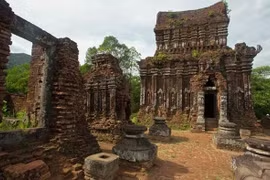
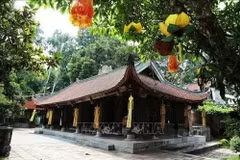
Thousand-year-old tower embodies Oc Eo culture ảnh 1Many reliefs on the tower are quite intact. (Photo: VNA)

Hanoi (VNA) – Hindu towers associated with the Oc Eo Culture are found not only in the central provinces like Khanh Hoa, Binh Thuan and Ninh Thuan but also in the Mekong Delta. One such ancient relic in the region is Binh Thanh tower in Tay Ninh province’s Trang Bang district.

The tower is one of the few remaining ones from the culture existing in the Mekong Delta region. It got the name Binh Thanh from its location on the right bank of Vam Co Dong River in Binh Phu hamlet, Binh Thanh commune.

The Binh Thanh tower was discovered along with Chop Mat tower in Tay Ninh in the early 20th century via an archeological report by the Indochinese archaeological research library.

Located on a high and fairly flat land, the building is hidden under shady trees, creating an extremely poetic, wild, mysterious, pure and peaceful scene.

Belonging to the Oc Eo Culture, its formation was identified to be around the 8th  – 9th centuries. Through ups and downs over a thousand years, the ancient tower’s special architectural features remain almost intact, forming an important part of the nation’s cultural heritage.

It is the only Oc Eo tower that has an almost intact stone wall since discovery. Quite similar to other Champa towers in the central region, its construction technique employed the use of baked brick materials that were stacked skillfully and tightly without using adhesives. However, it is a pity that such technique has so far been lost despite restoration efforts by many scientists and archaeologists over years.

The original architecture of the Binh Thanh ancient tower site consists of three main towers. However, only one of them exists today thanks to being restored in 1998. The other two are now only vestiges.

Built on a square plot, the remaining one is 10 metres high. Each of its sides is 5 metres long. They face the four directions east, west, south and north.

At one metre wide and two metres high, the east-facing main door of the tower protrudes completely. Above it is a 2 m x 0.8 m rectangular stone, which was carved with extremely sophisticated stylised chrysanthemums.

The West, South and North main doors all have fake doors that are embossed with extremely delicate and elaborate patterns.

Decorative motifs are repeated in many parts of the tower and get smaller toward its top, creating angles and edges for the entire construction. Meanwhile, reliefs are embossed around the tower, making it a solid and elaborate work of architecture.

In 1993, the tower was recognised by the then Ministry of Culture and Information (now the Ministry of Culture, Sports and Tourism) as a cultural historical relic site in 1993.

Not only having historical and architectural values, the relic also embodies many special values about the cultural life, religion and belief of ancient people. Its ingenious construction and sculpture techniques reflect the peak development of the Oc Eo Culture.

The Oc Eo Culture was first discovered in 1944 via artifacts found in the sites of Ba The Mountain, now in Oc Eo town, Thoai Son district in An Giang province.

Scientific research has unravelled a brilliant culture with a system of dense monuments on a large scale with a variety of artifacts, diverse in types and high levels of technique, aesthetics, arts, and interactivity with major cultural centres at that time.

Artifacts of the Oc Eo Culture are valued as significant historical documents and evidence of a prosperous culture in the history of Vietnam./.
VNA

See more

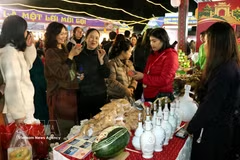
Visitors and locals explore, shop for and discover the culinary specialities of various provinces and cities at the festival. (Photo: VNA)

Festival celebrates culinary quintessence of northern region

The "Quintessence of Northern Cuisine" Festival 2026 is not only a culinary celebration but also a venue for cultural exchange, connectivity, the promotion of traditional values and the introduction of Vietnam’s land and people to domestic and international visitors, according to the organisers.

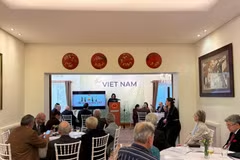
Vietnamese Ambassador to Greece Pham Thi Thu Huong speaks at the "MEET VIETNAM" programme on the occasion of Great National Unity Festival and Vietnam Culture Day (Photo: Vietnamese Embassy in Greece)

Vibrant “MEET VIETNAM” programme held in Greece

The Vietnamese Embassy in Greece has held a “MEET VIETNAM” programme in Athens to mark the Great National Unity Festival and Vietnam Culture Day part of a series of more than 400 activities and events organised on this occasion to honour national cultural identity, spread great national unity, promote the development of cultural industries, and create opportunities for people to directly participate in, contribute to and enjoy cultural activities.

Vietnam's first rally event, Petrolimex XCR Sprint Cup Vietnam 2026, will be held on December 2-6 in Quang Tri province. (Photo courtesy of organisers)

XCR Sprint Cup Vietnam 2026 to debut in December

This marks the first time a global rally sprint will be held in Vietnam. The event is part of the Cross Country Rally (XCR) competition system, a Japanese-founded off-road rally format established in 2022.

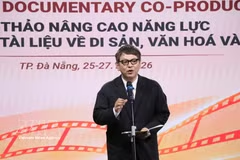
Aoki Kazunori, Head of Programming at the Asia-Pacific Broadcasting Union (ABU), speaks at the second ABU CARE 13 Documentary Exchange Conference. (Photo: VNA)

International cooperation promoted in documentary production on heritage, culture

Participation in ABU CARE 13 provides an opportunity for television professionals in the Central and Central Highlands region to exchange experience and learn modern storytelling approaches from international experts, while expanding co-production, copyright exchange and support for foreign film crews seeking access to filming locations in Vietnam

An art performance at Tam Thang Tower Square in Vung Tau ward draws large crowds of residents and visitors. (Photo: VNA)

Artistic events help connect heritage, culture, tourism

In Ho Chi Minh City, thousands of people attended a special programme entitled “Proud of Vietnamese Identity” to mark Vietnam Culture Day. Connecting three venues in Sai Gon, Thu Dau Mot and Vung Tau, the event combined traditional performances with 3D mapping technology to tell stories of southern Vietnam’s heritage and cultural traditions.

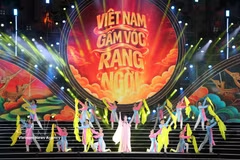
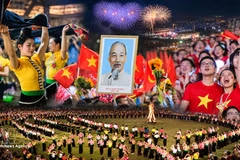
The special art programme brings together music, traditional and contemporary performances, spreading love for Vietnamese culture and national pride. (Photo: VNA)

Special art programme showcases flow of Vietnamese culture

The large-scale event, entitled "Colours of Vietnam: Culture Lights the Way – The Nation in Harmony," brought together music, traditional and contemporary performances, spreading love for Vietnamese culture and national pride.

Culture fosters Vietnam-Canada friendship

Culture fosters Vietnam-Canada friendship

Through stories shared in poetry, music and conversations over Vietnamese food, members of the Vietnamese community had an opportunity to introduce their homeland’s culture to Canadian friends and help younger generations of Vietnamese origin learn more about their roots.

Vietnamese Ambassador to Mozambique Tran Thi Thu Thin, embassy officials and members of the Vietnamese community pose for a group photo at the National Great Unity Day and Vietnam Culture Day celebrations in Maputo on November 22.( Photo: VNA)

Vietnamese cultural identity promoted in Mozambique

National unity is a precious tradition and a tremendous source of strength that has enabled the Vietnamese people to overcome challenges and build and defend the country, while culture serves as the root, spiritual foundation and identity underpinning the nation's enduring vitality, said Vietnamese Ambassador to Mozambique Tran Thi Thu Thin.

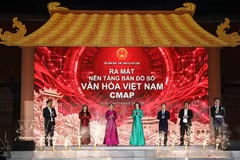
The Vietnam Cultural Digital Map (CMAP) is launched at https://cmap.vn. (Photo: VNA)

Technology helps spread cultural values, connect heritage

In many localities, digital platforms and databases are gradually changing the way heritage is preserved and presented. Artefacts once accessible only in exhibition spaces, as well as historical stories associated with particular places, can now be brought to life through 2D and 3D images, virtual reality, artificial intelligence (AI) and other interactive digital formats.

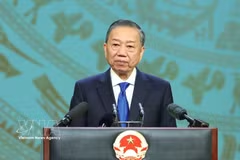
General Secretary of the Communist Party of Vietnam (CPV) Central Committee and President To Lam addresses the Hanoi ceremony marking the 80th anniversary of the first National Cultural Conference on November 24. Photo: VNA

Top leader calls for nurturing culture with responsibility, compassion and spirit of dedication

Cultural development must help individuals lead better lives and take control of their own futures. Everyone should be encouraged to learn, cooperate and innovate, value labour, and take responsibility for themselves, their families and society. National values, cultural values, family values and standards of Vietnamese people must be reflected in education and everyday conduct, said top leader To Lam.

New Vietnam Culture Day celebrates national cultural values

New Vietnam Culture Day celebrates national cultural values

Vietnam Culture Day on November 24 provides an opportunity to honour and promote the nation’s traditional cultural values. To turn culture into a resource for sustainable tourism, however, celebrations should go beyond commemorative events, creating opportunities for people and visitors to experience and practise cultural traditions, and strengthen their responsibility for preserving and promoting heritage.

Vietnamese Consul General Le Duc Hanh (centre, in red traditional ao dai) joins Consulate General staff and representatives of the Vietnamese student community in Hong Kong at the Vietnamese booth during the festival. (Photo: VNA)

Vietnamese arts and cuisine shine at Hong Kong cultural festival

The annual Asia+ Festival, organised by Hong Kong's cultural authorities, featured a wide range of performances, from classical arts to popular entertainment and from indoor venues to outdoor spaces. Vietnam's contributions this year included Teh Dar, a contemporary bamboo circus performance by Lune Production, and dance and music performances prepared by members of the Vietnamese community in Hong Kong.

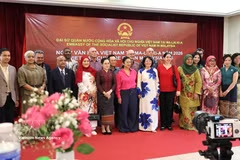
Vietnamese Ambassador to Malaysia Pham Thi Thuy Nga (centre, wearing ao dai) and guests at the event. (Photo: VNA)

Vietnam Culture Day impresses guests in Malaysia

Opening the event, Ambassador Pham Thi Thuy Nga emphasised that the occasion is a tribute to Vietnam's rich cultural heritage and the role of culture in shaping national identity. Forged over thousands of years of history, Vietnamese identity is reflected in the distinctive traditions, arts, cuisine and lifestyles of the country's 54 ethnic groups.

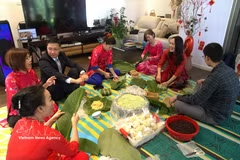
Vietnamese people in Israel gather to make banh chung (traditional sticky rice cake) for the Lunar New Year, preserving their customs and the flavours of home far from the homeland. (Photo: VNA)

Vietnam Culture Day 2026: Vietnamese in Israel keep their roots alive

Beyond Lunar New Year celebrations and major festivals, Vietnamese identity lives on in the language spoken at home, traditional meals, family ties and enduring affection for the homeland. Through these everyday practices, Vietnamese people abroad maintain a strong connection with their roots as they integrate into their host society.