Hanoi (VNA) – A series of road transport projects have been completed and opened to traffic over the past six months, helping to drive socio-economic development, strengthen regional connectivity, reduce logistics costs and minimise traffic accidents.
Meanwhile, the Ministry of Construction is accelerating projects in the aviation, railway, maritime and inland waterway sectors, with a focus on bringing them to completion.
A series of projects reach finish line
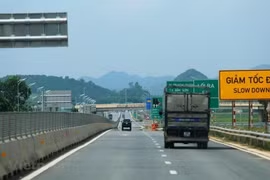
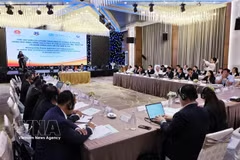
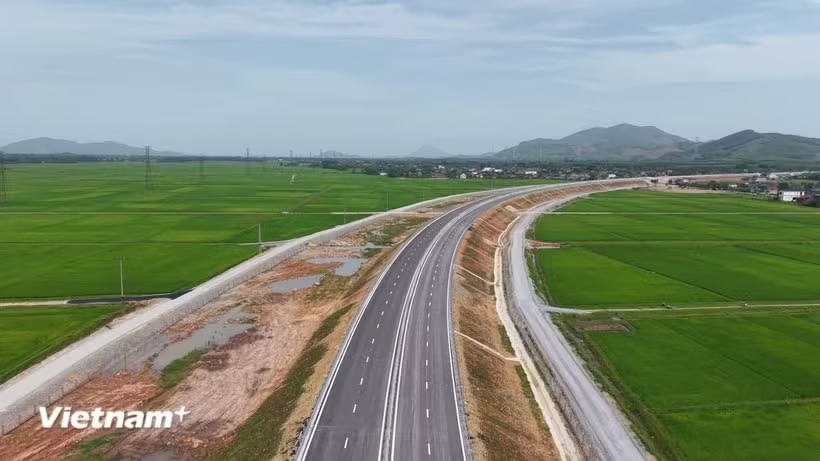
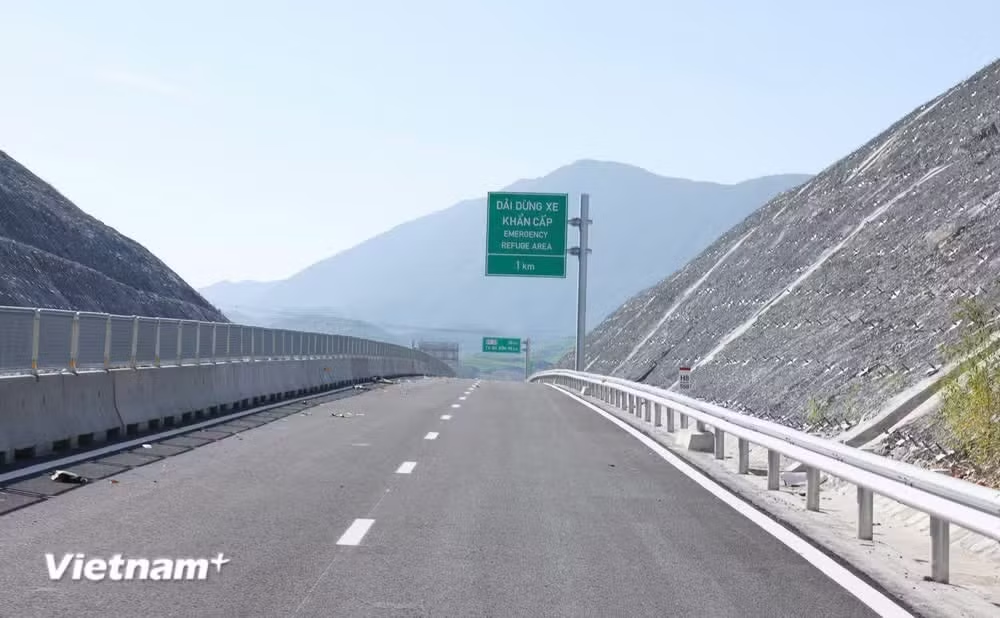
Speaking at a conference reviewing the ministry's performance during the first half on July 7, Chief of the ministry’s Office Lam Van Hoang said the country has completed and put 395km of expressways into operation during the period.
This brings the total length of expressways completed and opened to traffic nationwide to 3,345km.
Meanwhile, the first half saw 219km of new roads built, while 212km of national highways were upgraded and renovated. Vietnam now has a total of 24,595km of national highways.
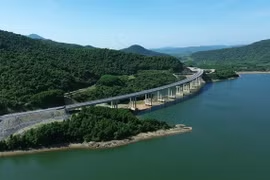
Under local planning and the orientations set out in the national road network plan, Vietnam's coastal road network has a total planned length of 2,869km. So far, around 1,701km have been opened to traffic, while approximately 399km are under construction and a further 769km are at the investment preparation stage.
The ministry has undertaken research and completed the pre-feasibility study report for the proposed expansion of sections of the eastern North-South expressway. It has also worked with relevant provinces and cities to finalise plans to study investment in Ring Road No. 5 around Hanoi, as well as with local authorities to reach agreement on research and investment preparation for the Pleiku-Buon Ma Thuot-Gia Nghia section of the western North-South expressway.
In the railway sector, the ministry has actively urged relevant agencies to accelerate implementation of the North-South high-speed railway project and the Lao Cai-Hanoi-Hai Phong railway project.
For key aviation projects, including Long Thanh International Airport (Phase 1), Gia Binh Airport, Phu Quoc Airport and Ca Mau Airport, the ministry has maintained close and regular oversight, updated progress, reviewed implementation schedules, identified difficulties and bottlenecks, and proposed measures to address them.
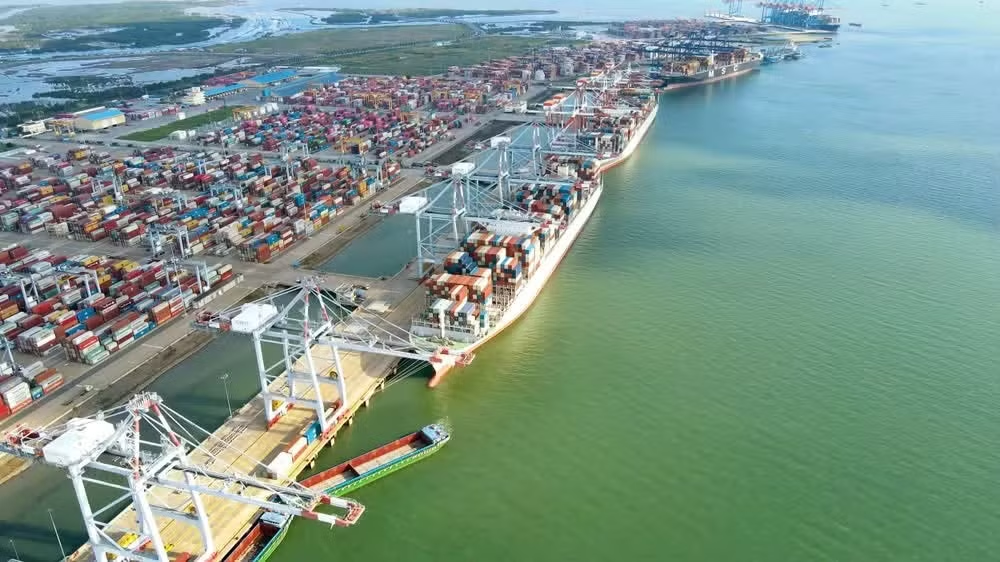
In the maritime and inland waterway sectors, the ministry is finalising plans with a focus on greater integration and closer coordination between maritime transport and inland waterways. Priority is being given to gateway ports and key shipping routes, while efforts are being made to accelerate the completion of seaport projects and ensure their quality.
Multimodal connectivity remains limited
Assessing the introduction of toll collection on several State-funded expressways from March, Hoang said the system has delivered positive results.
As of June 30, the toll collection system had recorded more than 14 million vehicle journeys and collected over 1.32 trillion VND in expressway user fees for the state budget.
All 211 eligible toll stations have now installed electronic toll collection systems, while operations across the network have remained broadly stable.
In the transport sector, passenger transport in the first six months was estimated at 3,403.1 million passenger journeys, up 18.8% year on year. Freight transport was estimated at 1,619.4 million tonnes, representing an annual increase of 13.2%.
“Overall, transport activities have continued to maintain positive growth, effectively meeting people's travel needs, supporting production and the import and export of goods, while ensuring traffic order and safety,” Hoang said.
However, the Chief of Office acknowledged that preparations for investment in some projects, efforts to resolve project-related difficulties and bottlenecks, and the development of institutional frameworks in certain sectors remained slow.
He also noted that financial mechanisms for infrastructure development are yet to be sufficiently stable and that there is a shortage of instruments for mobilising long-term capital. Mobilising social resources, particularly through public-private partnerships (PPPs), also remained challenging./.