Vietnam Fisheries Society protests China’s unilateral fishing ban in East Sea

The society stressed that the ban is unilateral and unjustified; seriously infringes upon Vietnam’s sovereignty, rights and legitimate interests; violates international law, including the 1982 United Nations Convention on the Law of the Sea (UNCLOS); and runs counter to the Declaration on the Conduct of Parties in the East Sea (DOC).

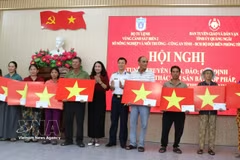
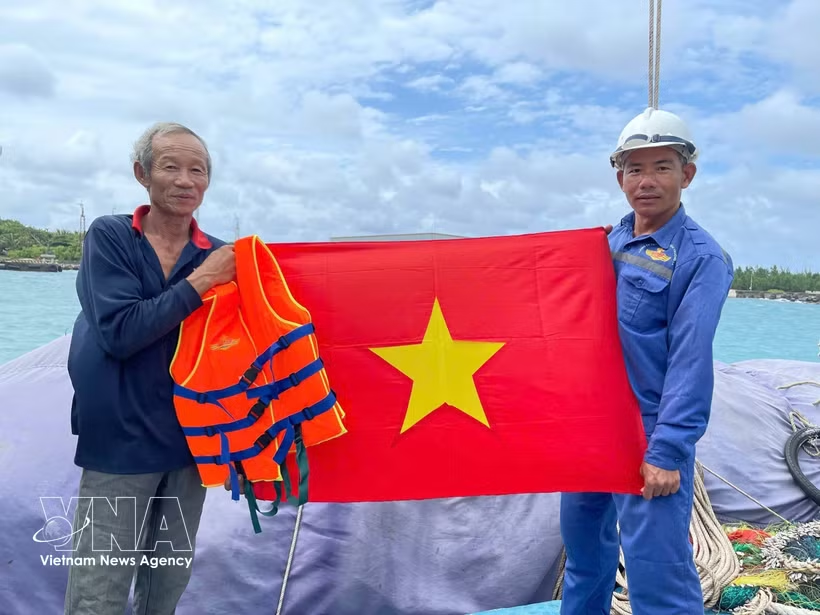
The naval force presents the national flag to a fisherman. (Photo: VNA)

Hanoi (VNA) – The Vietnam Fisheries Society (Vinafis) has formally lodged a protest with the Government Office, the Ministry of Agriculture and Environment, and the Ministry of Foreign Affairs over China’s unilateral fishing ban in the East Sea in 2026.

According to the society, a notice issued on April 24 by authorities in Sanya, China, announced an annual fishing moratorium lasting three and a half months, from 12:00 on May 1 to 12:00 on August 16. The ban applies to waters between latitudes 12°00’N and 26°30’N, including the Gulf of Tonkin, areas off its mouth, and parts of Vietnam’s exclusive economic zone in the central East Sea (north of Truong Sa Archipelago), prohibiting all fishing activities except angling.

The society stressed that the move is unilateral and unjustified; seriously infringes upon Vietnam’s sovereignty, rights and legitimate interests; violates international law, including the 1982 United Nations Convention on the Law of the Sea (UNCLOS); and runs counter to the Declaration on the Conduct of Parties in the East Sea (DOC).

It warned that the prolonged ban will disrupt the normal operations of Vietnamese fishing vessels and fishermen in Vietnam's own waters, affect fishing production at sea, threaten livelihoods, and increase the risk of confrontations between Vietnamese fishing vessels and China's coast guard force.
vnanet-potal-hai-quan-ho-tro-sua-chua-tau-ca-cho-ngu-dan-tinh-dak-lak-8408090.jpg
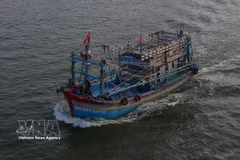
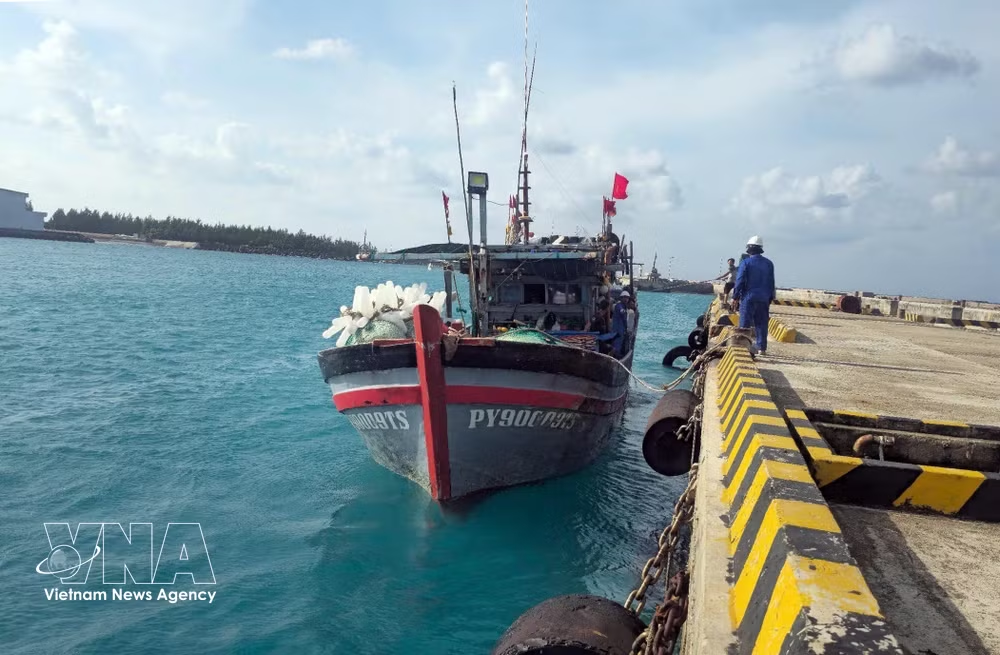
Fishing vessel PY 90009 TS is anchored at the boat shelter on Truong Sa Island. (Photo: VNA)

Vinafis strongly opposes the measure and requested China to immediately revoke the ban in waters under Vietnam’s sovereignty and in international waters.

The society also urged relevant authorities to respond firmly and take strong measures to counter the ban, safeguard marine resources and fisheries, and ensure the safety of Vietnamese fishermen operating in the waters within the country's sovereignty, sovereign rights and jurisdiction, while maintaining maritime security and sovereignty.

It pledged to guide local fisheries associations, member enterprises and fishermen to operate in groups, comply with regulations, stay informed, proactively respond to unlawful actions, and encourage them to continue fishing and contributing to the protection of Vietnam’s maritime sovereignty./.
VNA

See more

The copyright crackdown is broadly viewed as an inevitable step in Vietnam’s cultural industry development. (Illustrative photo: VNA)

Healthy digital content market in the making

The sharper crackdown is rapidly redrawing how online entertainment is distributed and consumed, while gradually reshaping public awareness and responsibility toward copyright protection.

A view of Place Ho Chi Minh in Persan, France. (Photo: VNA)

Place preserving memories of President Ho Chi Minh in France

Although there is little publicly available documentation confirming exactly when Place Ho Chi Minh was established, French urban historians suggest that most streets and public spaces named after the Vietnamese leader in France emerged between the 1960s and 1980s, during the height of anti-war movements and solidarity campaigns supporting Vietnam across working-class towns and left-leaning suburbs around Paris.

Vietnamese Ambassador to Bangladesh Nguyen Manh Cuong speaks at the seminar. (Photo: VNA)

President Ho Chi Minh’s thought on national unity remains relevant today

President Ho Chi Minh's ideology of national unity continues to carry profound significance amid growing global challenges, including conflicts, social divisions and economic instability. His message of solidarity, consensus and placing national interests above sectional differences remains a valuable lesson for many developing nations.

Assoc. Prof. Dr. Nguyen Duc Son presents the decision establishing the Vietnamese Language Proficiency Test Council in Japan to a representative of the Vietnam Studies Centre in Japan. (Photo: VNA)

Japan hosts first standardised Vietnamese language proficiency test

As bilateral ties between Vietnam and Japan continue to expand, demand for Vietnamese language learning in Japan has also grown rapidly among OVs, educational institutions, businesses and Japanese people interested in Vietnam. Against this backdrop, the introduction of a standardised proficiency test is expected to provide an official and widely recognised benchmark for Vietnamese language skills.

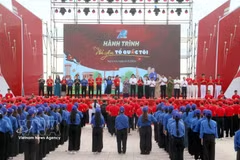
The “I Love My Fatherland" Journey 2026 kicks off in Nghe An province on May 16. (Photo: VNA)

"I Love My Fatherland” journey features diverse activities

The “I Love My Fatherland” journey will span seven stages across historical and cultural sites and “red addresses” nationwide. There will be a combination of education on traditions, field-based programmes, and digital communications.